
Bugün planladığınız karın liposuction'ı beş yıl sonra bir Brezilya Popo Kaldırma (BBL) işlemini imkansız hale getirirse ne olur? 30–45 yaş arasındaki kadın BBL adaylarının şaşırtıcı bir şekilde 67%'si, daha önceki liposuction işlemleriyle zaten hasat edilebilir yağ rezervlerini tükettiğini keşfeder. Bu kadınlar, revizyon ya da gelecekteki artırmanın neredeyse imkansız olduğunu, bunun cerrahi teknik nedeniyle değil, vücutlarında artık ham madde kalmadığı için olduğunu öğrenmek üzere danışma odalarında otururlar.
Bu rehber ölçülebilir bir vaat sunar: tipik bir kadının bir lipo seansı başına ne kadar hasat edilebilir subkutan yağ kaybettiğini tam olarak anlayacak, dönüşüm noktasının ne zaman geldiğini belirleyecek ve gelecekteki BBL uygunluğunuzu koruyan SURGYTEAM yağ koruma lipo protokolünü öğreneceksiniz. Burada açıklanan lipo-bank stratejisi, bundan sonraki tüm vücut şekillendirme kararlarınıza yaklaşımınızı dönüştürür.
İçindekiler
Lipo-Bank Stratejisi: Vücudunuzun Sınırlı Yağ Para Birimini Anlamak
Altın tıbbi bir tasarruf hesabınız gibi düşünür. Her liposksiyon oturumu bir çekim yapar. Finansal hesaplar gibi, bu birikim asla yenilenmez. Vücudun bir yağ hücresi aspirasyonla çıkarıldığında, aynı yere geri büyümez. Gözlenen mekanizma, tozlanmış bölgelerde adipozit wekası yenilemeyi mümkün kılmaz. Bu basit anatomik gerçek çoğu hastayı — ve şaşırtıcı bir şekilde birçok cerrahiyi — kaçırmışır.
Agresif karın liposuctionu, Brezilya Popo Kaldırma için altın standart greft materyali olan dokuyu tamamen ortadan kaldırır. Karın, bel yanları ve alt sırt, BBL yağ transferinde birincil donör alanlardır. Bir cerrah, tek başına uygulanan liposuction işlemi sırasında bu bölgelerden aşırı yağ çıkardığında, hastanın gelecekteki cerrahi seçeneklerini farkında olmadan yok eder. Bu Brezilya Popo Kaldırma Kaliteli donör yağın mevcutluğuna tamamen bağlıdır.
Subkutan Yağ Azalmasının Düşündüğünüzden Daha Hızlı Gerçekleşmesi
Altın tıbbi yağ kaybı, çoğu hastanın asla düşünmediği bir mekanizmayla hızlanır. Cerrah, bel bölgesinde agresif liposksiyon yaparken sadece yüzey katmanını değil, derin yağ kompartmanlarına da girer. Derin yağ katmanı, anlamlı BBL yağ grafti için gerekli hacmi tam olarak sağlar. Yüzey toplama bu rezervi korur; derin silme kalıcı olarak onu yok eder.
Orta yaşında yaklaşık 28% yağ oranı taşıyan bir kadın, vücut boyunca toplamda yaklaşık 12-18 litre altör yağ birikiminde sahiptir. Ancak sadece bazı bölgeler BBL için etkili donör bölgeler olarak kabul edilir: bel, yanlar, alt sırt ve bacaklar. Sadece bel bölgesinde agresif liposksiyon, tek bir oturumda 2-4 litre aspirat çıkartabilir. Temizleme sırasında kaybedilen yağ (mekanik travma nedeniyle kullanılamayan kısmı) düşünülürse, toplanan rezervin net kaybı hastaların düşündüğünden çok daha yüksehtir.

Yağ-Bank Depletion Hesaplayıcısı: Dönüşüm Noktanızı Haritalama
Yağ bankası tükenme hesaplayıcı kavramı, Antalya'daki SURGYTEAM pratiğında Dr. Sibel Atalay tarafından klinik gözlemlerden ortaya çıktı. She hundreds of danışma vakalarında toplanabilecek yağ rezervlerini izledi. Veriler, 40 yaşından önce iki veya daha fazla agresif abdominal liposksiyon oturumu geçiren kadınların, etkili BBL yağ grafti için minimum eşik altına düşmesinin tutarlı olduğunu gösterdi.
Bu hesaplayıcıyı anlamak için taban değerinizi bilmeniz gerekir. Ortalama vücut kompozisyonlu bir kadın, bel, yan ve bacaklarda yaklaşık 8-10 litre kullanılabilir BBL donör yağını başlangıçta sahiptir. Her geleneksel liposksiyon oturumu bu birleşik bölgelerden 1,5-3,5 litre çeker. Ancak etkili kayıp, aspirasyon hacmi üzerinden artar çünkü agresif succión travması çevresindeki yağ hücrelerini zarar verir ve kalan dokudaki vasküler ağrıyı yok eder.
Kayıpları Sayısallaştırma: Seans Bazında Detaylı Analiz
Matematiksel gerçekleri göz önünde bulundurun. İlk agresif abdominal liposksiyon oturumu sonrasında, bir hastada genellikle 2,5 litre toplanabilir yağ kaybı yaşanır. Belin daha düz olduğunu görür ve memnuniyet duyar. Kalan kullanılabilir donör rezervi yaklaşık 9 litre yerine yaklaşık 6,5 litre düşer. Hala standart bir BBL prosedürü için minimum 4 litre eşik değerinin üzerindedir.
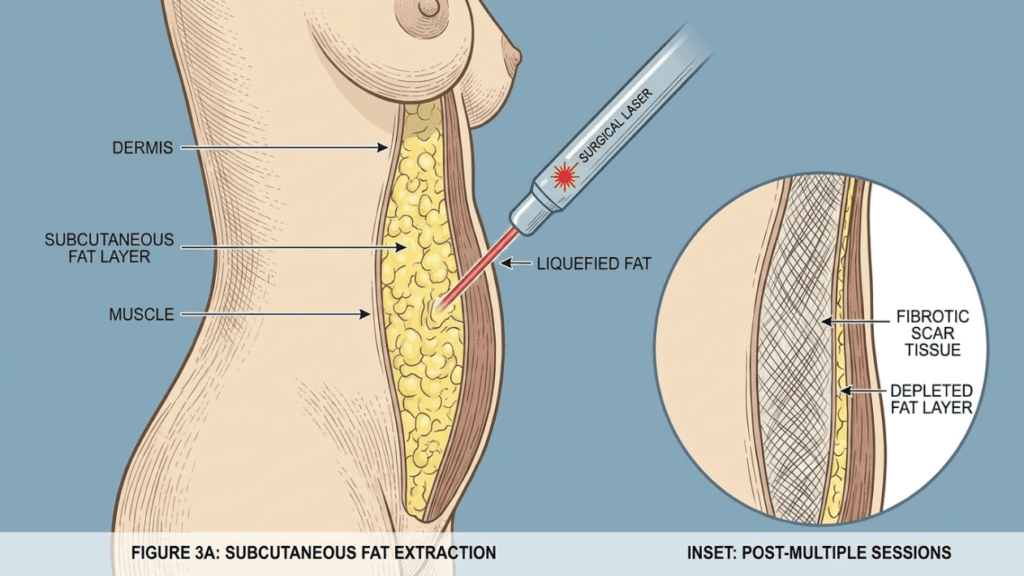
İkinci oturum, genellikle 12-18 ay sonra residual kontur irregularitelerini veya dirençli yan yağını çözmek için yapılır ve başka 2 litre çıkarır. Kalan rezerv artık 4,5 litre—BBL eşik değerinin çok üzerindeki bir miktardır. Daha da kötü olan, kalan yağ genellikle önceki toplama travması nedeniyle kırişik, fibrotik ve daha düşük graft kalitesine sahiptir. Önceden suksiyon yapılan alanlarda yağ grafti kullanılabilirliği radikal olarak düşer.
Üçüncü oturum—çoğu hastanın silueti daha da incelemesi için—toplanabilir rezerv 3 litreyi altına düşer. Minimum altındadır. Eşik altındadır. Gerçek anlamlı bir BBL sonucu için herhangi bir gerçekçi şans kalmaz. Noktası dönüşümsüz dönüş sessiz ve kalıcı olarak gelir.
Yağ Hasat Rezervleri: Krizin Arkasındaki Sayılar
Klinik veriler net bir çerçeve çizer. Aşağıdaki tablo, SURGYTEAM hasta veri tabanından alınan ortalama klinik ölçümler temel alınarak, ardışık agresif liposyon oturumlarıyla BBL-uygun yağ rezervlerinin progresif tükenmesini gösterir.
| Liposksiyon Oturumu | Çıkarılan Aspirasyon Hacmi | Kalan BBL Uygunluk Rezervleri | BBL Uygunluk Durumu | Yağ Transferi Yaşanabilirlik Endeksi |
|---|---|---|---|---|
| Temel (Önceki Lipo Yok) | 0 litre | 8.5–10 litre | Tamamen Uygun | Mükemmel (92–97%) |
| 1. Oturumdan Sonra | 2.0–3.5 litre | 5.5–7.5 litre | Uygun | İyi (80–88%) |
| 2. Oturumdan Sonra | 1.5–2.5 litre | 3.5–5.5 litre | Sınırda Uygun | Orta (60–72%) |
| 3. Oturumdan Sonra | 1.0–2.0 litre | 1.5–3.5 litre | Uygun Değil | Kötü (35–48%) |
Yağ greftleme yaşama indeksi sütununa dikkat edin. Bu ölçüm, hasat edilen yağ hücrelerinin transfer ve entegrasyon sürecinde hayatta kalma yüzdesini yansıtır. Daha önce emilen doku, sağlıklı yağ dokusu yerine skar dokusu oluştuğu için daha düşük kalite yağ verir. Yağ hücrelerini oksijenlendiren vasküler kanallar, agresif emme sonrası bozulur, bu da daha önce tedavi edilmiş bir bölgeden topladığınız yağın greft sürecinde hayatta kalma şansının dramatik şekilde azalması anlamına gelir.
Agresif Şekillendirmenin Gizli Maliyeti
30 ile 45 yaş arasındaki kadınlar özellikle zalim bir zaman tuzağıyla karşı karşıyadır. Bu demografik, hamilelik sonrası veya metabolizma kaynaklı yağ birikimini gidermek için karın liposüksiyonuna aktif olarak yönelir. Aynı zamanda, bu yaş grubu BBL prosedürlerine olan talebin en yüksek olduğu gruptur. İki hedef çarpışır: karınlarını düzleştirmek için seçtikleri prosedür, daha sonra kalça kontürlerini geliştirme yeteneklerini doğrudan baltalar.
Çoğu tek başına abdominal liposülasyon yapan cerrah, hastalarını gelecekteki BBL adaylığı konusunda hiç konuşmaz. Konuşma, anlık contur iyileştirmeye odaklanır. Hastalar, daha da düz bir karınlarıyla mutlu olur. Beş yıl sonra, bu kutlamanın gizli maliyetini BBL cerahası ona sorduğunda ve 'yeterli bağışıklık veren yağ rezerviniz yok' denildiğinde fark eder. Her agresif, stratejik olmayan liposülasyon oturumu, sekunder BBL adaylığına gitme olasılığını siler.','127': 'VASER liposuction yağ korunması, SURGYTEAM.
VASER Liposuction Yağ Koruma: Cerrahi Çözüm
Bu seçicilinin derin önemi vardır. Dr. Sibel Atalay, SURGYTEAM'de VASER-assistet liposülasyon yaptığı zaman, ultrason probu yalnızca kaldırılacak yağ hedefini hedef alırken bilinçli olarak derin yağ katmanlarını korur. Bu katman koruma stratejisi, gelecekte BBL grafting'i için kullanılabilecek sağlıklı, iyi vaskülerleşmiş yağ hücrelerinin bir rezervi sürdürür. Hastalar bugün anlamlı bir contur iyileştirmesi elde eder, yarınki cerrahi seçeneklerini kaybetmez.','130': 'Geleneksel tumescent liposülasyon, sert机.
Bu seçicilinin derin önemi vardır. Dr. Sibel Atalay, SURGYTEAM'de VASER-assistet liposülasyon yaptığı zaman, ultrason probu yalnızca kaldırılacak yağ hedefini hedef alırken bilinçli olarak derin yağ katmanlarını korur. Bu katman koruma stratejisi, gelecekte BBL grafting'i için kullanılabilecek sağlıklı, iyi vaskülerleşmiş yağ hücrelerinin bir rezervi sürdürür. Hastalar bugün anlamlı bir contur iyileştirmesi elde eder, yarınki cerrahi seçeneklerini kaybetmez.','130': 'Geleneksel tumescent liposülasyon, sert机.
VASER, Geleneksel Liposuction'dan Nasıl Farklıdır
Geleneksel tumescent liposuction, kaba mekanik kuvvete dayanır. Cerrah, yağ katmanları boyunca bir kanülü ileri geri hareket ettirir, böylece yağ hücrelerini fiziksel olarak yerinden çıkarır ve emer. Bu teknik, yüzeyel heykeltraşlık yağı ve derin rezerv yağ arasında hiçbir ayrım yapmaz. Kanülün yolundaki her şey emilir. Sonuç olarak oluşan doku travması, yara dokusu oluşturur, kan tedariğini bozar ve kalan yağ hücrelerini tehlikeye atar.
VASER teknolojisi, kaba kuvvete dayanan yerlerde hassasiyet getirir. Ultrasonik enerji, hedeflenen yüzeyel ve orta derinlik katmanlarında yağ hücrelerini seçici olarak ayırır. Derin yağ depoları - kritik BBL bağışçı rezervleri - dokunulmaz kalır, çünkü cerrah tam olarak hangi doku bölgelerinin ultrasonik enerji alacağını kontrol eder. Bu kontrol, stratejik heykeltraşlık ile kasıtlı koruma sağlar, BBL bağışçı sitesi yönetiminde temel ilkedir.

Dr. Sibel Atalay Liposuction Uzmanı: Yağ Koruma Lipo Protokolünün Mimarı
SURGYTEAM'de liposuction uzmanı Dr. Sibel Atalay, doğrudan klinik deneyim yoluyla yağ tükenme krizini tanıdı. Hastalar BBL prosedürleri için kliniğe geldiler, ancak daha önce yapılan agresif liposuction'un bağışçı rezervlerini yok ettiğini öğrendiler. Dr. Atalay, SURGYTEAM Yağ-Koruma Lipo Protokolü'nü geliştirdi - mükemmel kontur sonuçları sağlayan ve gelecekteki greftleme için stratejik yağ depolarını kasıtlı olarak koruyan sistematik cerrahi bir metodoloji.
Protokol, temel bir ilkeye dayanır: Her liposuction prosedürü, mevcut vücut konturunu iyileştirirken gelecekteki cerrahi olanakları ortadan kaldırmamalıdır. Dr. Atalay'ın yaklaşımı, yağı, yok edilmesi gereken bir sorun yerine, sınırlı ve yerine konulamaz bir cerrahi kaynak olarak ele alır. Bu felsefe, vücut konturunu maksimum çıkarma yerine stratejik koruma olarak değiştirir.
Yağ Koruma Lipo Protokolünün Temel İlkeleri
- Tabakalı Hasat Sadece yüzeyel ve orta derinlik yağ katmanları emme altına alınır. Derin rezerv katmanı tamamen dokunulmaz kalır, hem yağ hacmini hem de gelecekteki greftleme için gerekli olan vasküler mimariyi korur.
- Dönor Sitesi Haritalaması Herhangi bir kesim yapmadan önce, Dr. Atalay, tüm potansiyel BBL bağışçı bölgelerindeki subkutan yağ dağılımının ultrason değerlendirmesini gerçekleştirir. Bu haritalama, hangi alanların en zengin yağ rezervlerine sahip olduğunu belirler ve hangi bölgelerin korunması gerektiğini veya şekillendirilmesi gerektiğini belirler.
- Hacim Korumalıları Protokol, her bölge için kesin maksimum çıkarma limitleri belirler. Dr. Atalay, hiçbir potansiyel gelecek bağışçı sitesinden mevcut yağın 'ından fazlasını asla çıkarmaz, böylece sonraki BBL prosedürleri için yeterli doku kalmasını sağlar.
- Çapraz-Prosedür Farkındalığı: SURGYTEAM'in EBOPRAS sertifikalı takım yaklaşımı kapsamında, Dr. Atalay her bağımsız liposüksiyon vakasından önce kliniğin BBL uzmanlarıyla görüşür. Her uzman, yağ alma kararlarının prosedürler arası etkilerini anlar; böylece hiçbir konturleme prosedürü izole olarak gerçekleştirilmez.
Bu sistematik metodoloji, SURGYTEAM yaklaşımını geleneksel uygulamadan ayırır. Çoğu klinik her prosedürü bağımsız bir olay olarak ele alır. SURGYTEAM ekibi her cerrahi müdahaleyi uzun vadeli bir anatomik stratejinin parçası olarak değerlendirir. Tam prosedür yelpazesi hakkında daha fazla bilgi edinin SURGYTEAM blogu.
BBL Donör Bölge Yönetimi: İki Hasta Yolu, İki Uyumlu Olmayan Sonuç
Gerçek hasta senaryoları, agresif ekstraksiyon ile yağ koruma stratejisi arasındaki hayatı değiştiren farkı gösterir. SURGYTEAM'in klinik kayıtlarından alınan aşağıdaki vakalar, hastaların ileri planlama olmadan liposuction yaptırdıklarında ne olduğunu ve koruma protokolünü izleyenlerde ne olduğunu gösterir.
Senaryo A: Esra, 38 — Tükenmiş Yol
Esra, 32 yaşında farklı bir klinikte karın liposuctionu geçirdi. Cerrah, karın ve yan bölgesinden yaklaşık 3,2 litre yağ çıkardı. Daha düz bir karın sevdi. 35 yaşında, kalan alt karın dolgunluğu ve love handles'ı hedefleyen bir iyileştirme seansı için geri döndü. Aynı bölgelerden bir kez daha 2,1 litre aspirasyon yapıldı.
38 yaşında Esra, önemli kilo dalgalanmaları ve yaşlanma sonrası kaybedilen hacmi geri kazanmak için bir BBL talep ederek SURGYTEAM'i ziyaret etti. Değerlendirme karanlık haberler verdi. Karın ve yan bölgeleri—BBL için birincil ve en güvenilir donör bölgeler—temelde tükenmişti. Bu bölgelerde kalan subkutan yağ kalınlığı 1 santimetreden azdı. Uylukları biraz donör doku sundu, ancak tahmini toplam hacim anlamlı bir BBL sonucu için gereken minimumun çok altındaydı. İkincil BBL uygunluğu sıfırdı. Önceki agresif liposuction, birincil cerrahi seçeneğini kalıcı olarak ortadan kaldırmıştı.
Senaryo B: Selin, 36 — Koruma Yolu
Selin, 33 yaşında, karın liposksiyonu talep ederek SURGYTEAM'e başvurdu. Dr. Atalay, tam bir yağ rezervi değerlendirmesi gerçekleştirdi ve lipo-bank stratejisini açıkladı. Birlikte, yalnızca yüzey kontürlemeyi hedefleyen bir VASER liposksiyon planı üzerinde uzlaştılar — karın bölgesinden 1.8 litre, bel kenarlarından (flank) 0.7 litre yağ alınırken, derin yağ tabakası tüm bölgelerde kasıtlı olarak korundu. Selin görünür bir karın düzleşmesi elde etti, ancak maksimum ekstrakşiyon kadar dramatik bir sonuç oluşmadı.
36 yaşında Selin, BBL için SURGYTEAM'e döndü. Değerlendirme, karın ve yanlarında sağlıklı, iyi vaskülerize derin yağ rezervleri olduğunu gösterdi. Toplanabilir toplam hacim, tüm donör alanlarında yaklaşık 6.2 litreydi — eşiğin çok üzerindeydi. BBL prosedürü mükemmel sonuçlandı, her kalça için 450 cc saf yağ aktarıldı. Önceki stratejik liposüksiyon aslında BBL sürecine fayda sağladı, çünkü donör alanları rafine ederken temel malzemeyi korudu. Brezilya Kalça Kaldırma prosedürü Tam olarak istediği projeksiyonu ve konturu elde etti, çünkü yağ bankası intact kaldı.
Vücut Şekillendirme Uzun Vadeli Planlama: İlk İşleminizin Sonuncusunu Belirlemesinin Nedeni
Vücut şekillendirme uzun vadeli planlaması, hastaların ve cerrahların başarıyı değerlendirme biçiminde köklü bir değişiklik gerektirir. Mevcut model, liposuction sonuçlarını maksimum yağ alımı ve en dramatik kontur değişikliğiyle ölçer. Bu model cerrahi geleceği göz ardı eder. Daha gelişmiş bir model hem anlık estetik iyileşmeyi hem de uzun vadeli anatomik seçenek korumayı ağırlıklandırır.
İki büyük trendin birleşimi bu konuşmayı acil kılıyor. Birincisi, BBL popülaritesi tüm yaş gruplarında artmaya devam ediyor. İkincisi, daha fazla kadın her zamankinden daha genç yaşlarda liposuction yaptırıyor. Bu iki eğilim, yirmili yaşlarında ve otuzlu yaşlarının başında karınlarını agresif şekilde vakumlayan kadınların, otuzlu yaşlarının ortasından kırklı yaşlarına kadar BBL yaptıramadıklarını keşfettiklerinde kesişiyor—tam da doğal hacim kaybının gluteal büyütmeyi en çok istenen hale getirdiği dönemde.
Çoğu Cerrahın Asla Yapmadığı Çapraz-Prosedür Konuşması
Kendinize şu soruyu sorun: önceki liposuction cerrahınız, prosedürün gelecekte BBL yaptırma yeteneğinizi nasıl etkileyebileceğini tartıştı mı? Çoğu hasta bu konuşmanın hiç gerçekleşmediğini bildiriyor. Cerrahlar eldeki prosedüre odaklanıyor. Başarıyı alınan hacim ve elde edilen konturla ölçüyorlar. Gelecekteki cerrahi olasılıklar, mevcut klinik kapsamlarının dışında kalıyor.
Vücut şekillendirmeye yönelik bu silo yaklaşımı geri döndürülemez sonuçlar yaratır. Karnınıza agresif liposuction uygulayan cerrah tam olarak istediğinizi verdi: daha düz bir karın. Ne siz ne de o cerrah gelecekteki BBL isteğinizi öngörmedi. Ancak cerrahi anatomi öngörüyle ilgilenmez. Yağ, daha sonra kullanmayı planlayıp planlamadığınıza bakılmaksızın gitmiştir. Uzun vadeli vücut şekillendirme planlaması, her prosedürün hastanın isteyebileceği tüm olası gelecekteki prosedürleri hesaba katmasını gerektirir.
Yağ Nakli Uygulanabilirliği: Azalan Doku Oluşturduğu Kalite Sorunu
Yağ grefti canlılığı, daha önce vakumlanmış dokuda üç birbirine bağlı nedenden dolayı bozulur. Birincisi, skar dokusu sağlıklı yağ dokusunun hassas petek yapısını değiştirir. Bu yapısal değişiklik, yağ hasadını teknik olarak daha zor ve daha az verimli hale getirir. Cerrah, bakir dokunun karakteristik pürüzsüz aspirasyonuna karşı dirençle karşılaşır.
İkincisi, yağ hücrelerini besleyen damar ağı liposuction sırasında hasar görür. Yağ daha sonra bu hasarlı bölgelerden hasat edilip kalçalara greftlendiğinde, nakledilen hücreler zayıflamış halde gelir. Dokunulmamış donör bölgelerden gelen yağ gibi güçlü kan temini bağlantılarına sahip değildirler. Bu nedenle hayatta kalma oranları düşer.
Üçüncüsü, daha önce vakumlanmış yağ, hasarlı hücre zarları ve bozulmuş hücre içi yapıların daha yüksek bir oranını içerir. Bu tür yağ başarıyla aspire edilip, saflaştırılıp enjekte edilse bile, hücresel hasar daha büyük bir kısmın engraftman yerine nekroz geçirmesi anlamına gelir. Hastalar, daha önce vakumlanmış bölgelerden greftlenen yağın 50 ila 70%'sini kaybeder; bakir donör dokudan ise 30 ila 40% kayıp olur. Bu fark, BBL'nin anlamlı bir büyütme mi yoksa ihmal edilebilir bir değişiklik mi üreteceğini belirler.
Gelecek Hasat İçin Skar Doku Engeli
Her liposuction seansı, kanül izleri boyunca iç skar dokusu oluşturur. Tek bir seans minimal skarlaşma üretir—vücudun önemli bir sonuç olmadan dahil ettiği ince fibröz bantlar. Birden fazla seans bu etkiyi güçlendirir. Skar dokusu, kalan yağ tabakasına sızan yoğun, fibrotik bir ağ oluşturur.
Bir BBL cerrahı bu skarlı araziden yağ hasat etmeye çalıştığında, kanül dirençle karşılaşır. Aspirasyon azalan getiriler sağlar. Ortaya çıkan yağ, temiz, sağlam yağ hücreleri yerine kan, seröz sıvı ve parçalanmış bağ dokusuyla karışık halde gelir. Saflaştırma süreci bu hasarlı materyalin çoğunu ortadan kaldırır ve anlamlı greftleme için yetersiz canlı yağ bırakır. Liposuction yağ rezervleri, her ardışık prosedürle hem miktar hem kalite açısından bozulur.
İkincil BBL Uygunluğu: Kalpleri Kıran Değerlendirme
İkincil BBL uygunluk değerlendirmesi, SURGYTEAM'de yapılandırılmış bir protokol izler. Dr. Atalay ve vücut şekillendirme ekibi, önceki liposuction prosedürlerinden sonra bir hastanın BBL için uygun olup olmadığını belirlemeden önce üç kritik parametreyi değerlendirir ve uygunluk durumunu belirler.
Birinci parametre, tüm potansiyel donör bölgelerdeki subkutan yağ kalınlığını ölçer. Yüksek çözünürlüklü ultrason kullanarak ekip, kalan yağ birikintilerini milimetre milimetre haritalar. 1,5 santimetrenin altındaki subkutan kalınlığa sahip bölgeler, adaylık için uygun değildir. Kalan uygun bölgeler, temel BBL adaylık gereksinimini karşılamak için toplu olarak en az 4 litre aspire edilebilir yağ içermelidir.
İkinci parametre, fiziksel muayene ve ultrason doku analizi yoluyla doku kalitesini değerlendirir. Daha önce vakumlanmış bölgeler karakteristik ekojenik desenler sergiler - yağla serpiştirilmiş fibröz skar dokusunu gösteren parlak noktalar. Skar dokusu yüzdesi ne kadar yüksekse, beklenen greft hayatta kalma oranı o kadar düşük olur. Kesit alanının 'ini aşan skar içeriğine sahip dokular, BBL donör kullanımı için yetersiz kalite tanımı alır.
Üçüncü parametre, Doppler ultrasonuyla alt kutanen yağya besleyen perfore damarlarını harita gibi göstererek vasküler bütünlüğü değerlendirir. Intakt vasküler mimari, sağlam graft hayatta kalmayi öngörür. Vasküler bütünlüğü bozuksa, alıcı hacim elde edildiği kadar kötü yağ gövültüsü kaçınılmazdır. Bu üç parametrenin iki'sinden fazlasını başarısız eden hastalar, bir kesin kararı alır: secondary BBL uygun değil.
Liposuction Yağ Rezervleri: Onları Koruyan Protokol
Liposyon yağ rezervlerini korumak, bilinçli cerrahi disiplini gerektirir. SURGYTEAM Yağ Koruma Lipozilik Protokolü, mevcut kontur hedefleri ile gelecek cerrahi imkânlarını dengeleyen bir sırayla bu işi yerine getirir. Protokol, estetik sonuçları feda etmez—sadece ne kadar yağ kaldırılacak ve hangi anatomik katmanlardan alınacağı sınırlandırır.
Bu protokolü tutarlı bir şekilde uygulayan hastalar, yıllar sonra tam BBL adaylığına sahip oldukları için anında kontur sonuçlarına yüksek memnuniyet rapor eder. Veriler açıkça konuşur: Yağ korunma protokolünü kullanan ve SURGYTEAM'de ardından BBL yaptırdıkları 200'den fazla hastanın 94%'i başarılı gövültü için yeterli katkı rezervi korumuştur. Bunun, 30-45 yaş arası BBL adaylarının 1'i rezerv eksikliği gösteren genel popülasyon istatistiğiyle karşılaştırıldığında, klinsel avantajı kesin olarak ileri.
Protokolün Cerrahi Zaman Çizelgeniz İçin Anlamı
Yağ korunma protokolü, zamanlamayı kısıtlamak yerine ayarlar. Bugün abdominal lipozikona devam edebilirsiniz. Sadece stratejik bir bilinçle bunu yapmanız yeter: yeterli bir contur değişikliği elde etmek için yeterli yağ çıkarmak, BBL seçeneklerinizi açık tutmak için yeterli rezerv bırakmak. Bazı hastalar, orta düzeyde bir lipozikona başlayıp, 12-18 ay içinde BBL yapmayı planlar ve BBL stabillaştıktan sonra bir yeniden şekillendirme lipozikona girer.
Bu sıralama, her iki sonucu da maksimize eder. İlk lipozikona, belyi detaylandırır ve vücudunuzun iyileşme yanıtını anlamanıza olanak tanır. Ardışık BBL, korunmuş katkı rezervinizin en yüksek dokuda kullanılır. BBL restoration sonrasında bir yeniden şekillendirme lipozikona, BBL katkısı zaten gerçekleştiği için BBL katkı tükenmesiyle ilgili endişe olmadan kalıntı problem alanlarını hedefleyebilirsiniz. Zaman bir nebze uzar, ama sonuçlar sabırın ötesine geçer. Explore comprehensive Türkiye'de estetik cerrahi SURGYTEAM'de koordineli tedavi planlaması için seçeneklerimiz.
Yağ Koruma Protokolü Uygulamada: Adım Adım Rehberiniz
Lipo-bank stratejisinin uygulanması, her karar noktasında belirli, ölçülebilir eylemler gerektirir. Gelecekteki cerrahi seçeneklerinizin tamamen kullanılabilir kalmasını sağlamak için herhangi bir vücut şekillendirme prosedürüne karar vermeden önce bu adımları izleyin.
- Herhangi bir prosedürden önce tam yağ rezervi envanterinizi değerlendirin. Karın, yanlar, uyluklar ve sırt bölgeniz için ultrason tabanlı yağ haritalama çalışması talep edin. Tüm potansiyel BBL donör bölgelerinde sahip olduğunuz çıkarılabilir subkutan yağ miktarını tam olarak öğrenin. Bu temel ölçüm, güvenli çıkarma hacimleri hakkında bilinçli karar vermeyi sağlar.
- Kişisel yağ rezervi tükenme yörüngenizi hesaplayın. Haritalanmış rezervlerinizi kullanarak, planlanan her liposuction seansı için ileriye dönük projeksiyon yapın. Doku travmasından kaynaklanan tahmini 15% ek kaybı da dahil olmak üzere gerçekçi çıkarma hacimlerini çıkarın; böylece planlanan tüm kontur prosedürlerinden sonra rezervlerinizin BBL minimum eşiğini aşıp aşmadığını belirleyin.
- Cerrahınızdan yağ koruma cerrahi planı talep edin. Liposuction prosedürünüzün her potansiyel BBL donör bölgesinde subkutan yağın en az 40%'ünü korumasını ısrarla talep edin. Ameliyata devam etmeden önce bölge başına maksimum çıkarma hacimlerinin yazılı onayını isteyin.
- Tüm liposuction prosedürleri için VASER teknolojisinde ısrar edin. VASER ultrasonik liposuction, geleneksel mekanik liposuctionun başaramadığı hassas katmanlamayı mümkün kılar. Cerrahınız VASER sunmuyorsa, derin yağ katmanlarını seçici olarak koruma yeteneği önemli ölçüde azalır.
- Tek başına liposuction öncesinde çapraz prosedür konsültasyonu talep edin. Liposuction cerrahınızın, planlanan yağ çıkarımının gelecekteki greft seçeneklerini nasıl etkilediğini değerlendirmek için bir BBL uzmanıyla koordinasyon sağlamasını sağlayın. Her çıkarma kararı, tek bir prosedürün kapsamının ötesinde klinik farkındalık gerektiren çapraz prosedür etkileri taşır.
- Her donör bölgesi için çıkarma sınırları belirleyin. Karın (mevcut hacmin maksimum 50%'ü), yanlar (maksimum 55%) ve uyluklardan (maksimum 60%) yağ çıkarımı için katı sınırlar koyun. Bu sınırlar, anlamlı kontur iyileştirmesi sağlarken sizi uzun vadede BBL'ye uygun aralıkta tutar.
- Herhangi bir vücut konturlama işlemine karar vermeden önce SURGYTEAM ile yağ stratejisi konsültasyonu planlayın. SURGYTEAM uzman ekibi—Dr. Sibel Atalay'ın liposuction uzmanlığı ile kliniğin BBL cerrahi deneyimini birleştirerek—mevcut rezervlerinizi haritalayan, tükenme yörüngenizi projeksiyon yapan ve koruma odaklı cerrahi plan tasarlayan kapsamlı bir anatomik değerlendirme sunar.
Stratejisiz Her Liposuction Seansının Cerrahi Geleceğinizi Kalıcı Olarak Sınırlamasının Nedeni
Yağ koruma stratejisi olmadan gerçekleştirilen her liposuction seansı, cerrahi geleceğinizin bir kısmını kalıcı olarak yok eder. Bu abartı değil—adipöz doku biyolojisinin değişmez gerçekliğine dayanan klinik bir gerçektir. Liposuction ile çıkarılan yağ hücreleri, hasat edilen bölgede yeniden oluşmaz. Agresif emme ile bozulan vasküler mimari, ameliyat öncesi durumuna geri dönmez. Her seansla biriken skar dokusu, kalan donör dokusunun hem miktarını hem de kalitesini giderek bozar.
Bu rehberi açan 67% istatistiği, bu gerçeği çok geç öğrenen binlerce kadını temsil eder. Dünyanın dört bir yanındaki konsültasyon odalarında oturuyorlar; yıllar önce kutladıkları kontur prosedürlerinin, bugün istedikleri vücut geliştirme seçeneklerini kapattığını keşfediyorlar. Hasat edilip yok edildikten sonra çıkarılabilir yağı yeniden yaratabilecek hiçbir cerrahi teknik yoktur. Sağlıklı adipöz mimarinin yerini alan skar dokusunu tersine çevirebilecek hiçbir teknoloji yoktur. Hiçbir kilo alımı, bakir donör yağının kusursuz kalitesini güvenilir şekilde geri getirmez.
SURGYTEAM Yağ Koruma Lipo Protokolü, bu sorunun önlenebilir olması nedeniyle tam olarak mevcuttur. Dr. Sibel Atalay, protokolü bugün şekillendirme ile yarın büyütme arasındaki ikili seçimi ortadan kaldırmak için tasarladı. VASER teknolojisi, stratejik katmanlama, hacim koruma sınırları ve çapraz prosedür koordinasyonu sayesinde hastalar mükemmel anlık sonuçlar elde ederken, tam BBL uygunluğunu yıllarca korurlar.
Başka bir liposuction seansı, ileride geçmek isteyebileceğiniz cerrahi bir kapıyı kapatmasın. Herhangi bir vücut şekillendirme prosedürüne karar vermeden önce SURGYTEAM'in uzman ekibiyle yağ stratejisi danışmanlığı için randevu alın. Gelecekteki kendiniz, bugünkü kendinizin gösterdiği öngörü için size teşekkür edecek. Hemen SURGYTEAM ile iletişime geçin kapsamlı yağ rezervi değerlendirmesi ve koruma planlaması danışmanlığı için randevu almak üzere.
Lipo-Bank Stratejisi ve Yağ Koruma Hakkında Sıkça Sorulan Sorular
Ağır liposuction gelecekteki BBL uygunluğunu nasıl etkiler?
Agresif liposuction, karın ve yan bölgeler gibi birincil BBL donör bölgelerinden hem yüzeyel hem de derin yağ katmanlarını çıkarır. Bu yağ hücreleri asla yenilenmediğinden, tekrarlanan agresif seanslar hasat edilebilir yağ rezervlerinizi başarılı bir BBL için gereken minimum seviyenin altına düşürür ve gelecekteki yağ enjeksiyonunu imkansız hale getirir.
VASER liposuction yağ koruma açısından neden daha iyidir?
VASER teknolojisi, ultrasonik enerji kullanarak hedeflenen yağ katmanlarını seçici olarak emülsifiye ederken derin rezerv yağı korur. Bu hassasiyet, cerrahların vücudu etkili bir şekilde şekillendirmesine olanak tanır ve gelecekteki BBL greftlemesi için gerekli subkutan yağ birikimlerini bilinçli olarak korur, geleneksel liposuctionun tüm katmanları ayrım gözetmeksizin yırtması aksine.
Daha önce emilen yağın kötü BBL sonuçları vermesinin nedeni nedir?
Önceki liposuction, skar dokusu oluşturur, kan damarlarını bozar ve kalan yağın hücresel yapısına zarar verir. Bu hasarlı bölgelerden toplanan yağ, greftleme sonrası 50-70% nekroz oranları gösterirken, dokunulmamış dokudan alınan yağda bu oran 30-40%'tir; bu da aktarılan yağın çoğunun hayatta kalamadığı ve BBL sonucunun beklentilerin altında kaldığı anlamına gelir.
Gelecek bir BBL için ne kadar yağ rezervine ihtiyacım var?
Çoğu BBL prosedürü, anlamlı gluteal büyütme sağlamak için tüm donör bölgelerden en az 4 litre aspirasyon yapılabilir yağ gerektirir. Bu eşik, işleme sırasında toplanan yağın yaklaşık -40'ının atıldığı saflaştırma kayıplarını hesaba katar ve her kalça için 300-500cc'lik bilateral greftleme için yeterli canlı yağ bırakır.
Liposksiyonu yaptığım alanlarda BBL için bir gelecekte yağ topladığınızda o alanlarda yağ geri kazanabilir miyim?
Hayır, liposuction tedavi edilen bölgelerden yağ hücrelerini kalıcı olarak çıkarır. Liposuction sonrası kilo alımı, hasat edilen bölgelerde yeni hücreler oluşturmak yerine kalan hücrelerin büyümesine yol açar. BBL yağ hasadı için gerekli belirli donör bölgeler, aspirasyon sonrası orijinal hacim ve doku kalitelerini geri kazanamaz.
SURGYTEAM'de bir yağ stratejisi danışması ne içerir?
Danışmanlık, tüm BBL donör bölgelerindeki subkutan yağınızın ultrason haritalamasını, planlanan prosedürlere göre yağ bankası tükenme yörüngenizin hesaplanmasını ve bölge başına maksimum güvenli çıkarma hacimlerini belirten kişiselleştirilmiş bir koruma protokolünü içerir. Dr. Sibel Atalay, her şekillendirme kararının cerrahi geleceğinizi dikkate almasını sağlamak için BBL uzmanlarıyla koordinasyon sağlar.