

The Brazilian Butt Lift (BBL) remains one of the most sought-after body contouring procedures, offering patients a fuller, more lifted buttock profile. However, one of the most common post-operative concerns is the development of a “shelf” deformity—a sharp, unnatural transition between the upper buttock and lower back. This not only compromises the aesthetic outcome but also signals underlying technical issues during surgery. Understanding why this happens and how to prevent it is critical for both surgeons and patients aiming for a seamless, natural result.
This guide dissects the anatomical and surgical factors contributing to the “shelf” deformity, outlines the transition zones that demand precision, and provides actionable strategies to achieve a smooth, contoured outcome. Whether you’re a patient considering a BBL or a surgeon refining your technique, mastering these principles ensures a harmonious silhouette.
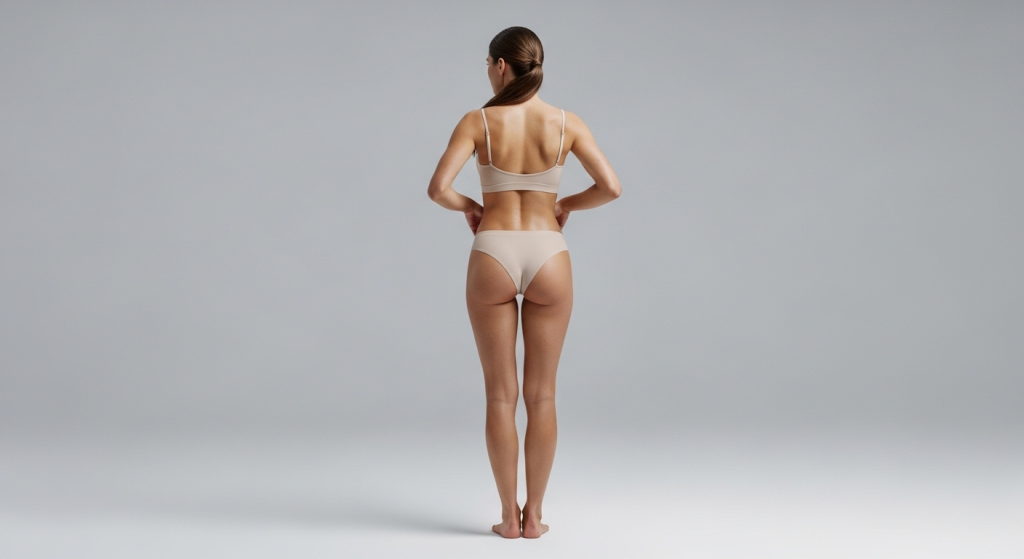
İçindekiler
What Causes the ‘Shelf’ Deformity After a BBL?
The “shelf” deformity is not a random outcome; it stems from specific anatomical and technical missteps during surgery. Here are the five primary causes:
1. Inadequate Fat Grafting in the Upper Buttock
The upper buttock—where the gluteus maximus meets the lower back—requires meticulous fat distribution. **Surgeons often underestimate the volume needed in this zone**, focusing instead on the central and lower buttock regions. This creates a stark drop-off, resulting in the “shelf” appearance. The solution? **Strategic layering of fat grafts** to ensure a gradual slope from the lower back to the buttock apex.
2. Poor Transition Zone Management
The transition zones—the areas where the buttock curves into the lower back and thighs—are the most vulnerable to deformities. **A lack of attention to these zones** leads to abrupt angles rather than smooth contours. Surgeons must **blend fat grafts seamlessly** into the sacral region and lateral thighs, avoiding overcorrection or undercorrection in these critical areas.
3. Over-Resection of Fat During Liposuction
Liposuction in the lower back and flanks is essential for enhancing the buttock’s projection. However, **aggressive fat removal** in these areas disrupts the natural flow between the back and buttocks. The result? A visible ledge where the buttock begins. **Moderation is key**: Surgeons must balance fat extraction with the need to maintain a fluid transition.
4. Incorrect Patient Positioning During Surgery
Patient positioning during fat transfer plays a pivotal role in achieving symmetry. **Operating with the patient in a prone (face-down) position** can distort the surgeon’s perception of the buttock’s natural shape. Instead, **intraoperative positioning adjustments**—such as lateral or semi-lateral views—help visualize the transition zones more accurately, reducing the risk of deformities.
5. Failure to Address Underlying Muscle Structure
The gluteal muscles provide the foundation for fat grafting. **Ignoring muscle tone and structure**—such as asymmetrical muscle insertion or weak upper gluteal fibers—can lead to uneven fat distribution. Preoperative assessments must include **muscle symmetry evaluations**, and surgical plans should account for these anatomical nuances.

How Surgeons Can Avoid the ‘Square Look’
Preventing the “shelf” deformity requires a combination of surgical precision, anatomical expertise, and artistic judgment. Here’s how top surgeons achieve flawless results:
1. Master the Art of Fat Layering
Fat grafting is not a one-layer process. **Surgeons must employ a multi-layered approach**, placing fat in the subcutaneous, intramuscular, and submuscular planes. This technique ensures a **gradual, three-dimensional contour** rather than a flat, square appearance. The upper buttock, in particular, demands **finer, more dispersed injections** to mimic natural fullness.
2. Prioritize Transition Zone Refinement
The sacral hollow and lateral thighs are the gatekeepers of a natural-looking BBL. **Surgeons must:
- Use **micro-fat grafts** to soften the edges of the upper buttock.
- Avoid over-suctioning the lower back to preserve a **smooth, downward slope**.
- Employ **radial expansion techniques** to blend fat into the surrounding tissues.
3. Utilize Dynamic Intraoperative Assessments
Static positioning leads to static results. **Surgeons should:
- Assess the buttock’s shape **from multiple angles**—prone, lateral, and standing positions.
- Use **3D imaging technology** to visualize fat distribution in real-time.
- Adjust fat placement **based on the patient’s natural posture and movement**.
4. Customize the Procedure to Muscle Anatomy
No two buttocks are identical. **A tailored approach involves:
- Evaluating **muscle insertion points** to determine optimal fat placement.
- Addressing **asymmetries** with targeted fat grafting or muscle sculpting.
- Using **ultrasound-guided techniques** to ensure fat is deposited in the correct planes.
5. Emphasize Postoperative Care and Monitoring
The surgery is only half the battle. **Postoperative protocols must include:
- **Compression garments** to support the new contours and reduce swelling.
- **Regular follow-ups** to assess fat survival and symmetry.
- **Patient education** on avoiding pressure on the buttocks for at least 8 weeks.

Patient Considerations: What You Need to Know
Patients play a crucial role in achieving optimal BBL results. **Here’s what you should do:
- **Choose a surgeon with a proven track record** in BBL procedures. Review before-and-after photos to assess their ability to create natural transitions.
- **Communicate your goals clearly**. Bring reference images to illustrate the shape and contour you desire.
- **Follow postoperative instructions diligently**. Avoid sitting directly on your buttocks, and wear compression garments as directed.
- **Attend all follow-up appointments**. This ensures any early signs of deformities are addressed promptly.
Revizyon Cerrahisi Ne Zaman Düşünülmelidir?
Despite best efforts, some patients may still develop a “shelf” deformity. **Revision surgery may be necessary if:
- The deformity is **visibly pronounced** and affects your confidence.
- Non-surgical treatments—such as **radiofrequency therapy or massage**—fail to improve the contour.
- Your surgeon identifies **technical issues** that can be corrected with a secondary procedure.
Revision BBLs focus on **redistributing fat, refining transition zones, and addressing scar tissue** to restore a natural shape. Always consult with a **board-certified plastic surgeon** to evaluate your options.
Final Thoughts: Achieving a Natural, Contoured BBL
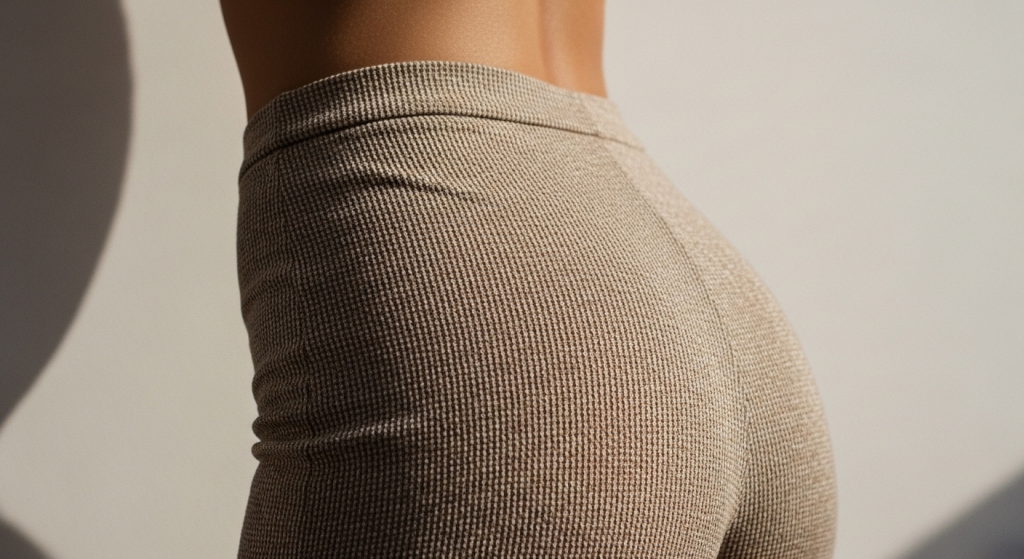
The “shelf” deformity is a preventable complication when surgeons and patients prioritize **anatomical precision, transition zone refinement, and postoperative care**. By understanding the causes and implementing the strategies outlined above, you can achieve a **smooth, natural-looking BBL** that enhances your silhouette without the square, unnatural appearance.
For those considering a BBL, **choose a surgeon who emphasizes artistry as much as technique**. For surgeons, **mastery of fat layering and dynamic assessments** is non-negotiable. Together, these principles ensure a result that is as beautiful as it is natural.
Frequently Asked Questions About BBL ‘Shelf’ Deformity
Can the ‘shelf’ deformity correct itself over time?
The ‘shelf’ deformity is primarily a structural issue caused by uneven fat distribution or over-resection. While **swelling may subside and contours may soften slightly**, the deformity typically requires **surgical revision** for significant improvement. Non-surgical treatments like massage or radiofrequency can offer minor enhancements but are unlikely to resolve the issue entirely.
How soon after a BBL can I tell if I have a ‘shelf’ deformity?
Most patients can assess their initial results **within 3 months**, once the majority of swelling has subsided. However, **final contours may take up to 6-12 months** to fully settle. If you notice a sharp transition or unnatural ledge during this period, consult your surgeon to discuss potential revisions or corrective measures.
Is the ‘shelf’ deformity more common with certain body types?
Yes, patients with **a pronounced lower back curve or minimal natural fat in the upper buttock region** are more susceptible to developing a ‘shelf’ deformity. Additionally, those with **asymmetrical muscle structure or significant weight fluctuations** may experience uneven fat survival, exacerbating the issue. A thorough preoperative assessment helps identify these risks.
What are the risks of revision surgery for a ‘shelf’ deformity?
Revision BBLs carry similar risks to the primary procedure, including **infection, fat embolism, and asymmetry**. However, the **complexity increases** due to scar tissue and altered anatomy. Choosing a **highly experienced surgeon** who specializes in revisions minimizes these risks and improves the likelihood of a successful outcome.
Can non-surgical treatments improve a ‘shelf’ deformity?
Non-surgical options like **radiofrequency therapy, laser treatments, and specialized massage** can help **soften edges and improve skin elasticity**, but they **cannot fully correct** a structural deformity. These treatments are best used as **complementary therapies** alongside surgical revisions or for patients with mild irregularities.
For more information on body contouring procedures and recovery, explore our resources on Brezilya Popo Kaldırma, 360 Liposuction, and Sırt Kaldırma procedures. If you’re ready to discuss your options, contact us to schedule a consultation with our expert team.


 Turkish
  English
  German
  Russian
  Arabic
  Spanish
  Italian