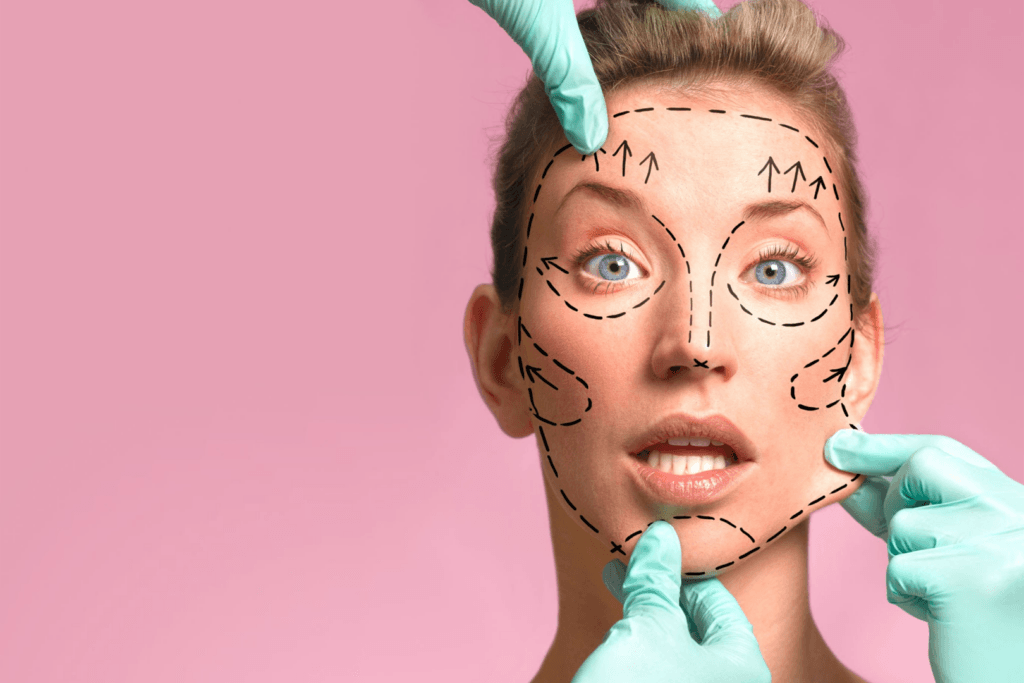
The image you see reflected in your social media feed is often a mathematical impossibility. Thousands of individuals scroll through meticulously edited photos, convinced that a simple stitch can transform their facial geometry into a permanent upward sweep. This cultural obsession has fueled the rise of cat eye surgery, yet a dangerous gap exists between viral trends and surgical reality. Many patients walk into consultations asking for a “look” without realizing that the procedures required to achieve it—canthopexy and canthoplasty—operate on entirely different biological levels. One stabilizes what you have, while the other reconstructs the very foundation of your gaze.
Understanding the paradox of cat eye surgery means looking beyond the skin. It involves a sophisticated grasp of the lateral canthus, the delicate junction where your upper and lower eyelids meet. At SurgyTeam, we encounter hundreds of patients who have been misled by temporary “thread lifts” that fail within weeks or generalist surgeons who treat every eye with a one-size-fits-all approach. This guide serves as the definitive blueprint for anyone seeking a more tilted, almond-shaped aesthetic while prioritizing ocular health and long-term structural integrity. You will discover why the distinction between stabilization and reconstruction changes everything about your surgical outcome.
Table of Contents
The Functional Foundation: Almond Eye Surgery and Ocular Safety
The pursuit of the perfect almond eye surgery outcome is not merely about pulling the skin upward. The human eyelid is a complex mechanical structure responsible for protecting the cornea and ensuring the tear film remains stable. When we discuss a cat eye surgery, we are effectively talking about altering the canthal tilt—the angle between the inner and outer corners of the eye. A “positive” canthal tilt, where the outer corner is slightly higher than the inner corner, is universally associated with youth and alertness. Conversely, a “negative” tilt can create a look of perpetual fatigue or sadness.
True surgical excellence requires balancing these aesthetic desires with ocular safety. If a surgeon over-tightens the lateral canthus without respecting the natural curvature of the eyeball, the result is not a beautiful cat-like sweep; it is a condition called ectropion, where the lid pulls away from the eye. This leads to chronic dryness, irritation, and potential vision loss. This is why our team of EBOPRAS-certified specialists at SurgyTeam rejects aggressive, trend-driven techniques in favor of anatomical precision. Every millimetre of elevation must be supported by the underlying tarsal plate and orbital rim to ensure the eye remains functional and protected.
Furthermore, the skin of the eyelid is the thinnest on the human body. It lacks the robust connective tissue found elsewhere, meaning it cannot bear the weight of a heavy lift on its own. The “paradox” lies in the fact that to create a look that appears light and lifted, the surgeon must perform work that is deep and structurally sound. Whether we are refining a cat eye surgery through stabilization or reconstruction, the goal is always a result that looks natural even when the face is in motion, avoiding the “startled” look often seen in less experienced hands.

Canthopexy: The Subtle Strength of Canthal Tilt Stabilization
When patients present with a relatively healthy eye structure but desire a slight aesthetic enhancement or wish to prevent age-related sagging, canthopexy is the preferred route. This technique is often described as a “stabilization” procedure. Unlike more invasive methods, canthopexy does not involve cutting or detaching the lateral canthal tendon. Instead, it uses deep, permanent sutures to reinforce the existing tendon and anchor it more firmly to the periosteum—the tough membrane covering the orbital bone.
The beauty of canthopexy within the realm of cat eye surgery is its subtlety. It provides just enough support to tilt the eye upward without fundamentally altering the eye’s shape or size. It is an excellent choice for younger patients who have “heavy” lower lids or those undergoing a lower blepharoplasty who want to ensure their lids don’t sag during the healing process. Because the tendon remains intact, the recovery is generally faster, and the risk of changing the eye’s expression too drastically is minimized.
However, canthopexy has its limitations. It cannot correct a significant negative canthal tilt or fix a tendon that has become severely stretched over time. It is a refinement tool, not a reconstruction tool. At SurgyTeam, we utilize canthopexy as a preventative and subtle enhancing measure, ensuring that the lateral corner remains crisp and youthful. It is the surgical equivalent of reinforcing a bridge’s cables rather than rebuilding the entire span. For patients seeking a dramatic “fox-like” transformation, this technique may not provide sufficient lift on its own.
Canthoplasty: The Bold Path of Eyelid Reconstruction
For those who require a more transformative change, canthoplasty is the gold standard. This is a true eyelid reconstruction. In this procedure, the lateral canthal tendon is actually detached from the bone. The surgeon then trims a small portion of the tendon or the lower lid itself to create tension before re-anchoring it at a higher, more aesthetically pleasing position on the orbital rim. This is the heavy lifting of cat eye surgery.
Canthoplasty is frequently necessary for patients with significant lower lid laxity, a condition where the lid droops and exposes too much of the white of the eye (scleral show). By repositioning the tendon, we can physically shorten the lid and change the shape of the eye opening from a rounder, tired appearance to a sleek, almond-shaped profile. This procedure is common in revision cases where a previous surgery has left the patient with a distorted eye shape. It requires a surgeon with an intimate knowledge of facial anatomy, as moving the tendon even a millimeter too high or too low can result in asymmetry that is difficult to correct.
While the word “reconstruction” might sound intimidating, the results of a well-performed canthoplasty are often the most satisfying for those seeking the cat eye look. It addresses the root cause of the sag rather than just pulling at the skin. At SurgyTeam, our surgeons perform this with microscopic precision, ensuring that the new anchor point is secure and that the tension is balanced perfectly across the entire eyelid structure. This is structural engineering applied to beauty.
Comparing Techniques: Choosing Your Surgical Path
Choosing between these two methods depends entirely on your unique anatomy, the quality of your skin, and the strength of your existing tendons. A patient in their 20s with firm skin but a desire for a sharper tilt is a very different candidate than a patient in their 50s whose lower lids have lost their elasticity. Below is a breakdown of how these techniques differ in practice and outcome.
| Feature | Canthopexy (Stabilization) | Canthoplasty (Reconstruction) |
|---|---|---|
| Tendon Status | Left intact and reinforced | Detached and repositioned |
| Primary Aesthetic Goal | Subtle lift and prevention | Dramatic shape change and tightening |
| Incision Location | Small, usually within lid crease | Slightly larger, at the outer corner |
| Recovery Period | 5 to 7 days for initial healing | 10 to 14 days for initial healing |
| Best For | Younger patients with mild laxity | Correction of droop or major tilt change |
| Ocular Safety Benefit | Maintains current lid position | Reduces scleral show and improves seal |
This comparison highlights why an expert consultation is mandatory. You cannot simply “order” a canthopexy because you want a faster recovery; if your tendons are lax, canthopexy will fail, and your cat eye surgery results will vanish within months. Conversely, performing a canthoplasty on someone who only needs a “pexy” is unnecessarily invasive. We believe in the right tool for the right anatomy, always aiming for the least invasive method that will yield a permanent, safe result.
Navigating Aesthetic Surgical Standards in a Trend-Driven Market
The global demand for cat eye surgery has unfortunately led to a “conveyor belt” mentality in some medical tourism hubs. Clinics often promise a generic “Instagram look” without explaining the risks of mid-face instability or the eventual failure of non-surgical thread lifts. True aesthetic surgical standards demand a more rigorous approach. In Turkey, and specifically at SurgyTeam, we adhere to European standards of plastic surgery, where the surgeon’s primary duty is the preservation of tissue and the restoration of harmony.
One of the most critical aspects of our standard is the multi-specialist approach. When you come to us for eyelid aesthetics, your case is not handled by a generalist. We utilize surgeons who have spent decades focusing on the periorbital region. They understand that the “cat eye” look is often influenced by the brow and the temple as much as the eyelid. Sometimes, the best results are achieved by combining a canthoplasty with a temporal lift to provide a cohesive, upward flow to the entire upper face. This comprehensive view is what separates a “procedure” from a “transformation.”
Moreover, we emphasize the importance of “over-correction” management. During the first few days after a cat eye surgery, the eyes often look more tilted than they will ultimately appear. A skilled surgeon knows exactly how much the tissue will relax and anchors the tendon accordingly. If the eye looks “perfect” on the operating table, it will likely look “under-corrected” three months later. If it looks slightly exaggerated initially, it will settle into a beautiful, natural almond shape as the swelling subsides. This foresight is the hallmark of an elite aesthetic team.
The Long-Term Vision: Maintaining Ocular Safety and Shape
What happens five or ten years after your cat eye surgery? This is the question most clinics avoid. The aging process does not stop just because you’ve had surgery. However, by choosing a structural procedure like canthoplasty over a superficial lift, you are investing in a result that will age gracefully with you. When the lateral canthus is properly anchored to the bone, it provides a stable framework that resists the downward pull of gravity more effectively than natural tissue alone.
Ocular safety remains the priority throughout the patient’s life. We educate our patients on the importance of maintaining the health of the skin around the eyes post-surgery. Proper hydration, sun protection, and avoiding smoking are essential to preserving the elasticity of the remaining lid tissue. If the skin becomes too damaged by the sun, it can lose its ability to support the underlying surgical work, leading to premature softening of the almond shape. We provide our patients with detailed long-term care plans to ensure their investment remains as striking as it was on day one.
Additionally, we monitor for any signs of “dry eye syndrome” post-operatively. While some dryness is common in the first few weeks, it should not persist. By ensuring the eyelid maintains a perfect seal against the eyeball, our surgical techniques actually prevent the long-term ocular issues associated with loose, sagging lids. In many cases, our patients find that their eyes feel more comfortable after cat eye surgery because the lid is finally providing the protection it was designed to give.
The SurgyTeam Approach to Eyelid Aesthetics
At SurgyTeam, we reject the “cookie-cutter” approach that has become prevalent in international medical tourism. We recognize that every face tells a different story and every eye has a different structural limit. Our philosophy is rooted in “bespoke planning.” Before a single incision is made, our surgeons utilize high-definition photography and digital mapping to analyze the symmetry and tilt of your eyes. This allows us to predict how different techniques will affect your overall facial harmony.
Our team is composed of specialists who hold FEBOPRAS and EBOPRAS certifications, the highest distinctions in European plastic surgery. This means that when you are on our table, you are being cared for by someone whose skills have been vetted by the most rigorous medical boards in the world. We don’t just aim for a “cat eye”; we aim for a “SurgyTeam eye”—one that is vibrant, healthy, and structurally sound. Our clinic in Antalya provides a luxury environment where your recovery is supported by a multi-language team dedicated to your comfort and safety.
The demand for our specialized eyelid aesthetics team is exceptionally high, as patients from the UK, Germany, and the Middle East seek out the precision that only specialized niche surgeons can provide. We limit the number of surgeries we perform each day to ensure that every patient receives the undivided attention of our lead specialists. This is not a factory; it is a center of surgical excellence where your cat eye surgery is treated with the gravity and artistry it deserves.
The Patient Journey: Your Step-by-Step Transformation
Embarking on a surgical journey requires clear expectations. At SurgyTeam, we have refined the process into five distinct stages designed to maximize results and minimize anxiety. From the moment you contact us to the final reveal of your new look, every step is calculated for your success.
- Anatomical Digital Assessment: We begin with a remote or in-person analysis of your canthal tilt, lid laxity, and bone structure. We don’t just look at the eyes; we look at the mid-face and brow position.
- Customized Surgical Blueprint: Your surgeon decides between canthopexy and canthoplasty based on the “snap test”—a measure of how quickly your lid returns to position—and your aesthetic goals.
- Micro-Precision Surgery: Performed under local or general anesthesia, the surgery typically takes 60 to 90 minutes. We use microscopic sutures that minimize scarring and promote rapid healing.
- Controlled Recovery Phase: You will spend the first 24 hours under our observation. We use specialized cooling masks to reduce swelling and provide a bespoke cocktail of medications to manage any discomfort.
- Final Stabilization: Over the next 3 to 6 months, the internal tissues heal and the tendon settles into its new position. We conduct regular follow-ups via video call or in person to monitor your progress.
This structured approach ensures that no detail is overlooked. By the time you return home, you won’t just have a new look; you will have the confidence that your cat eye surgery was performed to the highest global standards. Our goal is to make the process as seamless as the results themselves.
Your Path to a Refined Gaze Starts Here
The “paradox” of the cat eye is that it looks effortless, yet it requires the most sophisticated surgical skill to achieve safely. Don’t leave your vision and your face to chance or social media trends. Whether you need the subtle stabilization of canthopexy or the transformative reconstruction of canthoplasty, our team is ready to provide an anatomical assessment that respects your unique beauty.
Slots for our specialized periorbital surgery team fill up months in advance due to our commitment to personalized care. If you are ready to move beyond filters and achieve a permanent, safe, and striking almond shape, the time to act is now. Take the first step toward your transformation today.
Secure your personalized anatomical assessment with SurgyTeam today.
Frequently Asked Questions About Cat Eye Surgery
What is the main difference between canthopexy and canthoplasty?
Canthopexy is a stabilization technique that reinforces the lateral canthal tendon with sutures without cutting it, ideal for mild sagging. Canthoplasty is a reconstructive procedure where the tendon is detached and repositioned to significantly change the eye shape and tilt. Your surgeon will choose the method based on your lid laxity and aesthetic goals.
Is cat eye surgery permanent?
Yes, the results of cat eye surgery are considered permanent because the tendon is either reinforced or re-anchored to the bone. While your face will continue to age, the structural changes made during the procedure provide a long-lasting lift that resists gravity much better than non-surgical alternatives like thread lifts.
How long is the recovery for cat eye surgery?
Initial healing typically takes 7 to 14 days. During the first week, patients experience some swelling and bruising around the corners of the eyes. Most people can return to work and social activities after 10 days, though the final results and the ‘settling’ of the tissue take about 3 to 6 months.
Can cat eye surgery affect my vision?
When performed by an EBOPRAS-certified specialist, the risk to vision is extremely low. In fact, by correcting lid laxity, cat eye surgery can often improve ocular comfort by reducing dryness. However, choosing an inexperienced surgeon can lead to lid malposition, which may cause chronic irritation and secondary vision issues.
Why should I choose Turkey for cat eye surgery?
Turkey, particularly clinics like SurgyTeam in Antalya, offers a combination of world-class surgical expertise and state-of-the-art facilities. Our surgeons are internationally board-certified and specialize in niche procedures. Additionally, our all-inclusive packages provide a luxury recovery experience that is often more comprehensive and affordable than options in Western Europe or the US.
Are the scars from the procedure visible?
The incisions for cat eye surgery are strategically placed in the natural creases of the eyelid or at the outer corner of the eye. With proper technique and post-operative care, these scars become virtually invisible within a few months, blending seamlessly into the skin’s natural texture.