

Noticing a tummy tuck bulge after surgery can be alarming, especially when you expected a flat, toned stomach. But here’s the truth: **this is completely normal** in the early stages of recovery. Whether it’s residual edema, a temporary ورم مصلي, or lingering visceral fat, most post-op bulges resolve within **6–12 months**—as long as you know what to look for and how to support your healing. This guide explains why your stomach isn’t flat yet, how to distinguish normal swelling from red flags, and actionable steps to ensure smooth, long-lasting results from your عملية شد البطن.
If you’re frustrated by a persistent bulge after your procedure, you’re not alone. Many patients mistake post-surgical edema or fluid buildup for failed results. By understanding the **three phases of tummy tuck recovery**—and the role of visceral fat, muscle repair, and proper compression—you’ll gain clarity on your body’s timeline and learn when to seek help. Let’s break down the science behind the bulge and how to optimize your healing journey.
جدول المحتويات
Why Your Stomach Isn’t Flat After a Tummy Tuck: 5 Common Causes
أ tummy tuck bulge after surgery is rarely a sign of a botched procedure. Instead, it’s usually a normal part of the healing process. Here are the most common reasons your abdomen may still appear rounded or uneven:
1. Post-Surgical Edema (Swelling)
Edema is the body’s natural response to trauma, including the incisions and muscle repairs from your عملية شد البطن. This swelling can:
- Peak at **3–5 days** post-op, then gradually subside over **3–6 months**.
- Cause a “hard” or “full” feeling in the lower abdomen, especially when standing.
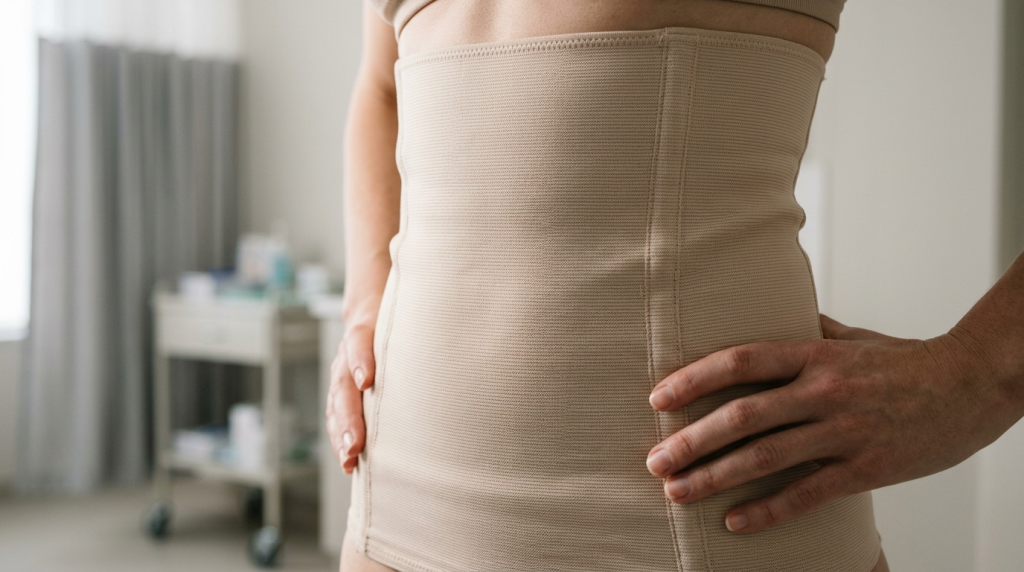
- Be managed with **compression garments**, lymphatic drainage massages, and elevated rest.
Pro tip: Swelling is often worse in the **morning** and improves throughout the day as fluid redistributes. This is normal!
2. Seroma (Fluid Buildup)
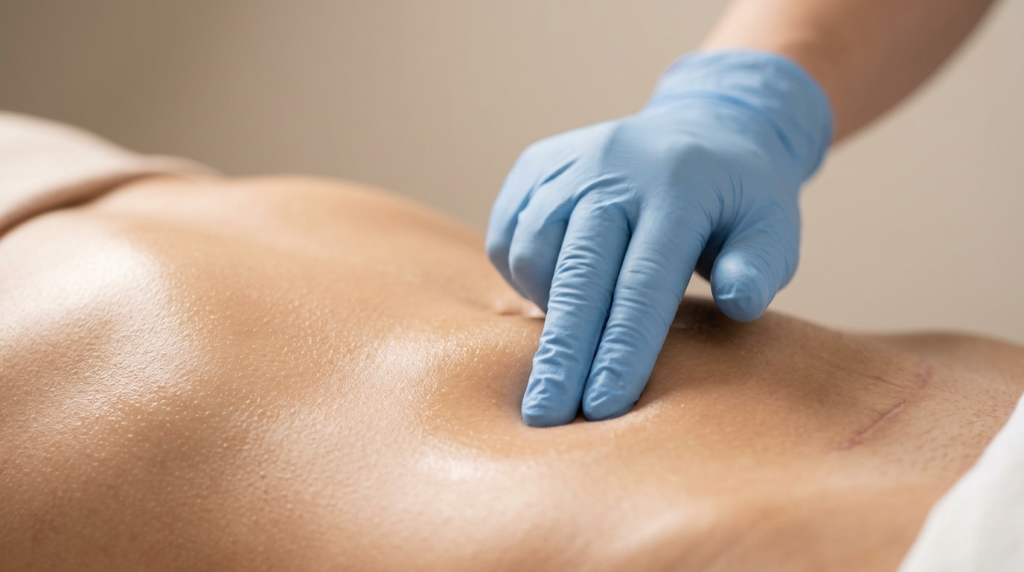
أ ورم مصلي is a pocket of clear fluid that can accumulate under the skin after surgery. It’s a common side effect of عملية شد البطن and typically:
- Feels like a **squishy, movable lump** (not hard or painful).
- Occurs in **10–30% of patients**, usually within the first **2–4 weeks**.
- Often resolves on its own or with **drainage by your surgeon**.
Red flag: If the area becomes **red, hot, or painful**, it may indicate an infection—contact your surgeon immediately.
3. Visceral Fat (Internal Fat)
أ شد البطن removes **subcutaneous fat** (the layer under the skin) but does **not** eliminate visceral fat (the fat around your organs). If your bulge is:
- Softer and **more noticeable when sitting**, it may be visceral fat.
- Unchanged after **6+ months**, diet and exercise (especially core-strengthening) can help.
- Accompanied by **poor posture**, physical therapy may be needed to retrain your core muscles.
4. Muscle Repair and Tightening
During an عملية شد البطن, your surgeon repairs separated abdominal muscles (a condition called **diastasis recti**). This repair can cause:
- A **tight, pulled sensation** as muscles heal in their new position.
- Temporary **bulging above the incision** (from internal swelling or muscle spasms).
- Improvement over **3–6 months** as the muscles adapt and strengthen.
5. Scar Tissue Formation
As your body heals, it forms **internal scar tissue** (adhesions) that can create:
- A **firm ridge** along the incision line (usually temporary).
- Discomfort when **bending or stretching**, which improves with time and gentle massage.
- Long-term smoothing with **silicone sheets or gels** (recommended by your surgeon).
| Cause | Timing | What It Feels Like | Solution |
|---|---|---|---|
| Edema | Peaks at 3–5 days; resolves in 3–6 months | Hard, full lower abdomen; worse in the morning | Compression garments, lymphatic drainage, elevation |
| ورم مصلي | First 2–4 weeks | Squishy, movable lump; not painful | Drainage by surgeon if persistent |
| Visceral Fat | Ongoing (if present pre-surgery) | Soft bulge, noticeable when sitting | Diet, exercise, posture training |
| إصلاح العضلات | 3–6 months | Tight, pulled sensation; bulging above incision | Time, core exercises (after clearance) |
| Scar Tissue | 2–12 months | Firm ridge along incision; discomfort with movement | Silicone sheets, massage, physical therapy |
Normal vs. Abnormal: When to Worry About a Tummy Tuck Bulge
While most tummy tuck bulge after surgery is temporary, some symptoms warrant a call to your surgeon. Use this checklist to assess your situation:
✅ Normal (No Action Needed)
- Bulge is **symmetrical** and softens when lying down.
- Swelling **fluctuates** (better by evening, worse in the morning).
- No **redness, heat, or foul odor** from the incision.
- Discomfort is **mild and improves** with rest or compression.
⚠️ Monitor Closely (Call If Worsens)
- Bulge is **hard or growing** after 4 weeks.
- Pain is **sharp or localized** (not general soreness).
- Incision shows signs of **separation or unusual discharge**.
- You develop a **fever or chills**.
❌ Red Flags (Contact Your Surgeon Immediately)
- Sudden **severe pain or swelling** on one side.
- Incision **bleeding or oozing pus**.
- Leg swelling or **shortness of breath** (could indicate a blood clot).
- Signs of **infection** (red streaks, foul smell, high fever).
The 6-Month Rule: What to Expect in Your Recovery Timeline
Understanding the **tummy tuck recovery timeline** can ease frustration over a tummy tuck bulge after surgery. Here’s what to expect month by month:
Months 1–2: The Swelling Phase
Your body is in **high-healing mode**. Expect:
- Edema makes your abdomen feel hard and full.
- You may look **more swollen than before surgery**—this is normal!
- Wear your **compression garment 24/7** (except when showering).
- Walk gently to **promote circulation** and reduce fluid buildup.
Months 3–4: The Transition Phase
Swelling starts to subside, but you may notice:
- A **”shelf” appearance** where the incision meets the pubic area (this smooths out).
- Numbness or **tingling** as nerves regenerate.
- Your surgeon may recommend **lymphatic drainage massages** to speed healing.
Months 5–6: The Refinement Phase
By now, **80% of swelling** should be gone. You’ll see:
- A **flatter, more defined waistline**.
- Improved **posture and core strength** (if you’ve been doing approved exercises).
- Residual **minor bulges** (if any) are likely visceral fat or scar tissue.
Months 7–12: The Final Results
This is when you’ll see your **true outcome**:
- Your stomach should be **smooth and contoured**.
- Any remaining bulges are likely **pre-existing visceral fat** (addressable with diet/exercise).
- Scars and internal adhesions continue to soften.

How to Reduce a Tummy Tuck Bulge: 7 Proven Strategies
If you’re eager to minimize a tummy tuck bulge after surgery, these evidence-based strategies can help speed your recovery:
1. Wear Your Compression Garment Religiously
Your garment:
- Reduces edema by **30–50%** when worn consistently.
- Supports repaired muscles and **prevents fluid buildup**.
- Should be worn **24/7 for at least 6 weeks** (or as directed).
2. Prioritize Lymphatic Drainage
Manual lymphatic drainage (MLD) massages:
- Help move excess fluid away from the surgical site.
- Can be done by a **certified therapist** or gently at home (ask your surgeon for guidance).
- Are most effective when started **2–3 weeks post-op**.
3. Stay Hydrated and Eat Clean
Nutrition impacts healing:
- **Hydration** (2–3L water/day) flushes toxins and reduces edema.
- **Anti-inflammatory foods** (berries, leafy greens, omega-3s) minimize swelling.
- **Low-sodium diet** prevents fluid retention.
4. Move Gently but Consistently
Walking:
- Improves circulation and **reduces seroma risk**.
- Should start **the day after surgery** (short, slow walks).
- Avoids **strenuous activity** until cleared by your surgeon (usually 6–8 weeks).
5. Address Visceral Fat with Core Work
If your bulge is visceral fat:
- Start **pelvic tilts and gentle core exercises** at 6–8 weeks post-op.
- Progress to **planks and leg lifts** after 12 weeks (with surgeon approval).
- Combine with **cardio** (walking, swimming) to burn internal fat.
6. Use Silicone Sheets for Scar Management
Silicone sheets:
- Reduce **scar tissue thickness** by up to 60%.
- Should be worn **12+ hours/day** for 2–3 months.
- Can be combined with **scar massage** (after incisions are fully closed).
7. Consider Revision Surgery (Last Resort)
If after **12 months** you still have:
- A **persistent, asymmetrical bulge**.
- Loose skin or **muscle separation** that wasn’t fully corrected.
- Consult your surgeon about a **mini-revision** (often less invasive than the original عملية شد البطن).

Real Patient Stories: Overcoming Tummy Tuck Bulges
Hearing from others who’ve faced a tummy tuck bulge after surgery can provide reassurance and practical tips:
Anna, 38 (6 Months Post-Op)
“I panicked at 8 weeks when my stomach still looked pregnant! My surgeon explained it was edema and scar tissue. By month 5, the bulge was 90% gone—I just needed patience and my compression garment. Now, I’m thrilled with my flat tummy!”
Mark, 45 (1 Year Post-Op)
“I had a ورم مصلي at 3 weeks that my surgeon drained in-office. It was painless and resolved quickly. The key was following up early instead of waiting. My advice? **Trust the process**—your body knows how to heal!”
Lisa, 32 (3 Months Post-Op)
“I didn’t realize how much visceral fat I had until after my عملية شد البطن. My surgeon said no procedure removes that—it’s about diet and exercise. I’ve been doing pilates and seeing a huge difference in my waistline!”

Frequently Asked Questions About Tummy Tuck Bulges
When will the swelling go down after a tummy tuck?
Most swelling resolves by **3–6 months**, but subtle changes can continue for up to a year. The first 6 weeks see the most dramatic reduction in edema.
Is it a seroma or just swelling?
أ ورم مصلي feels like a **squishy, fluid-filled lump** that may shift when pressed, while general swelling (edema) is more diffuse and firm. If you’re unsure, your surgeon can perform an ultrasound.
Can a tummy tuck bulge be fixed without revision surgery?
Yes! Most bulges improve with **time, compression, lymphatic drainage, and core exercises**. Revision is only needed if there’s a structural issue (e.g., muscle separation) or persistent asymmetry after 12 months.
Why does my stomach look worse after a tummy tuck?
This is often due to **post-surgical swelling** and your body’s healing response. The “worse before better” phase typically peaks at **2–3 weeks** and improves steadily after that.
How can I tell if my bulge is visceral fat or swelling?
Visceral fat is soft, jiggly, and more noticeable when sitting, while edema feels hard and may indent when pressed. Swelling also fluctuates (better by evening), whereas visceral fat stays consistent.
Trust the Process: Your Flat Stomach Is Coming
أ tummy tuck bulge after surgery is a normal—and temporary—part of the healing journey. By understanding the causes (like edema, ورم مصلي, or visceral fat) and following your surgeon’s guidance, you’ll see your stomach flatten and contour over **6–12 months**. Remember: Your body is still healing, even when progress feels slow.
For personalized advice or to discuss your recovery, schedule a follow-up consultation with our team. We’re here to support you every step of the way toward the smooth, toned results you deserve.
 Arabic
  English
  German
  Russian
  Turkish
  Spanish
  Italian