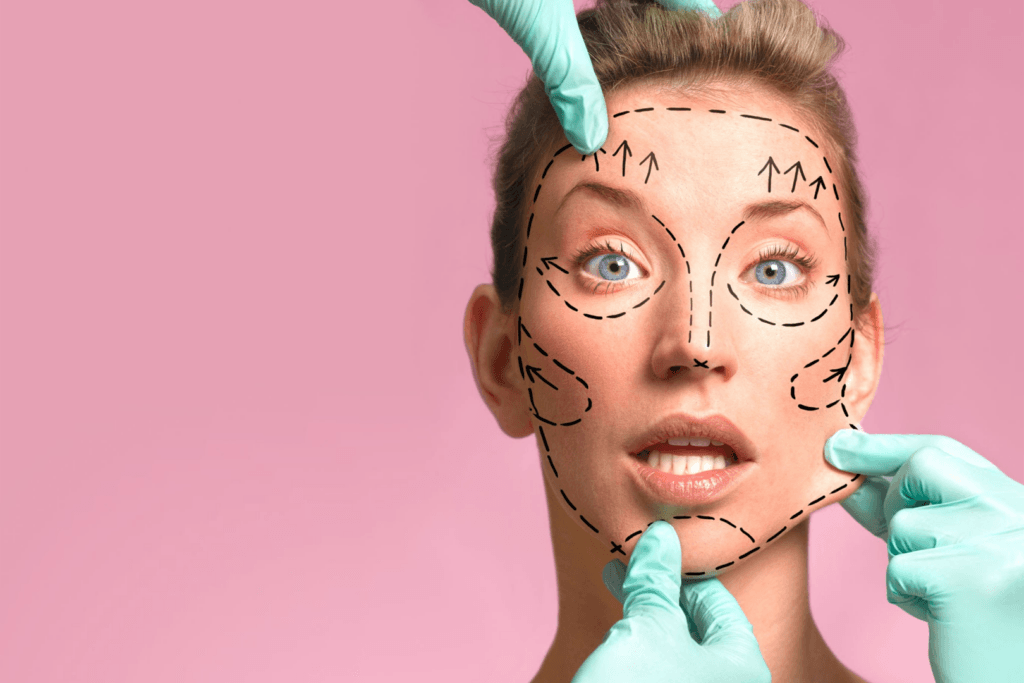
¿Cuánto extra pagarías para corregir un párpado caído o una mejilla más plana? Si tu cirujano te cotizó dos procedimientos separados — uno para el lado izquierdo, otro para el derecho — acabas de encontrarte con el ‘impuesto de asimetría’.’ Este recargo oculto inflaciona tu factura al tratar cada mitad de tu rostro como un proyecto independiente, aunque compartan la misma estructura ósea, la misma envoltura de tejido blando y el mismo campo quirúrgico.
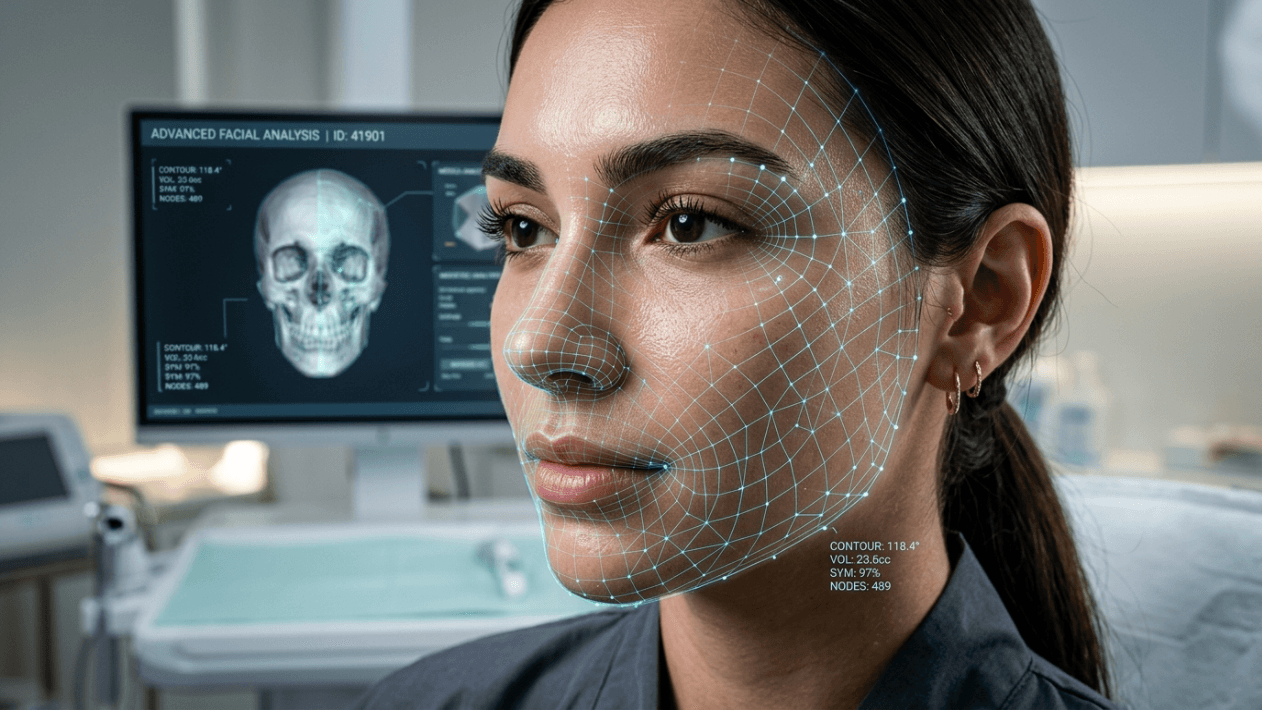
Costo de corrección de asimetría facial plaga a pacientes en todo el mundo porque la mayoría de las clínicas fijan precios por procedimiento, no por problema. Cuando la asimetría facial izquierda-derecha requiere ajustes diferentes en cada lado, los cirujanos tienden a facturar dos operaciones distintas. El conjunto de fotogrametría 3D de grado hospitalario y escáner CBCT de Antalya desmantela esta trampa de precios al mapear ambas mitades en una sola exploración, simular correcciones digitalmente y ejecutar un plan de corrección facial unificado — al costo de un procedimiento, no dos.

Tabla de contenido
¿Qué es el ‘impuesto de asimetría’ y por qué triplica tu factura?
Su rostro no es simétrico. Ningún rostro humano lo es. La evolución construyó la simetría bilateral como una plantilla aproximada, no como una garantía. Las mitades izquierda y derecha de cada cráneo difieren por milímetros — a veces por centímetros. La mayoría de la gente nunca nota sus propias discrepancias hasta que un cirujano se las señala durante una consulta.
Aquí es donde comienza el problema de facturación. Las estructuras de precios quirúrgicos tradicionales tratan cada corrección anatómica como un evento independiente. Un paciente con asimetría facial izquierda-derecha — una ceja 3 mm más baja, una mejilla que proyecta 4 mm menos — recibe una cotización para dos procedimientos. La lógica parece razonable al principio: cada lado requiere maniobras quirúrgicas diferentes, por lo que cada lado merece su propio código de procedimiento.
En realidad, el cirujano opera ambos lados durante la misma sesión, en la misma sala de operaciones, bajo la misma anestesia. Lo único que se duplicó fue su factura. Precios de cirugía facial bilateral exploita una laguna semántica — etiquetando una cirugía coordinada como dos procedimientos separados.
La anatomía del sobrecargo
- Códigos de Procedimiento Dual: Las clínicas asignan un código CPT a la corrección del lado izquierdo y un segundo código a la corrección del lado derecho, aunque ambos ocurren consecutivamente.
- Tarifas de Instalación Duplicadas: El tiempo de quirófano, la anestesia y los costos de enfermería se aplican dos veces a pesar de ocurrir en una sola sesión quirúrgica.
- Riesgo de Revisión Inflado: Sin simulación quirúrgica 3D, los cirujanos estiman los ajustes intraoperatoriamente, aumentando la probabilidad de que un lado sane imperfectamente — lo que genera una factura de revisión.
Los pacientes aceptan esto porque asumen que el precio refleja una complejidad añadida real. En algunos casos es así. Sin embargo, cuando el cirujano corrige ambos lados simultáneamente usando estimación visual en lugar de precisión digital, la ‘complejidad extra’ a menudo proviene de la ausencia de un plano preoperatorio, no de una verdadera dificultad quirúrgica.

Cómo la cirugía facial con fotogrametría 3D elimina el mito de los dos procedimientos
La fotogrametría tridimensional captura cientos de puntos de referencia faciales desde múltiples ángulos y los reconstruye en un gemelo digital medible de su rostro. Combinada con la tomografía computarizada de haz cónico, que reproduce la arquitectura ósea con resolución submilimétrica, esta tecnología reemplaza la ‘estimación a ojo’ del cirujano con certeza matemática.
Cuando un cirujano visualiza un modelo 3D de un rostro asimétrico, las discrepancias entre izquierda y derecha se convierten en puntos de datos cuantificables, no en impresiones subjetivas. Un déficit de elevación de ceja de 2,7 mm en la izquierda. Un déficit de proyección malar de 3,1 mm en la derecha. Estos números se incorporan directamente a simulación quirúrgica CBCT software, que mapea los movimientos exactos, injertos o remodelado óseo que cada lado requiere — dentro de un mapa quirúrgico unificado.
De dos cotizaciones a un plan
El cambio de facturación bilateral a una plan de corrección facial unificado se basa en un principio simple: un paciente, un problema, un plan. Cuando el software calcula cómo un ajuste óseo del lado izquierdo afecta el drapeado de tejido blando del lado derecho, el cirujano puede secuenciar las correcciones estratégicamente en lugar de tratar cada lado como un evento aislado.
- Escaneo preoperatorio único: Una sesión de fotogrametría y una captura de CBCT de ambas mitades simultáneamente.
- Simulación quirúrgica unificada: El software modela las correcciones izquierda y derecha juntas, revelando cómo los ajustes en un lado influyen en el otro.
- Ejecución coordinada: El cirujano sigue un plano digital en lugar de estimar a mitad de la cirugía, reduciendo el tiempo operatorio y el error.
Este enfoque no solo reduce costos. Produce resultados superiores porque el cirujano manipula ambos lados con conciencia de cómo interactúan. A rinoplastia que endereza un puente desviado, por ejemplo, cambia el ancho aparente de cada órbita. Un cirujano que usa datos 3D anticipa este efecto dominó y ajusta las estructuras circundantes en consecuencia.
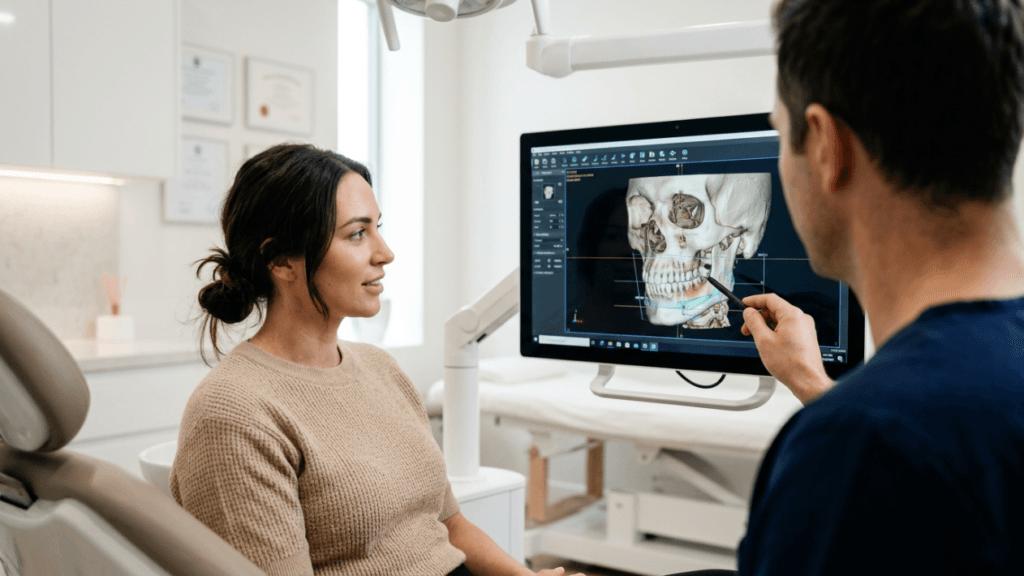
Simulación quirúrgica CBCT: mapeo de precisión que los cirujanos no pueden ver a simple vista
La tomografía computarizada de haz cónico ofrece lo que ninguna fotografía de espejo puede: la verdad bajo la piel. La asimetría facial visible se origina en el hueso. El arco cigomático de un lado se sitúa 4 mm más posteriormente. El suelo orbital se hunde 2 mm más a la izquierda. La inclinación maxilar inclina toda la mitad media de la cara fuera del eje en 3 grados.
Los cirujanos que se basan en la evaluación visual pasan por alto estas asimetrías esqueléticas o las subestiman. Abordan los síntomas de tejido blando — un párpado caído, una mejilla hundida — sin corregir la base ósea que los causó. ¿El resultado? Mejora visual temporal seguida de recaída a medida que el tejido blando se asienta nuevamente en su contorno óseo original.
La simulación quirúrgica con CBCT elimina por completo la conjetura. El cirujano importa la exploración al software de planificación, segmenta el hueso y reposiciona virtualmente cada segmento hasta que la simetría alcance el umbral objetivo. El software genera entonces guías de corte, férulas de reposicionamiento y datos de dimensionado de implantes, todo calibrado a la anatomía exacta del paciente.
Por qué la mayoría de las clínicas omiten la planificación CBCT
Costo y acceso. Una unidad de CBCT de nivel hospitalario cuesta entre $150,000 y $350,000. Los sistemas de fotogrametría añaden entre $80,000 y $200,000. Las clínicas estéticas independientes — del tipo que dominan el turismo médico — rara vez poseen este equipo. Refieren a los pacientes a centros de imagen externos, lo que añade retrasos, gastos y pérdida de coordinación. O omiten la planificación 3D por completo y dependen del juicio intraoperatorio.
Aquí es donde el modelo de hospitales asociados en Antalya cambia la ecuación. Planificación quirúrgica facial 3D en Antalya se beneficia de una suite de imágenes interna dentro del hospital donde se realiza la cirugía. El escáner CBCT está en el mismo edificio que el quirófano. La captura de fotogrametría se realiza a pocos pasos de la oficina del cirujano. Los datos fluyen al software de planificación en horas, no semanas. Costo preoperatorio extra cero para el paciente. Referencias externas cero. Pérdida de datos entre escáner y cirujano cero.

Comparación real de costos: precios bilaterales tradicionales vs. planificación unificada
Los números revelan lo que el marketing oculta. La tabla a continuación compara lo que los pacientes suelen pagar bajo el modelo de facturación bilateral convencional versus lo que pagan bajo un plan de corrección unificado asistido por 3D. Estas cifras provienen de datos de cotizaciones promediados de 2024–2025 en los mercados de cirugía estética del Reino Unido, Alemania y Turquía.
| Componente de costo | Facturación Bilateral Tradicional | Plan Unificado Asistido por 3D (SURGYTEAM) |
|---|---|---|
| Honorario del Cirujano (Procedimiento Lado Izquierdo) | $6,500 – $9,000 | Incluido en la tarifa del procedimiento único |
| Honorario del Cirujano (Procedimiento Lado Derecho) | $6,500 – $9,000 | Incluido en la tarifa del procedimiento único |
| Anestesia (Cobrada Doble) | $2,200 – $3,800 | $1,100 – $1,900 (sesión única) |
| Sala de Operaciones (Cobrada Doble) | $3,000 – $5,500 | $1,500 – $2,750 (sesión única) |
| Imagen y Simulación 3D | No ofrecido o $800–$1,500 referencia externa | $0 (incluido en la asociación hospitalaria) |
| Riesgo de revisión (Estimado 15–22% sin 3D) | $4,000 – $8,000 costo potencial de revisión | Tasa de revisión 3–7% (la vista previa digital reduce errores) |
| Rango total estimado | $22,200 – $35,300 | $10,200 – $16,550 |
Los números hablan claramente. Los pacientes que aceptan facturación bilateral para asimetría facial izquierda-derecha pagan aproximadamente el doble y enfrentan una tasa de revisión de tres a cinco veces mayor que aquellos tratados con planes unificados guiados por 3D. El costo de corrección de la asimetría facial bajo precios tradicionales no refleja el valor quirúrgico añadido. Refleja la conveniencia de facturación añadida para la clínica.
Estudio de caso: Cómo Sarah ahorró $12,000 al cambiar a un plan unificado evaluado en 3D
Sarah, una directora de marketing de 38 años de Londres, notó que su párpado izquierdo estaba caído mientras que su ojo derecho parecía más ancho y abierto. Un cirujano oculoplástico de Londres diagnosticó ptosis izquierda y exceso de piel en el párpado superior derecho — dos diagnósticos separados en dos párpados diferentes. La cotización: £8,200 por la reparación de ptosis en el izquierdo y £6,100 por blefaroplastia superior bilateral, totalizando £14,300.
Sarah investigó alternativas y descubrió el programa de SURGYTEAM en Antalya. blefaroplastia Un escaneo de fotogrametría 3D y análisis CBCT revelaron que su aparente ptosis se debía a una asimetría del borde orbital de 2.8 mm — no a un músculo elevador defectuoso. El borde orbital izquierdo estaba ligeramente más inferior, haciendo que la ceja y el párpado se sentaran más bajos en ese lado. El párpado derecho parecía ‘más ancho’ porque el borde orbital más alto tiraba de la ceja hacia arriba 1.9 mm.
El cirujano diseñó un plan de corrección facial unificado que abordó la discrepancia del borde orbital mediante reposicionamiento dirigido de la ceja y injerto de contorno óseo en el lado inferior, combinado con ajuste preciso de piel y músculo en ambos párpados superiores{{{ en una sola pasada coordinada. Tarifa quirúrgica total: €5,700 incluyendo anestesia, quirófano y estancia hospitalaria. El costo de la imagen 3D: €0.}}}}.
Lo que Sarah realmente recibió
- Captura de fotogrametría 3D: Mapeo facial de 180 grados con más de 2,400 puntos de datos
- Escaneo CBCT: Visualización completa del hueso craneofacial a resolución de voxel de 0,3 mm
- Simulación quirúrgica digital: Tres iteraciones de vista previa antes de la confirmación
- Cirugía de una sola sesión: Corrección de asimetría del levantamiento de cejas más blefaroplastia superior bajo una sola anestesia
- Estancia en el hospital: Observación nocturna con apoyo de enfermería multilingüe
Sarah ahorró aproximadamente $12,000 comparado con su presupuesto de Londres. Más importante aún, la causa raíz de su asimetría recibió tratamiento, no solo el síntoma visible. Si hubiera seguido el plan de Londres, la reparación de la ptosis habría abordado el párpado caído pero habría ignorado el borde orbital que causó la caída. En 12–18 meses, el tejido blando se habría asentado nuevamente hacia abajo porque el soporte óseo permanecía sin cambios.
Corrección de asimetría de lifting facial: Por qué la imagen espejo falla y el 3D tiene éxito
Un lifting realizado sin mapeo de asimetría produce un resultado involuntariamente asimétrico. Esta afirmación parece contradictoria, pero la evidencia clínica la respalda. Cuando un cirujano tira de la piel de forma simétrica en una cara asimétrica, el resultado amplifica la asimetría original porque una tensión igual sobre estructuras de tejido desiguales produce un desplazamiento desigual.
Considere a un paciente cuya mejilla izquierda está 3 mm más baja que la derecha. Un cirujano que aplica una tensión idéntica del colgajo SMAS en ambos lados elevará la mejilla derecha 3 mm más que la izquierda, simplemente porque la derecha comenzó más alta. ¿El resultado postoperatorio? Una cara aún más visiblemente asimétrica. Este resultado contraintuitivo sorprende a los pacientes que asumían que estiramiento facial ‘igualaría las cosas’ por defecto.
La corrección de asimetría en un lifting requiere una ejecución asimétrica. El cirujano debe aplicar 1,5 mm más de tensión en el lado inferior, tener en cuenta la elasticidad diferencial de la piel y compensar la posición ósea subyacente. Estos ajustes requieren mediciones precisas, no estimaciones. La fotogrametría proporciona esas mediciones antes de que comience la cirugía; la CBCT confirma que la base ósea puede soportar el reposicionamiento del tejido blando planificado.
El protocolo de lifting facial asimétrico
Los cirujanos experimentados en contorno facial de SURGYTEAM siguen un protocolo estructurado al abordar la corrección de asimetría en un lifting en pacientes con discrepancias medibles izquierda-derecha:
- Medición Delta Preoperatoria: La fotogrametría cuantifica el delta exacto del tejido blando entre izquierda y derecha en 12 zonas faciales.
- Confirmación Ósea: La CBCT verifica si la asimetría se origina en el hueso, el tejido blando o ambos, determinando si el injerto óseo o el reposicionamiento acompañan al lifting.
- Mapeo de Tensión Diferencial: El plan quirúrgico especifica diferentes tensiones de colgajo para cada lado, calibrado para neutralizar la asimetría preexistente.
- Verificación intraoperatoria: Los cirujanos comparan la posición del tejido blando contra la simulación 3D en tres puntos de control durante el procedimiento.
Este protocolo existe porque los especialistas en contorno facial certificados por FEBOPRAS comprenden que la simetría no se logra aplicando fuerza igual a estructuras desiguales. La verdadera simetría surge de una corrección calibrada y diferencial — y la calibración requiere medición antes de la primera incisión.
Cirugía de feminización facial y el punto ciego de asimetría que la mayoría de los cirujanos ignora
Los pacientes de cirugía de feminización facial enfrentan una versión ampliada del problema de asimetría. Los procedimientos de FFS — contorno de cejas, reducción de mandíbula, reducción de tráquea, avance de línea del cabello — remodelan múltiples zonas faciales en una sola sesión. Cada zona tiene su propio perfil de asimetría. Cuando los cirujanos operan sin mapeo 3D, corren el riesgo de crear nuevas asimetrías mientras corrigen las existentes.
El daño económico se agrava. Una cotización típica de FFS ya cubre de cinco a siete procedimientos individuales. Añadir precios bilaterales por cada ajuste de asimetría convierte una inversión ya sustancial en una carga financiera que obliga a algunos pacientes a posponer aspectos críticos de su tratamiento de confirmación de género.
La planificación facial 3D en Antalya colapsa esta estructura de costos. Al escanear todo el cráneo y el envoltorio de tejido blando antes de iniciar cualquier procedimiento, el equipo quirúrgico construye un plano maestro que integra cada modificación de feminización dentro de un solo sistema de coordenadas. La reducción de ceja en el lado más ancho compensa la reducción de mandíbula en el lado más estrecho. El contorno de frente ajusta la asimetría orbital existente. Nada se planifica en aislamiento — y-n.
El factor de asimetría de afirmación de género
Investigación publicada en el Revista de Cirugía Craneofacial, confirma que la asimetría facial en mujeres trans suele seguir patrones específicos del género. La deposición ósea impulsada por testosterona durante la pubad masculina crea prominencias desiguales en la frente, mandíbula y mentón. El lado izquierdo suele presentar una mayor hipertrofia ósea que el derecho — o viceversa — porque la densidad de receptores de andrógenos varía en las regiones faciales.
Un cirujano que reduce la mandíbula por una cantidad uniforme en ambos lados — sin tener en cuenta esta hipertrofia diferencial — produce una mandíbula que parece simétrica en la mesa, pero se cura de forma asimétrica a medida que la hinchazón revela la discrepancia ósea subyacente. La planificación facial 3D mediante fotogrametría captura esta discrepancia antes del primer corte, asegurando que cada milímetro de extracción ósea coincida con la anatomía específica del paciente, en lugar de seguir una planté.
Esta precisión importa profundamente a los pacientes de FFS. Sus rostros sirven como el marcador social primario de su identidad de género. Un resultado asimétrico socava el propio propósito de la cirugía — y la facturación bilateral por corrección de asimetría añade insulto a la herida al cobrar más a los pacientes para arreglar la discrepancia que la planificación quirúrgica genérica debería haber abordado desde el principio.}.
Por qué las clínicas de turismo médico independientes no pueden ofrecer esta ventaja
El ‘impuesto por asimetría’ persiste en el turismo médico porque la mayoría de las clínicas de destino carecen de la infraestructura necesaria para ejecutar planes unificados de corrección facial. Una clínica independiente en un distrito turístico suele operar en una suite quirúrgica privada — un entorno eficiente para procedimientos sencillos, pero que rara vez cuenta con un escáner CBCT $350,000 o con un rig de fotogrametría de seis cifras.
El enfoque hospitalario asociado de SURGYTEAM en Antalya brinda acceso a un departamento completo de imágenes hospitalarias. El hospital — una instalación acreditada por JCI — mantiene su sistema CBCT, su escáner de superficie 3D y sus estaciones de simulación quirúrgica como parte de su departamento de craniomaxilofacial. Los pacientes de SURGYTEAM acceden a este equipo a través de la asociación hospitalaria sin costo adicional previo a la cirugía.
Esta distinción separa la precisión quirúrgica auténtica del marketing del turismo cosmético. Una clínica puede afirmar ‘cuidado personalizado’ en su folleto mientras estima la forma de tu hueso a simple vista. Un equipo quirúrgico basado en hospital con acceso a 3D demuestra personalización mediante tu propio modelo digital facial — medido, simulado y confirmado antes de que ingreses al quirófano.
El factor de escasez
La escasez en el turismo médico es real, pero se aplica a la tecnología — no a los cirujanos. Los cirujanos plásticos calificados superan en número a los centros equipados para la contorno facial guiado por 3D por un margen enorme. En Antalya sola, operan más de 200 clínicas de cirugía estética. Menos de cinco disponen de acceso a imágenes 3D a nivel hospitalario. Los pacientes que eligen instalaciones equipadas con tecnología reducen su costo de corrección de asimetría facial mientras aumentan su probabil.
La escasez de planificación guiada por CBCT significa que la mayoría de los pacientes nunca se entera de que esta opción existe. Aceptan cotizaciones bilaterales porque nunca encuentran a un cirujano que ofrezca una alternativa unificada. La asociación hospitalaria de SURGYTEAM hace que esta alternativa esté disponible, y los ahorros se transfieren directamente al paciente.
Asimetría de blefaroplastia: El procedimiento más sobrecargado en cirugía estética
La cirugía del párpado superior se presta a la facturación bilateral de manera más agresiva que cualquier otro procedimiento facial. El razonamiento es: los párpados izquierdo y derecho difieren en exceso de piel, herniación de grasa y función del elevador. Por lo tanto, cada uno requiere su propio enfoque técnico. Por lo tanto, cada uno merece su propio código de procedimiento. Por lo tanto, cada uno incurre en su propia tarifa.
Esta lógica se derrumba bajo escrutinio. El cirujano realiza ambos lados en la misma sesión, con los mismos instrumentos, a través del mismo arco anestésico. Las diferencias técnicas entre los lados — eliminar 2 mm más de piel en la izquierda, conservar más grasa en la derecha — no constituyen un segundo procedimiento. Constituyen una gestión competente de la asimetría dentro de un solo procedimiento. Facturarlos por separado inflaciona costo de corrección de asimetría facial sin añadir valor clínico.
Lo que la planificación 3D revela sobre la asimetría del párpado
Mediciones fotogramétricas en 200 candidatos consecutivos de blefaroplastia en el hospital asociado de SURGYTEAM mostraron que el 94% tenía asimetría medible del párpado superior que superaba 1 mm. La discrepancia promedio izquierda-derecha se midió en 1,8 mm de exceso de piel y 2,1 mm de distancia entre ceja y párpado. Solo el 6% presentaba simetría bilateral.
Si la lógica de facturación bilateral tuviera mérito, los pacientes de blefaroplastia con 94% deberían pagar por dos procedimientos. Esto revela la absurdidad del modelo de precios: casi cada paciente tiene asimetría, por lo que la facturación predeterminada trata la variación humana normal como una condición excepcional que requiere cargos adicionales.
La blefaroplastia guiada por 3D incorpora la corrección de asimetría como una característica estándar, no como un recargo premium. El plan quirúrgico especifica diferentes cantidades de piel a eliminar, diferentes profundidades de sculpting de grasa y diferentes reposicionamientos de la arruga para cada lado — dentro de una tarifa de procedimiento único. La simulación preoperatoria muestra al paciente su resultado previsto antes de la cirugía, confirmando que el enfoque diferencial produce un resultado equi.
Rinoplastia y la base desviada: La fotogrametría 3D expone lo que los espejos ocultan
Una nariz torcida rara vez se presenta sola. La desviación nasal casi siempre indica una asimetría facial subyacente. Los huesos nasales se desplazan hacia el lado más ancho del maxilar. La punta sigue al septo caudal, que se inclina en la dirección de la cantulación maxilar. Los cirujanos que corrigen una nariz desviada sin abordar el marco facial circundante producen una nariz recta en una cara asimétrica — un resultado que a menudo parece más evidentemente asimétrica que una nariz torcida en una cara así.
La simulación quirúrgica CBCT identifica toda la cadena de desviación anatómica. Cuando la cantidad maxilar mide 2.3 grados, el cirujano puede calcular exactamente cómo esta inclinación contribuye a la desviación nasal y si la intervención ortognática mejoraría el resultado final. En algunos casos, el rinoplastia Por sí solo basta — pero el cirujano llega a esa conclusión mediante la medida, no la suposición.
Los pacientes que se someten a asimetría facial izquierda-derecha El análisis antes de la rinoplastia aporta dos ventajas. Primero, reciben un plan quirúrgico que tiene en cuenta toda la estructura facial, evitando el fenómeno de ‘nariz recta, cara torcida’. Segundo, evitan el cobro adicional que aplican las clínicas cuando descubren durante la cirugía que la desviación nasal supera los huesos nasales — lo que desencadena un procedimiento adyacente no planificado facturado a la tarifa de ‘cirugía adicional’.
La cadena nasal-facial de asimetría
- Inclinación del maxilar: La inclinación del maxilar se traduce en una base nasal que se inclina fuera del centro en 1–4 grados.
- Descrepancia Zigomática: La proyección desigual de los pómulos altera el ancho nasal aparente en cada lado.
- Inclinación del eje orbital: Los ojos que se sitúan en diferentes planos verticales crean una ilusión de desviación nasal que desaparece cuando la base orbital se alinea.
Cada eslabón de esta cadena afecta el plan de rinoplastia. Sin mapeo 3D, el cirujano aborda la desviación nasal visible de forma aislada. Con CBCT y fotogrametría, el cirujano aborda la desviación en contexto — produciendo un resultado que se armoniza con la verdadera geometría facial del paciente.
Guía paso a paso para eliminar el impuesto de asimetría
Los pacientes cotizados con precios de procedimiento bilateral para asimetría facial pueden tomar acciones concretas para reducir sus costos mientras mejoran su resultado quirúrgico. Siga este protocolo para reemplazar el precio de dos procedimientos con un plan unificado guiado por 3D.
1. Solicita tu imagen 3D antes de aceptar cualquier presupuesto
Exija fotogrametría y imágenes CBCT como requisito previo para su plan quirúrgico. Si su clínica actual no puede proporcionar imágenes 3D internas, busque una que sí pueda. Los datos del escaneo le pertenecen: revelan la verdadera causa de su asimetría y evitan estimaciones inexactas que conducen a facturación bilateral. Nunca acepte una cotización de procedimiento basada únicamente en el examen visual y un espejo de mano.
2. Revisa los resultados de la simulación con tu cirujano
Una simulación 3D genera un modelo postoperatorio predicho. Examine este modelo con su cirujano. Haga preguntas concretas: ‘¿Qué cambio en milímetros recibe el lado izquierdo frente al derecho? ¿Cómo afecta el reposicionamiento óseo de la ceja inferior al párpado de ese lado? ¿Qué ocurre con mi eje nasal si se corrige la inclinación maxilar?’ La simulación proporciona respuestas exactas, no aproximaciones.
3. Compare la Cotización Unificada con su Cotización Bilateral Original
Coloque ambas cotizaciones una al lado de la otra. El plan unificado debe incluir todas las imágenes, honorarios quirúrgicos, anestesia, costos de la instalación y estancia hospitalaria en un solo ítem. Si la cotización unificada aún enumera cargos separados para izquierda y derecha, la clínica no ha adoptado completamente el modelo de plan único guiado por 3D.
4. Verifique la Experiencia del Cirujano en Asimetría
La corrección de la asimetría facial requiere experiencia específica más allá de la formación estética estándar. Confirme que su cirujano posea certificaciones de juntas reconocidas: la certificación FEBOPRAS indica competencia en cirugía plástica según estándares europeos. Revise casos antes y después que presenten pacientes con asimetría preoperatoria visible, no solo candidatos perfectos de libro de texto.
5. Confirme el Acceso a Imágenes a Nivel Hospitalario
Las clínicas independientes sin asociaciones hospitalarias no pueden ofrecer imágenes 3D preoperatorias sin costo. Pregunte explícitamente: ‘¿Mi CBCT y fotogrametría se realizarán en su clínica, o me enviarán a una instalación externa?’ Las derivaciones externas añaden costo, retraso y fragmentación de datos. Los departamentos de imágenes hospitalarios entregan resultados integrados dentro del mismo ecosistema clínico donde se realiza su cirugía.
6. Comprenda la Política de Revisión Antes de Firmar
La cirugía guiada por 3D reduce las tasas de revisión a 3–7% en comparación con 15–22% para cirugías basadas en estimaciones. De cualquier modo, pregunta sobre la política de revisión de tu cirujano. Un cirujano con plan unificado que confía en su vista digital suele proporcionar términos de revisión más claros, ya que su simulación reduce lo desconocido que lleva a la decepción postoperatoria.
Preguntas Frecuentes Sobre la Corrección de Asimetría Facial y el Impuesto de Asimetría
¿Por qué la mayoría de los cirujanos cobran por separado cada lado de la cara?
La mayoría de las clínicas utilizan un modelo de facturación por códigos de procedimiento donde cada corrección anatómica recibe su propio cargo. Cuando la asimetría facial izquierda-derecha requiere ajustes diferentes en cada lado, el sistema genera dos códigos de procedimiento — aunque ambas correcciones ocurran durante una sola sesión quirúrgica bajo una sola anestesia.
¿Cómo reduce la fotogrametría 3D el costo de mi corrección de asimetría facial?
La fotogrametría 3D captura medidas exactas de ambas mitades faciales en una sola toma, permitiendo al cirujano diseñar un plan de tratamiento unificado. Esto elimina la necesidad de códigos de procedimiento separados porque ambos lados se abordan dentro de una única hoja de ruta quirúrgica coordinada, facturada como un solo procedimiento.
¿Es permanente la corrección de asimetría facial cuando se realiza con planificación 3D?
Sí. Cuando las discrepancias óseas y de tejido blando reciben corrección basada en mediciones precisas 3D, los resultados son estructuralmente estables. Las correcciones óseas son permanentes. Los ajustes de tejido blando mantienen su posición porque se asientan sobre una base ósea corregida en lugar de una asimétrica.
¿Qué procedimientos se benefician más de la planificación facial 3D unificada?
La blefaroplastia, rinoplastia, cirugía de feminización facial, elevación de cejas y lifting facial obtienen el mayor beneficio. Cada uno de estos procedimientos involucra zonas donde las discrepancias izquierda-derecha afectan significativamente el resultado, y la facturación bilateral se aplica con mayor frecuencia a ellos bajo precios tradicionales.
¿Cuánto puedo ahorrar al pasar de precios bilaterales a un plan unificado?
Los ahorros varían según la complejidad del procedimiento, pero los pacientes suelen ahorrar entre 40–55% en comparación con cotizaciones bilaterales. En casos documentados, los ahorros oscilan entre $8,000 y $12,000 al cambiar de una cotización de dos procedimientos a un plan unificado de corrección facial guiado por 3D en la instalación de SURGYTEAM en Antalya.
¿Necesito viajar a Antalya para la exploración 3D antes de decidir sobre la cirugía?
No. SURGYTEAM ofrece consultas remotas donde envías fotografías para una evaluación preliminar. Si tu caso califica para planificación guiada por 3D, la imagenología y simulación completas se realizan cuando llegas para la cirugía — sin costo adicional previo a la cirugía a través de la asociación con el hospital.
¿Qué es la CBCT y en qué se diferencia de una radiografía convencional?
La tomografía computarizada de haz cónico produce imágenes óseas tridimensionales con una resolución de 0.3 mm — aproximadamente 30 veces más detalladas que una radiografía facial estándar. Revela asimetrías óseas invisibles en la imagen convencional, permitiendo a los cirujanos corregir discrepancias óseas a nivel que causan asimetría de tejido blando.