ماذا لو أن كل تمرين كرنش، بلانك، وجلسة بيلاتس تحملته منذ الحمل ترك معدتك تبدو كما هي تماماً - أو حتى أكثر بروزاً؟ حقيقة مزعجة تطارد الملايين من الأفراد بعد الولادة: لا كمية من إزالة الجلد ستفلطح بطناً جداره العضلي لا يزال مشقوقاً جراحياً. أ إصلاح انفصال العضلات المستقيمة يستهدف الخط المتوسط لللفافة المقطوع، وليس مجرد الجلد المترهل المتراكم فوقه.
قرأت ذلك بشكل صحيح. إزالة الجلد الزائد دون إعادة توصيل عضلات المستقيم البطني تعادل وظيفياً استبدال الملاءة على مرتبة ممزقة. الانتفاخ يبقى، الضعف يستمر، والنتيجة التجميلية تتدهور مع الوقت. تكشف هذه المقالة الواقع السريري وراء شد البطن التجميلي مقابل الوظيفي إصلاح انفصال العضلات المستقيمة, ، وتوضح لماذا يؤدي إغفال انفصال العضلات إلى إدانة المرضى بخلل وظيفي دائم في الجذع.
جدول المحتويات
الإصابة غير المرئية: فهم تباعد المستقيمين
يحدث انفراق المستقيم عندما الخط الأبيض (الخط الأبيض هو مصطلح تشريحي)—النسيج الضام الكثيف الذي يمتد عموديًا بين عضلي البطن المستقيمين—يتمدد ويترقق إلى ما بعد التعافي. تنفصل البطون العضلية، مما يخلق فجوة تُقاس بعرض الإصبع. يدمر هذا الانفصال تعريف عضلات بطنك ويقوض استقرار جذعك من الداخل إلى الخارج.
لماذا يعجز استئصال الجلد وحده عن معالجة الجوهر الوظيفي
يركز شد البطن التقليدي على استئصال الجلد الزائد وشد النظام اللفافي السطحي. الجراحون الذين يؤدون هذه الخطوة فقط يتركون خط الوسط العميق دون مساس تمامًا. يستمر النتوء الداخلي الناتج عن العضلات المنفصلة في الدفع للخارج ضد غلاف الجلد الجديد المشدود. خلال أشهر، يتمدد ذلك الجلد مرة أخرى. يعود نتوء البطن. يلوم المريض نفسه، مفترضًا أنه اكتسب وزنًا أو فشل في اتباع الإرشادات ما بعد الجراحة.
في الواقع، تجاهلت الخطة الجراحية الفشل الهيكلي الأساسي. تخيل تركيب ورق حائط باهظ الثمن فوق جدار حامل متصدع. يبدو ورق الحائط لا تشوبه شائبة في اليوم الأول. بحلول الشهر السادس، يظهر التصدع عبر السطح. شد البطن الذي يتم دون إصلاح العضلات ينتج نفس النتيجة المخيبة للآمال.

تباعد المستقيمين مقابل شد البطن التجميلي: التمييز الحاسم
يخلط المرضى بشكل روتيني بين هذين الإجراءين لأن الاستشارات قبل الجراحة تتغاضى غالبًا عن التمييز. فهم الفرق يحدد ما إذا كنت ستخضع لتعافٍ وظيفي يغير حياتك أو ستشتري مجرد ضمادة تجميلية مؤقتة.
فيما يلي، يكشف التحليل المقارن لماذا يحدد اختيار الإجراء نتيجتك على المدى الطويل مباشرة. يمكنك استكشاف صفحتنا الشاملة شد البطن صفحة للتفاصيل الإجرائية الإضافية، لكن التباين الأساسي يتطلب انتباهك الآن.
| المعلمة السريرية | شد البطن الجلدي فقط | إصلاح انفصال المستقيمات الكامل |
|---|---|---|
| النسيج المستهدف الأساسي | الجلد السطحي والدهون تحت الجلد | الخط الأبيض، غشاء البطن المستقيم العضلي |
| الإغلاق الميكانيكي | لم يتم إجراء تقلص في الفاسكيا | تكميم خط الوسط الكامل مطلوب |
| استعادة استقرار الجذع | لا شيء؛ يظل الضعف إلى الأبد | استعادة وظيفية كاملة للجدار البطني |
| تحديد عضلات البطن على المدى الطويل | حافة؛ يمتد الجلد مع مرور الزمن | دعم داخلي ممتاز؛ يوفر الجدار الداخلي دعمًا دائمًا |
| تكرار البروز بعد الجراحة | خطر عالٍ في غضون 12-18 شهرًا | أدنى حد عندما يؤمن إصلاح المرساة بشكل آمن |
| أعراض وظيفية ثانوية | غير متغير (ألم الظهر، سلس البول) | انخفض بشكل كبير أو زال تماماً |
تتحدث البيانات بقوة. الإجراء الجلدي فقط يعالج التغليف، لا المنتج. التعافي الوظيفي يتطلب من الجراح إعادة بناء الهيكل الداخلي قبل إعادة تغطية الغلاف الخارجي بشكل صحيح.
تشريح الخراب الوظيفي: ما يدمره الانفصال فعلياً
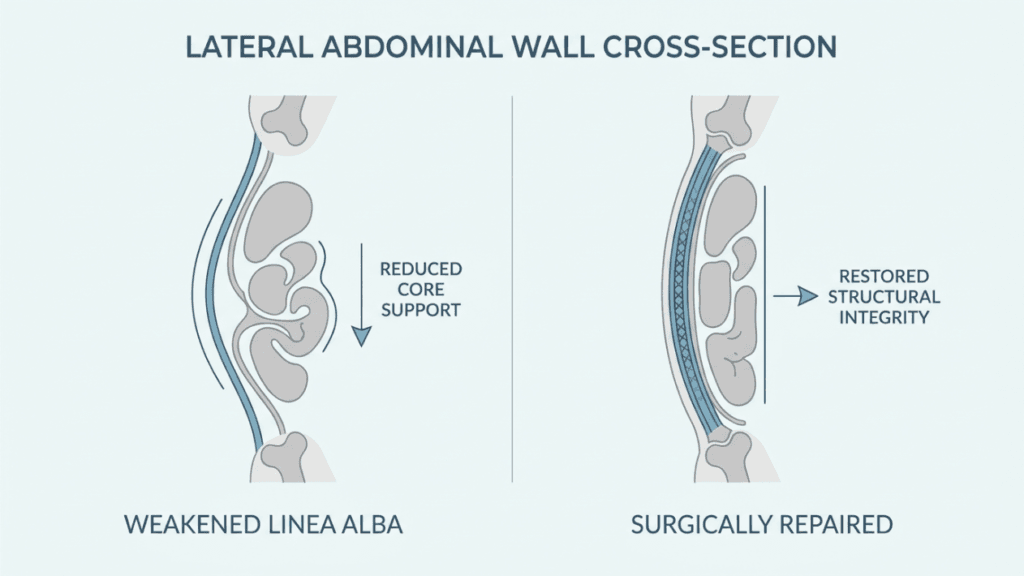
انفصال العضلات المستقيمة لا يُحدث مجرد بروز مرئي، بل يُفكك نظام الضغط الكامل في جسمك. تعمل الحاوية البطنية كاسطوانة مغلقة: يشكل الحجاب الحاجز السقف، ويعمل قاع الحوض كقاعدة، وتوفر العضلات البطنية العميقة الجدران.
عندما يتمزق الخط الأبيض، تفقد الاسطوانة ختمها الهيكلي. الضغط داخل البطن الذي يجب أن يثبت عمودك الفقري يدفع بدلاً من ذلك إلى الخارج عبر الفجوة. يتجلى تسرب الضغط هذا كعدة اختلالات مترابطة لا تعالجها الجراحة التجميلية التقليدية أبداً.
تسلسل الانهيار الوظيفي
- اضطراب العمود الفقري لا تستطيع العضلات العميقة للجذع توليد ضغط كافٍ لدعم العمود الفقري القطني. يتطور ألم أسفل الظهر المزمن ويشتد على مدى سنوات.
- فرط تحميل قاع الحوض: بدون الضغط المضاد من جدار البطن، يمتص قاع الحوض قوة هبوطية غير متناسبة. يؤدي ذلك إلى سلس البول، وهبوط أعضاء الحوض، والجماع المؤلم.
- تشوه الوضعية: ينجرف القفص الصدري إلى الأمام بينما يميل الحوض إلى الأمام. يعوض الجسم بحداب صدري مفرط، مما يخلق مظهراً منحنياً لا تصححه أي إجراء تجميلي.
- قصور كفاءة التنفس: لا يستطيع الحجاب الحاجز تحقيق هبوط كامل ضد جدار بطني متسرب. يصبح التنفس سطحياً، مما يقلل توصيل الأكسجين أثناء الجهد.
- عجز ضغط الجهاز الهضمي: يعتمد الهضم السليم على الضغط داخل البطن للحركة الدودية. يبلغ المرضى الذين يعانون من انفصال غير مشخص بانتظام عن انتفاخ، إمساك، وبطء هضمي.
لماذا قد يتجاهل جراحك إصلاح العضلات - ولماذا لا يفعل د. سلجوق يلماز ذلك أبداً
لا يزال المجتمع الجراحي منقسمًا بشأن هذه القضية لأسباب مقلقة. تضيف طي الخط الأبيض حوالي 45 إلى 75 دقيقة من وقت العملية. تتطلب معرفة تشريحية متقدمة بالخطوط العضلية اللفافية. تزيد من الانزعاج بعد الجراحة لأن العضلات المصلحة تتشنج خلال مراحل الشفاء المبكرة.
غالبًا ما يهمل الجراحون الذين يعطون الأولوية للكمية على النتائج الإصلاح بالكامل. يسوقون الإجراء على أنه “شد مصغر” أو “شد بطن للجلد فقط” ويسلطون الضوء على أوقات تعافي أقصر. لا يدرك المريض أبدًا أن تعافيهم القصير جاء على حساب دائم استقرار الجذع حل وسط.
معيار سيرجيتيم: سلامة اللفافة بلا مساومة
الدكتور سلجوق يلماز، شد البطن اختصاصي في SURGYTEAM، يرفض بشكل قاطع إجراء شد البطن للجلد فقط على المرضى الذين يعانون من انفراق المستقيم. تتركز فلسفته الجراحية على مبدأ واحد: النتيجة التجميلية تتبع السلامة الهيكلية.
يتضمن كل شد بطن يتم تحت بروتوكول الدكتور يلماز تقييمًا ثنائي الجانب لمسافة ما بين المستقيمين باستخدام القياس المباشر أثناء العمل الجراحي. يطوي الخط الأبيض من العملية الخنجرية إلى العانة في طبقتين متداخلتين. تخلق هذه الطية ثنائية الطبقة صفيحة حيوية—أقوى بكثير من الخياطة أحادية الصف—وتستعيد متجه التوتر الذي يجعل تحديد البطن ممكن تشريحيًا.
يتلقى المرضى المسافرون إلى عيادتنا في أنطاليا رعاية جراحية معتمدة دوليًا. تعكس خبرة الدكتور يلماز الالتزام الأوسع لـ SURGYTEAM: اختصاصيون معتمدون من البورد يركزون حصريًا على إجراءاتهم المتخصصة. برنامجنا جراحة التجميل في تركيا يعكس هذه الفلسفة من خلال ضمان مواجهة كل مريض لاختصاصي—وليس ممارس عام—لإجراءهم المحدد.
تقنية الطي ثنائية الطبقة: هندسة جدارك البطني
تنطوي الطية القياسية على صف واحد من الغرز المستمرة على طول خط الوسط. في حين تقرب هذه التقنية الحواف المنفصلة، فإنها تُدخل نقطة ضعف حرجة. يوزع الإغلاق أحادي الصف التوتر عبر خط خياطة ضيق. عندما يسعل المرضى، يتقيأون، أو يجهدون أثناء التعافي، يخلق ذلك التوتر المركز تمزقات دقيقة على طول مسار الخياطة.
يستخدم الدكتور يلماز تقنية ثنائية الطبقة تعيد هندسة توزيع الحمل عبر الجدار المصلح بشكل أساسي. تقرب الطبقة الأولى الحواف الإنسيّة لغمد المستقيم معًا باستخدام غرز قابلة للامتصاص قوية. تطبق الطبقة الثانية الخط المغلق بالفعل، طية حافة فوق الأخرى وتثبيتها بخط خياطة مستمر ثانٍ.
مزايا هيكلية لإصلاح الطبقة المزدوجة
- توزيع قوة أوسع: يتوزع التوتر عبر خطين من الخياطة بدلاً من خط واحد، مما يقلل الإجهاد النقطي بنسبة تقريبية تتراوح بين 40 و50 بالمئة.
- انخفاض شدة سحب الخيوط تمنع الطبقة الثانية المتداخلة فعلياً الطبقة الأولى من القطع كالجبن عبر اللفافة تحت ارتفاعات الضغط المفاجئة.
- تشكيل صفيحة ندبة أقوى مستويان متداخلان للإغلاق يُنتجان صفيحة ندبية كولاجينية أكثر سماكة ومرونة أثناء الشفاء. ويُعزز هذا التعزيز البيولوجي صلابة الخط الأبيض بشكل دائم.
- نحت الخصر الفائق: يضيق التراكب الخصر عن طريق شد جدار البطن محيطياً. يلاحظ المرضى انخفاضاً قابلاً للقياس في محيط الخصر يتجاوز ما يحققه استئصال الجلد وحده.
هذا النهج الدقيق في إصلاح العضلات يمثل الخط الفاصل بين عملية شد البطن الوظيفية وعملية شد البطن التجميلية البحتة. يميز تأثير تضييق الخصر وحده بين النتيجتين بشكل ملحوظ.
من يحتاج فعلاً إلى إصلاح انفصال العضلات المستقيمة للبطن؟ المريض الذي لا يحذره أحد
تظهر لدى بعض فئات المرضى بشكل متوقع انفصال عضلي غير مشخص. يمنع تحديد هذه الفئات مبكراً خيبة الأمل الجراحية. تشمل المجموعة الأكثر عرضة الأفراد في فترة ما بعد الولادة الذين تجاوز حملهم 38 أسبوعاً من العمر الحملي. تزيد الحملات المتكررة—خاصة تلك التي تفصل بينها أقل من 18 شهراً—بشكل كبير من عرض الخط الأبيض وترققه.
ومع ذلك، لا يحتكر الحمل هذه الحالة. تمتد تقلبات الوزن الكبيرة بمقدار 50 رطلاً أو أكثر اللفافة إلى ما وراء حدها المرن. يخلق الإمساك المزمن ضغطاً متكرراً من نوع فالسالفا ضد خط الوسط الضعيف. حتى الرياضيون النخبة الذين يؤدون انثناءً شوكياً محملاً—رافعي الأثقال التنافسيين، مجدفي الأولمبياد—يطورون انفصالاً وظيفياً عبر الإجهاد اللفافي التراكمي.
التقييم الذاتي: اختبار إعادة تعريف التموجات
قبل جدولة أي استشارة جراحية، قم بهذا المناورة التشخيصية البسيطة. استلقِ على ظهرك مع ثني ركبتيك وقدميك مسطحتين. ضع إصبعين أفقياً فوق سرتك. ارفع رأسك وكتفيك ببطء كما لو كنت تؤدي تمرين الكرنش. تحسس وجود فجوة بين حواف عضلات البطن.
إذا غاصت أصابعك في أخدود أعمق من عرض إصبعين، فمن المؤكد تقريباً أن لديك أمراً ذا أهمية سريرية انفصال عضلات البطن. عملية جلدية فقط شد البطن لن تحل هذا الانفصال. تحتاج إلى إصلاح وظيفي للخط الأوسط.
التكلفة الحقيقية لتجاهل الإصلاح: عندما تخلق الجراحة التجميلية مشاكل جديدة
جلدي فقط عملية شد البطن إن إجراؤه على مريض يعاني من انفصال عضلي غير مشخص لا يقتصر على عدم الفائدة، بل يُدخل مشاكل جديدة. فالغلاف الجلدي المشدود يدفع الضغط داخل البطن إلى الأسفل نحو الفجوة غير المصلحة. يمتص قاع الحوض هذه القوة المعاد توجيهها، مما يؤدي غالبًا إلى تفاقم أعراض سلس البول التي كان المريض يأمل أن تحلها الجراحة.
علاوة على ذلك، يعتمد التروية الدموية الوعائية المحيطية للسديلة الجلدية على توتر اللفافة السليم لضمان التروية المناسبة. عندما يبقى جدار العضلات الأساسي رخوًا، يصبح توزيع تدفق الدم عبر السديلة غير متساوٍ. يزيد هذا عدم التماثل من خطر تأخر التئام الجرح، ونخر الجلد عند حواف الشق، وتكوين ندبات غير متماثلة.
أخيرًا، ضع في الاعتبار التأثير النفسي. المرضى الذين يستثمرون موارد مالية كبيرة والتزامًا عاطفيًا في الجراحة يتوقعون تحولًا مرئيًا. عندما يبدأ بطنهم في البروز مرة أخرى خلال عام، يشعرون بإحباط عميق. يلوم الكثيرون أنفسهم. ويلجأ آخرون إلى إجراء جراحة تصحيحية—متحملين التكلفة والمخاطر وفترة التعافي مرة ثانية.
عبء المراجعة: ما تكشفه الإحصائيات
ترسم بيانات النتائج المنشورة صورة قاتمة. فبين المرضى الذين يخضعون لعملية شد بطن جلدي فقط مع عدم معالجة انفراق العضلات المستقيمة، يسعى حوالي 30-40 بالمئة لجراحة مراجعة خلال ثلاث سنوات. ينخفض معدل المراجعة للمرضى الذين يتلقون طي اللفافة الكامل إلى أقل من 5 بالمئة خلال نفس الفترة.
ترتبط عملية شد البطن المراجعة بمعدلات مضاعفات أعلى من الجراحة الأولية. تُشوّه الأنسجة الندبية المستويات التشريحية. يكون الإمداد الدموي أقل موثوقية. يصبح المجال الجراحي معاديًا بشكل متزايد. يتطلب تجنب هذا الانحدار إجراء الجراحة الأولى بشكل صحيح—وهذا يتطلب التعرف على انفصال العضلات قبل إزالة الجلد.
استقرار الجذع بعد الجراحة: لماذا يغير الإصلاح كل ما تشعر به
المرضى الذين يتلقون رعاية كاملة إصلاح انفصال العضلات المستقيمة يُبلغون باستمرار عن تحسينات تمتد بعيدًا عن المظهر. تنبع هذه المكاسب الوظيفية من إعادة بناء حاوية الضغط البطني. عندما يُغلق الأسطوانة بشكل صحيح، تستفيد كل حركة جسدية تقوم بها من الكفاءة الميكانيكية المستعادة.
تحسينات وظيفية موثقة بعد الطي
تكشف دراسات النتائج السريرية التي تقيس مقاييس جودة الحياة بعد طي اللفافة عن أنماط لافتة. يُظهر المرضى الذين يخضعون لإصلاح كامل تحسينات قابلة للقياس عبر مجالات وظيفية متعددة، على عكس أولئك الذين يتلقون استئصال الجلد فقط.
- سلس البول: يُبلغ 68-82 بالمئة من المرضى عن انخفاض كبير أو زوال كامل لسلس البول الإجهادي خلال ستة أشهر من الإصلاح الجراحي.
- ألم أسفل الظهر: يقلل توتر جدار البطن المستعاد من قوى القص القطنية. يعاني 71-79 بالمئة من المرضى من انخفاض ذي دلالة سريرية في الألم.
- تحمل التمارين: تمكن ضغط الجذع المغلق من ميكانيكا تنفس سليمة أثناء الجهد. يُبلغ المرضى عن زيادة التحمل، وتحسين قدرة الرفع، وتقليل إرهاق البطن بعد التمرين.
- الوظيفة الهضمية: تحسين عودة الضغط داخل البطن إلى طبيعته يعزز كفاءة الحركة الدودية. غالبًا ما يتم حل الانتفاخ المزمن والإمساك دون علاج إضافي.
هذه ليست آثار وهمية. إنها تمثل العواقب الميكانيكية لاستعادة هيكل يحمل الحمل الذي تجاهله الطب لفترة طويلة جدًا. غالبًا ما يكتشف المرضى الذين يبحثون عن استعادة شاملة بعد الولادة أن الجمع بين إصلاح انفصال العضلات المستقيمة مع إجراءات الثدي من خلال تحول الام يعالج الطيف الكامل للتغيرات التشريحية في نفس الوقت.
غوص عميق في التقنية الجراحية: كيف يعمل الإصلاح الكامل فعليًا
فهم التسلسل الفني لإجراء وظيفي عملية شد البطن يفسح المجال للإجراء ويعطيك القدرة على طرح أسئلة مستنيرة خلال الاستشارة. يتبع الإجراء التسلسل الدقيق: يسبق البناء الداخلي تشكيل الحواف الخارجية. كل خطوة تبني على الخطوة السابقة.
تبدأ الجراحة بجرح أفقي في الجزء السفلي من البطن. يرفع الجلد إلى أعلى حتى عملية القصبة، مما يكشف عن الجدار البطني الأمامي بالكامل. في هذه النقطة، يرى الجراح مباشرة المسافة بين المستقيمين. يكشف التصور المباشر عن الأمراض التي غالبًا ما يقلل منها التصوير بال超صوت.
يقيس الدكتور يلماز الفجوة في ثلاث نقاط معيارية: القصبة، السرة، ونصف المسافة بين السرة والشرج. يوثق الفجوة بالسنتيمترات. تتلقى الفجوات التي تتجاوز 3 سنتيمترات عند مستوى السرة أو 2 سنتيمترات عند مستوى فوق السرة تقلصًا ثنائيًا باستخدام تقنية التضفير المزدوجة الموصوفة سابقًا.
تتم إغلاق اللفافة من الأعلى إلى الأسفل. هذا الاتجاه يسهل عمدًا انخفاض الجلد السفلي إلى الأسفل، مما يقلل من التوتر على إغلاق الجلد النهائي. بمجرد إكمال إصلاح العضلات ، يقوم الجراح بتقييم ساق السرة. غالبًا ما يتطلب الساق تقصيرًا وإعادة تحديد موقعه لاستيعاب الجدار المشدود حديثًا.
فقط بعد أن تحقق الهيكل الداخلي من السلاسة يعالج الجراح استئصال الجلد. يغطي الجلد الزائد والأنسجة تحت الجلد بشكل طبيعي على الجدار المسلح. يتم إزالة الأنسجة الزائدة. يغلق الجرح في طبقات متعددة لتوزيع التوتر وتقليل الجروح. تظل الصرفات في مكانها لمدة 7-10 أيام تقريبًا لمنع تكون السيروما.

حقائق التعافي: ما يحدث عند إصلاح الجدار مقابل إزالة الجلد
يطرح المرضى أحيانًا السؤال عن سبب شعورهم أن التعافي من الإصلاح الكامل إصلاح انفصال العضلات المستقيمة يشعر بأنه أكثر شدة من التعافي من إجراء جلدي فقط. الإجابة تعكس مباشرة الواقع البيولوجي. يخلق التقلص توترًا حقيقيًا على اللفافة العضلية الحية. يجب أن تتعافى اللفافة تحت التوتر الخاضع للرقابة، مما يؤدي إلى تشكيل لوحة الندبة الكولاجين التي توفر تعزيزًا هيكليًا دائمًا.
يؤدي استئصال الجلد وحده إلى ألم بعد الجراحة خفيف نسبيًا لأن لا توتر هيكلي موجود. لم يتم إزعاج اللفافة. لا شيء يحتاج إلى التعافي. تجعل المشدات المشي أسهل من التأهيل. يتطلب التعافي من الإصلاح الوظيفي تحويرًا حقيقيًا للأنسجة - الذي يستغرق وقتًا أطول ولكنه ينتج نتائج دائمة.
مقارنة جدول زمني الاسترداد
- الأيام 1-5: أقصى درجات الانزعاج. تشنج عضلات البطن أثناء تكيفها مع التوتر الجديد. المشي بانحناء خفيف عند الخصر إلزامي. الأدوية المسكنة تدير الانزعاج بفعالية.
- الأيام 6-14: تخف التشنجات. تصبح الاستقامة ممكنة تدريجياً. عادةً ما تتم إزالة أنبوب التصريف حوالي اليوم 7-10. يُشجع على المشي الخفيف.
- الأسابيع 3-4: يمشي معظم المرضى بشكل مستقيم تماماً. العودة إلى العمل المكتبي معتمدة عموماً. يستمر ارتداء الملابس الضاغطة. تمارين الجذع تبقى ممنوعة تماماً.
- الأسابيع 5-8: يُسمح بالنشاط الهوائي الخفيف. المشي اللطيف وركوب الدراجة الثابتة معتمدان. يبدأ نسيج الندبة بالنضج. يشعر جدار البطن بأمان متزايد.
- الأسابيع 9-12: يبدأ تقوية الجذع التدريجية تحت إشراف متخصص. يشعر المرضى بالفرق في الأنشطة الوظيفية—وضعية أفضل، ألم ظهر أقل، تحكم أفضل في التنفس.
- الأشهر 4-12: تصريح كامل بالنشاط. يعمل الجدار المُصلح الآن كبنية موحدة. تحديد عضلات البطن يصبح أكثر وضوحاً مع زوال التورم تماماً.
يعود المرضى الذين يخضعون لإجراءات الجلد فقط إلى النشاط الكامل أسرع. ومع ذلك، لا يختبرون أبداً المكاسب الوظيفية المذكورة أعلاه. ينتهي تعافيهم في وقت أقرب، لكن سقف نتائجهم يبقى أقل بشكل دائم.
دقة التشخيص: لماذا يفوت التقييم الشخصي ما يكشفه التقييم الافتراضي
يستشير العديد من المرضى جراحين محليين يقومون بتقييم انفصال العضلات المستقيمة من خلال الفحص السريري وحده. يوفر الجس معلومات محدودة. يتحسس الفاحص وجود فجوة، ويقدّر عرضها بأصابعه، ويكوّن انطباعًا سريريًا. تعاني هذه الطريقة من تباين كبير بين المقيمين. غالبًا ما يوثّقان جراحان يفحصان المريض نفسه قياسات مختلفة للفجوة.
في SURGYTEAM، نتبع نهجًا تشخيصيًا مختلفًا. يجمع بروتوكول التقييم الافتراضي لدينا بين التصوير المستهدف ومراجعة الموجات فوق الصوتية الديناميكية. يقدّم المرضى صورًا في أوضاع موحدة—استلقاء مسترخٍ، انثناء جلوس للأمام، وملف جانبي واقف. كما يقدّمون صور الموجات فوق الصوتية التي تقيس المسافة بين المستقيمتين أثناء الراحة وأثناء انقباض العضلة المستعرضة للبطن.
يزيل هذا النهج القائم على البيانات التخمين. يراجع الدكتور يلماز التصوير بنفسه بدلًا من تفويض التقييم إلى المنسقين. يحدد الموقع الدقيق، والعرض، وطبيعة الانفصال. يحدد ما إذا كانت الفجوة لديك تشمل فقط الخط الأبيض أو تمتد إلى الخط الهلالي—وهو تمييز يغيّر استراتيجية الإصلاح الجراحي جذريًا.
ما يحدده التقييم الافتراضي
- تصنيف العرض: قد تستجيب الفجوات التي تقل عن 3 سنتيمترات للعلاج الطبيعي المتخصص. تتطلب الفجوات التي تتجاوز 3 سنتيمترات إصلاحًا جراحيًا بشكل شبه عالمي.
- تصنيف الطول: هل الانفصال موضعي فوق السرة، أو تحتها، أو يمتد عبر خط الوسط بأكمله؟ هذا يحدد مدى الطي.
- جودة اللفافة: تكشف الموجات فوق الصوتية ما إذا كانت الخط الأبيض الممدود يحتفظ بسماكة كافية للخياطة الموثوقة. قد تتطلب اللفافة الرقيقة، شديدة الترقق، تعزيزًا بالشبكة.
- الأمراض المصاحبة: هل يصاحب الفتق السري الانفصال؟ يتطلب هذا التزامن الشائع إصلاحًا متزامنًا خلال نفس العملية.
بدون هذا التقييم، تخاطر بالخضوع لإجراء خاطئ. يحتاج المريض الذي يمتد انفصاله عبر طول خط الوسط بالكامل إلى طي كامل من الناتئ الخنجري إلى العانة. قد يقوم الجراح الذي يرى فقط الفجوة تحت السرة أثناء الجراحة بإصلاح ذلك الجزء فقط—تاركًا الانفصال العلوي دون مساس، والانتفاخ مرئيًا جزئيًا، والمريض في حيرة.

خطة عمل التعافي الوظيفي الخاصة بك: ضمان الإجراء المناسب
قراءة هذا المقال تزودك بمعرفة لا يتلقاها معظم المرضى. الآن يجب عليك تحويل تلك المعرفة إلى فعل. تضمن العملية التالية خطوة بخطوة خضوعك لإجراء يعالج واقعك التشريحي الكامل—وليس مجرد مظهره السطحي.
دليل خطوة بخطوة لتحديد احتياجات الإصلاح الخاصة بك
- الخطوة 1: قم بإجراء اختبار Recurl الذاتي. استلقِ، وضع إصبعين فوق سرتك، وقم بالانثناء. إذا غاصت أصابعك في فجوة أوسع من عرض إصبعين، وثّق النتيجة. هذا هو دليلك الأساسي.
- الخطوة 2: تحديد الأعراض الوظيفية الخاصة بك. قائمة كل الأعراض التي تتجاوز عدم الرضا التجميلي - ألم الظهر، وعدم القدرة على التحكم في المثانة، وتورم البطن، و Weariness الوضعية، وتباطؤ الهضم. هذه الأعراض تؤكد البعد الوظيفي لحالتك.
- الخطوة 3: إجراء فحص الموجات فوق الصوتية التشخيصي. الحصول على فحص الموجات فوق الصوتية الموحد الذي يقيس المسافة بين العضلات المستقيمة في مستويات فوق السرة، والسرة، وتحت السرة. اطلب القياسات في حالة الاسترخاء والانقباض لتقييم كفاءة اللفافة الحشوية.
- الخطوة 4: جدول تقييمك الافتراضي مع SURGYTEAM. قدّم نتائج الاختبار الذاتي، وقائمة الأعراض، وصور الموجات فوق الصوتية لمراجعة الدكتور يلماز مباشرة. يحدد هذا التقييم ما إذا كنت بحاجة إلى إصلاح وظيفي, ، استئصال الجلد، أو كلاهما.
- الخطوة 5: اسأل كل جراح عن تقنية الخياطة. اسأل تحديدا: “هل ستخاط من عظم القص إلى العانة؟” “هل تستخدم غلقة واحدة أو مزدوجة؟” “كيف تقيس الفجوة أثناء الجراحة؟” الجراحون الذين يشتتون هذه الأسئلة يظهرون أولوياتهم.
- الخطوة 6: التحقق من خطة الجراحة قبل الالتزام. تأكد من أن نموذج تقرير الجراحة يتضمن صراحة “طي الخط الأبيض” مع مدى محدد. مصطلحات غامضة مثل “شد الجدار البطني” تسمح للجراح بتجاهل الإصلاح حسب تقديره.
- الخطوة 7: الالتزام ببروتوكول التعافي. الإصلاح الوظيفي يتطلب تعافيًا منضبطًا. اتبع كل تعليمات ما بعد الجراحة بدقة. امتثالك يحدد مباشرة ما إذا كانت اللفافة المصلحة تتعافى إلى تعزيز هيكلي دائم.
البطن المسطحة تبقى مستحيلة عندما يستمر انفصال العضلات في الأسفل. كل ضغط يهدر جهدك. كل جراحة جلد فقط تهدر استثمارك. الحقيقة الوظيفية تتطلب حلولا هيكليا. الدكتور سيلتشوك يلماز وفريق SURGYTEAM يقدمون بالضبط ذلك: إعادة بناء اللفافة الكاملة التي تبني تعزيزا دائما استقرار الجذع, ، أصلي تحديد البطن, ، والحد المسطح الدائم الذي كنت تسعى إليه.
توقف عن التخمين حول سبب بروز بطنك. احجز تقييمك الافتراضي اليوم واكتشف ما إذا كنت بحاجة إلى إصلاح انفراق المستقيمة الوظيفي أم أن استئصال الجلد وحده يعالج تشريحك.
كيف يختلف انفراق المستقيم عن التغيرات البطنية الطبيعية بعد الولادة؟
يتلاشى تمدد ما بعد الولادة الطبيعي خلال 8-12 أسبوعًا مع استعادة الخط الأبيض لمرونته. يستمر انفراق المستقيمة بعد هذه الفترة، تاركًا فجوة قابلة للقياس بين عضلات المستقيم لا يمكن لأي قدر من التمارين إغلاقها. لقد تجاوز اللفافة حدها المرن وتتطلب تقاربًا جراحيًا لاستعادة السلامة الوظيفية.
لماذا تفشل إزالة الجلد وحدها في تسطيح المعدة مع انفراق المستقيم؟
تخلق عضلات المستقيم المنفصلة بروزًا داخليًا يدفع للخارج ضد أي غلاف جلدي. إن إزالة الجلد المترهل يعالج السطح فقط بينما يستمر الفجوة الهيكلية الكامنة في البروز. خلال أشهر، يمتد الضغط الداخلي الجلد الجديد ويعود البروز للظهور بشكل واضح.
كيف يتم إصلاح انفراق المستقيم أثناء شد البطن؟
يكشف الجراح جدار البطن الأمامي بالكامل، ويقيس الفجوة بين المستقيمين، ويغلق الخط الأبيض باستخدام خيوط الطي. في SURGYTEAM، يستخدم الدكتور يلماز الطي المزدوج من حد السيف إلى العانة، مما يخلق صفيحة بيولوجية معززة تستعيد استمرارية خط الوسط وثبات الجذع بشكل دائم.
هل يمكن للعلاج الطبيعي إغلاق فجوة انفراق المستقيم دون جراحة؟
يدير العلاج الطبيعي بفعالية الفجوات التي تقل عن 3 سنتيمترات عن طريق تقوية المستعرض البطني وتحسين التحكم العصبي العضلي. ومع ذلك، تنطوي الفجوات التي تتجاوز 3 سنتيمترات على لفافة تمددت إلى ما يتجاوز قدرتها على الارتداد. تتطلب هذه الانفصالات الأوسع طيًا جراحيًا للإغلاق النهائي.
ما التحسينات الوظيفية التي تحدث بعد إصلاح انفراق المستقيم الكامل؟
يُبلغ المرضى باستمرار عن انخفاض كبير في سلس البول وآلام أسفل الظهر والانتفاخ الهضمي. تعيد سلامة جدار البطن المستعادة إنشاء الضغط داخل البطن المناسب، مما يدعم العمود الفقري ميكانيكيًا، ويخفف الحمل عن قاع الحوض، ويحسن كفاءة التنفس أثناء الجهد البدني.
هل التعافي من الإصلاح الوظيفي أصعب من شد البطن للجلد فقط؟
ينطوي التعافي من الإصلاح الوظيفي على انزعاج عضلي أولي أكبر لأن اللفافة وُضعت تحت التوتر. عادة ما يهدأ هذا الانزعاج خلال أسبوعين. المقايضة دائمة: تحصل على تصحيح هيكلي دائم بدلاً من تحسن تجميلي مؤقت يتدهور خلال العام التالي.
كيف أعرف ما إذا كان جراح شد البطن سيجري إصلاحًا كاملاً للعضلات؟
اسأل سؤالين مباشرين أثناء الاستشارة: هل ستطوي من حد السيف إلى العانة، وهل تستخدم إغلاقًا مزدوج الطبقة؟ الجراحون الذين يلتزمون بتقنية ومدى طي محددين ينوون إجراء إصلاح كامل. الردود الغامضة حول شد جدار البطن تشير إلى احتمال إجراء غير مكتمل.