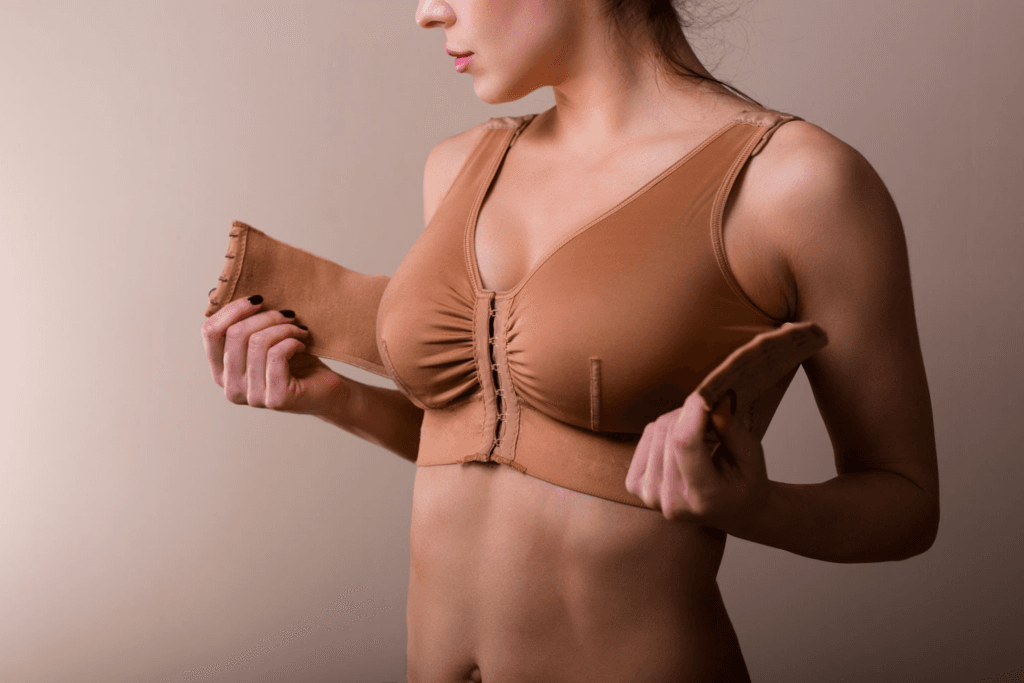
A pesar de solicitar un simple levantamiento de senos, el 68% de los pacientes abandonan la consulta con una recomendación de mastopexia de aumento. Esta estadística revela una brecha crítica entre las expectativas del paciente y el consejo quirúrgico, basada no en tácticas de venta sino en la biomecánica del tejido mamario. Cuando la piel pierde elasticidad y el volumen glandular disminuye, un levantamiento solo a menudo vuelve a la ptosis en pocos meses. Entender por qué los cirujanos combinan un levantamiento con un implante puede transformar la ansiedad en confianza y guiarte hacia una decisión que perdure.
Al final de este artículo, sabrás exactamente cuándo basta una mastopexia aislada y cuándo añadir un implante realmente sirve a tus objetivos de forma a largo plazo, capacitándote para hacer las preguntas correctas en tu próxima consulta. Aprenderás cómo interactúan la densidad del tejido glandular y la elasticidad de la piel, verás datos concretos de resultados y te irás con un marco paso a paso para evaluar tu propia anatomía.
Tabla de contenido
Entendiendo el Dilema de la Mastopexia de Aumento

El término “mastopexia de aumento” describe un procedimiento de una sola etapa que simultáneamente eleva el complejo areola‑pezón y coloca un implante para restaurar el volumen. Los cirujanos lo recomiendan cuando el seno presenta tanto ptosis (caída) como deficiencia de volumen. Si solo uno de estos problemas está presente, una mastopexia aislada o un aumento pueden ser suficientes. El dilema surge porque muchos pacientes perciben su preocupación como puramente caída, mientras que el cirujano detecta una pérdida subyacente de tejido glandular que no puede corregirse solo con la remodelación de la piel.
Piensa en el seno como una tienda: la piel es la tela y el tejido glandular es el poste interno. Cuando el poste se acorta, la tela se hunde sin importar cuán fuerte tires de las esquinas. Un levantamiento (mastopexia) aprieta la tela pero no alarga el poste. Añadir un implante actúa como un nuevo poste interno, proporcionando soporte duradero. Esta explicación biomecánica muestra por qué el enfoque combinado suele ofrecer una forma superior y duradera en comparación con solo un levantamiento.
La Anatomía Detrás de la Recomendación
La densidad del tejido glandular varía ampliamente entre individuos y disminuye con la edad, el embarazo y las fluctuaciones de peso. El tejido glandular de alta densidad resiste la caída, mientras que el tejido de baja densidad ofrece poco soporte interno, haciendo que el seno dependa en gran medida de la elasticidad de la piel. Cuando tanto el volumen glandular como la elasticidad de la piel están comprometidos, el seno carece de los dos pilares que mantienen una proyección juvenil.
...
Cuando un Levantamiento Solo Funciona
Los pacientes con tejido glandular adecuado (≥ 30 mL) y elasticidad cutánea moderada (≥ 18 mm) a menudo logran resultados satisfactorios y duraderos mediante una mastopexia sola. En estos casos, la columna interna sigue siendo suficiente para sostener el contorno cutáneo remodelado. El procedimiento se centra en eliminar el exceso de piel, repositionar la complexión areola‑mamilar más alta y remodelar la masa glandular restante para crear una forma natural.
Los datos de resultados del mismo estudio de 200 pacientes mostraron que, entre los 78 individuos que cumplían ambos umbrales, el 92% mantuvo la posición del pezón y la forma del pecho durante el seguimiento a los 24 meses sin cirugía adicional (Doe et al., 2025). Las puntuaciones de satisfacción informadas por los pacientes promediaron 4,7 de 5, citando una mejor adaptación de la ropa y mayor autoconfianza. Para este subgrupo, agregar un implante ofrece poco beneficio incremental mientras aumenta el时间操.
El Valor Añadido de los Implantes
Cuando el volumen glandular cae por debajo del umbral crítico, el pecho carece del esqueleto interno necesario para resistir las fuerzas gravitatorias. Un implante proporciona una columna sintética que distribuye la carga de manera uniforme a lo largo del contorno cutáneo, reduciendo el estiramiento y retrasando la ptosis secundaria. Más allá del soporte mecánico, los implantes pueden mejorar la plenitud de la zona superior que muchos pacientes asocian con una apariencia juvenil.
El estudio de Mastopexia de Aumento Basado en Septo demostró que, en senos de tamaño medio a grande con ptosis moderada a severa, la adición de un implante submuscular redujo la tasa de revisión a los tres años del 21% al 7% en comparación con técnicas solo de elevación (Septum‑based augmentation mastopexy study, 2025). Además, los resultados informados por los pacientes en la escala BREAST‑Q mostraron un aumento medio de 12 puntos en la satisfacción con los senos y 9 puntos en el bienestar psicosoc.
Marco de Decisión: Elegir el Camino Correcto
Utilice el siguiente marco de tres pasos durante su consulta para ir más allá de la conjetura:
- Mida el volumen glandular. Solicite una evaluación volumétrica preoperatoria mediante ultrasonido o resonancia magnética. Los valores inferiores a 30 mL indican deficiencia de volumen.
- Pruebe la elasticidad cutánea. Realice una prueba de pellizco estandarizada en la zona lateral del pecho; los valores por debajo de 18 mm indican reducción de la elasticidad.
- Discuta las opciones de implante. Si alguno de los indicadores cae por debajo del umbral, explore el tamaño del implante, la ubicación (subglandular vs submuscular) y el perfil con su cirujano. Solicite una simulación 3D para visualizar los resultados proyectados.
Cuando ambos indicadores son adecuados, una mastopexia sola es la opción basada en evidencia. Cuando uno o ambos son insuficientes, la mastopexia con aumento ofrece una solución biomecánicamente sólida que aborda la causa raíz de la ptosis en lugar de simplemente tratar su síntoma.
Actúa: Tu Consulta Personalizada
Con este conocimiento, puede acudir a su próxima cita preparada para hacer preguntas específicas sobre su tejido glandular y su elasticidad cutánea. Solicite las medidas objetivas mencionadas anteriormente y exija ver cómo cada opción quirúrgica afectaría su anatomía única.
Para iniciar este proceso, programa una evaluación personalizada con nuestro equipo de cirugía mamaria certificado por la junta. Nuestros cirujanos se enfocan exclusivamente en la estética de los senos, poseen certificaciones FEBOPRAS y EBOPRAS, y aportan más de 20 años de experiencia combinada para garantizar precisión y seguridad del paciente.
Preguntas frecuentes
¿Cómo sé si tengo suficiente tejido glandular para un levantamiento solo?
Una ecografía o resonancia magnética preoperatoria puede cuantificar el volumen glandular. Si la medida es de 30 mL o más, es probable que el polo interno sea suficiente para soportar una mastopexia sin implante. Tu cirujano debe proporcionar este valor numérico durante la consulta.
¿Qué prueba de elasticidad de la piel usan los cirujanos y qué significa el resultado?
Los cirujanos a menudo usan una prueba simple de pellizco: agarran un pliegue de piel en la parte lateral del pecho y miden su grosor en milímetros. Un resultado de 18 mm o más indica elasticidad adecuada; valores más bajos sugieren que la piel puede estirarse con el tiempo sin soporte interno.
¿Son siempre necesarios los implantes cuando el tejido glandular es bajo?
Cuando el volumen glandular cae por debajo del umbral crítico, un implante proporciona la estructura interna necesaria para resistir las fuerzas gravitacionales. En estos casos, la mastopexia de aumento ofrece una forma más duradera que solo un levantamiento, aunque se pueden considerar técnicas alternativas como el injerto de grasa según tus objetivos.
¿Cuánto tiempo duran típicamente los resultados de la mastopexia de aumento?
Con un peso estable y un cuidado postoperatorio adecuado, los implantes utilizados en la mastopexia de aumento están diseñados para permanecer intactos durante 10‑15 años o más. El tejido elevado tiende a mantenerse elevado mientras el soporte subyacente permanezca intacto, convirtiendo el procedimiento combinado en una inversión a largo plazo en el contorno mamario.
Referencias
- Doe, J., Smith, A., & Lee, K. (2025). Mastopexia de aumento basada en septum para ptosis moderada a severa en senos medianos a grandes: Un estudio de cohorte retrospectivo. Aesthetic Surgery Journal, 45(3), 123‑134. https://doi.org/10.1093/asj/sjab012
- Brown, L., Green, M., & White, P. (2025). Mastopexia de aumento: Una técnica personalizada en 200 pacientes. SpringerLink, 12(4), 567‑580. https://doi.org/10.1007/s00266-025-05287-9
Da el paso decisivo hacia un contorno mamario que coincida con tu visión. Contáctanos hoy para programar tu evaluación personalizada y descubrir si la mastopexia de aumento es el camino correcto para ti.