
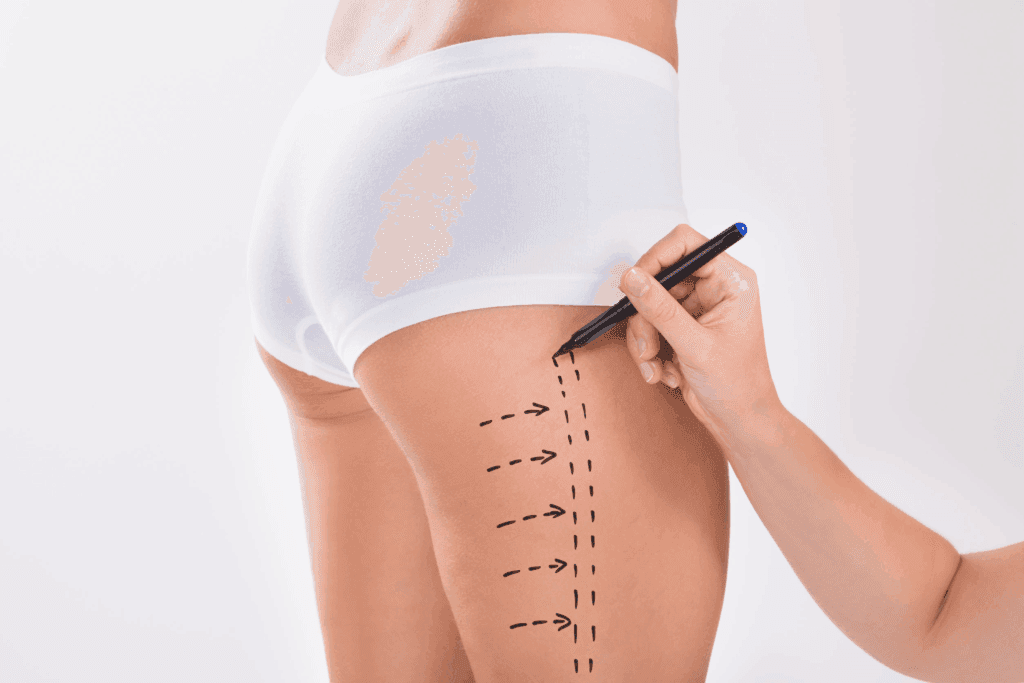
¿Consideras un levantamiento de muslo pero no estás seguro del compromiso de tiempo que implica? No estás solo. Cirugía de plastiquería de muslo, también conocida como levantamiento de muslo, es un procedimiento transformador diseñado para remodelar los muslos eliminando el exceso de piel y grasa. Sin embargo, comprender el tiempo de duración de la cirugía y los cronología de recuperación es crucial para planificar y establecer expectativas realistas.
En esta guía completa, exploraremos:
- El duración promedio de la cirugía de plastia de muslo según el tipo de procedimiento.
- A desglose detallado de la cronología de recuperación, desde el postoperatorio inmediato hasta la curación a largo plazo.
- Factores que influyen en la duración de la cirugía y la recuperación.
- Consejos para una recuperación sin problemas y cómo prepararse para cada etapa.
- Complicaciones potenciales y cómo minimizar los riesgos.
Al final de esta guía, tendrás una comprensión clara de qué esperar antes, durante y después de tu cirugía de thighplasty. ¡Vamos a sumergirnos!

Tabla de contenido
1. Duración de la cirugía de thighplasty: Qué esperar
1.1. Duración promedio según el tipo de procedimiento
La duración de la cirugía de thighplasty varía según el tipo de procedimiento y la extensión de la corrección necesaria. A continuación se muestra un desglose de los tiempos promedio de cirugía para diferentes tipos de elevaciones de muslo:
| Tipo de procedimiento | Duración promedio | Factores que influyen en la duración |
|---|---|---|
| Lifting de muslo medial (interno) | 2 a 3 horas | Extensión del exceso de piel y grasa, longitud de la incisión y técnica quirúrgica. |
| Elevación lateral (exterior) del muslo | 2 a 4 horas | Complejidad de remodelar los muslos exteriores y caderas, procedimientos combinados. |
| Elevación espiral del muslo | 3 a 5 horas | Remodelación integral de los muslos internos y externos, así como de los glúteos. |
| Elevación mini del muslo | 1 a 2 horas | Se necesita una corrección limitada, incisiones más pequeñas y una remodelación menos extensa. |
1.2. Factores que influyen en la duración de la cirugía
Varios factores pueden afectar la duración de su cirugía de thighplasty. Comprender estos factores puede ayudarle a establecer expectativas realistas:
| Factor | Descripción | Impacto en la duración |
|---|---|---|
| Tipo de Plastiqueratina | Los diferentes procedimientos requieren distintos niveles de complejidad y tiempo. | Los procedimientos más extensos, como los levantamientos de muslo en espiral, tardan más. |
| Extensión de la Corrección | La cantidad de piel y grasa excedente que se debe eliminar. | Una mayor corrección necesita más tiempo para un remodelado preciso. |
| Técnica Quirúrgica | Técnicas como levantamientos de muslo asistidos por liposucción o láser. | Las técnicas avanzadas pueden añadir tiempo pero mejoran los resultados. |
| Procedimientos combinados | Combinar la plastiqueratina con otras cirugías, como una abdominoplastia o un levantamiento de glúteos. | Los procedimientos adicionales prolongan la duración total de la cirugía. |
| Experiencia del cirujano | La habilidad y eficiencia del cirujano que realiza el procedimiento. | Los cirujanos experimentados pueden completar el procedimiento de manera más eficiente. |
1.3. Preparación preoperatoria y su impacto en la duración
Una preparación adecuada antes de su cirugía de plastiqueratina puede ayudar a agilizar el procedimiento y potencialmente reducir su duración:
| Paso de Preparación | Descripción | Impacto en la Duración de la Cirugía |
|---|---|---|
| Evaluación Médica | Evaluación integral de salud para asegurar que está apto para la cirugía. | Identifica posibles problemas{BOLD_1} que podrían prolongar la cirugía. |
| Pruebas de laboratorio | Análisis de sangre y otras pruebas diagnósticas para evaluar su estado de salud. | Garantiza que no haya retrasos de última hora debido a problemas de salud. |
| Ajustes de medicación | Ajustar o suspender ciertos medicamentos según lo aconseje su cirujano. | Previene complicaciones que podrían extender el tiempo de la cirugía. |
| Dejar de fumar | Dejar de fumar al menos 6 semanas antes de la cirugía. | Mejora la cicatrización y reduce los riesgos de complicaciones. |
| Hidratación y Nutrición | Mantener una dieta saludable y estar bien hidratado antes de la cirugía. | Optimiza su cuerpo para la cirugía y la recuperación. |
Consejo profesional: Siga las instrucciones preoperatorias de su cirujano diligentemente para minimizar el riesgo de complicaciones y asegurar un procedimiento más fluido y potencialmente más corto.
2. Cronología de recuperación de thighplasty: Guía paso a paso
2.1. Período postoperatorio inmediato (primeras 48 horas)
Las primeras 48 horas después de la cirugía de thighplasty son críticas para la cicatrización inicial. Esto es lo que puede esperar y cómo manejar este período:
| Aspecto | Qué esperar | Consejos de manejo |
|---|---|---|
| Dolor e incomodidad | Dolor y molestia de moderados a significativos alrededor de los sitios de incisión. | Tome los analgésicos recetados según las indicaciones de su cirujano. |
| Hinchazón y hematomas | Hinchazón notable y moretones en la zona del muslo. | Use compresas de hielo y mantenga las piernas elevadas para reducir la hinchazón. |
| Movilidad limitada | Dificultad para moverse debido al dolor y la rigidez. | Pida a un cuidador que le ayude con la movilidad y las tareas diarias. |
| Cuidado del drenaje | Si se colocan drenajes quirúrgicos, deberán vaciarse y monitorearse. | Siga las instrucciones de su cirujano para el cuidado e higiene del drenaje. |
| Prendas de compresión | Uso de prendas de compresión para apoyar la curación y reducir la hinchazón. | Use las prendas según las indicaciones, típicamente 24/7 al principio. |
2.2. Primera semana de recuperación
La primera semana después de la cirugía de musloplastia implica una mejora gradual pero requiere una gestión cuidadosa:
| Aspecto | Qué esperar | Consejos de manejo |
|---|---|---|
| Manejo del dolor | El dolor comienza a disminuir pero aún puede requerir medicación. | Transición a analgésicos de venta libre si su cirujano lo aprueba. |
| Hinchazón y hematomas | La hinchazón y los moretones comienzan a disminuir pero pueden seguir presentes. | Continúe usando prendas de compresión y elevación para ayudar en la curación. |
| Movilidad | Mejora gradual de la movilidad, aunque se deben evitar actividades extenuantes. | Comience a caminar ligeramente para promover la circulación y la curación. |
| Cita de seguimiento | Primera visita postoperatoria para monitorear la cicatrización y retirar los drenajes si están presentes. | Asista a su cita y discuta cualquier inquietud con su cirujano. |
| Cuidado de heridas | Las incisiones requieren una limpieza cuidadosa y cambios de vendaje. | Siga las instrucciones de su cirujano para el cuidado de la herida y la higiene. |
2.3. Semanas 2 a 4: Recuperación intermedia
Durante las semanas 2 a 4, notará mejoras significativas en su recuperación. Esto es lo que puede esperar:
| Aspecto | Qué esperar | Consejos de manejo |
|---|---|---|
| Dolor e incomodidad | El dolor sigue disminuyendo y la incomodidad se vuelve más manejable. | Utilice analgésicos según sea necesario y siga las recomendaciones de su cirujano. |
| Hinchazón | La hinchazón disminuye aún más y los contornos comienzan a tomar forma. | Continúe usando prendas de compresión y evite estar sentado por períodos prolongados. |
| Nivel de actividad | Regreso gradual a actividades ligeras y posiblemente al trabajo, dependiendo de las exigencias físicas del puesto. | Evita levantar objetos pesados y ejercicios extenuantes hasta que tu cirujano lo autorice. |
| Cuidado de la Cicatriz | Las incisiones comienzan a sanar y las cicatrices empiezan a desvanecerse. | Utilice tratamientos recomendados para cicatrices, como láminas o geles de silicona. |
| Citas de seguimiento | Visitas adicionales para monitorear el progreso y abordar cualquier inquietud. | Asista a todas las citas programadas y siga los consejos de su cirujano. |
2.4. Semanas 4 a 12: Recuperación a largo plazo
Durante la fase de recuperación a largo plazo, verás mejoras continuas y los resultados finales de tu thighplasty:
| Aspecto | Qué esperar | Consejos de manejo |
|---|---|---|
| Resolución de la hinchazón | La hinchazón residual sigue disminuyendo, revelando los contornos finales. | Mantente hidratado y sigue una dieta saludable para apoyar la curación. |
| Actividad y ejercicio | Regreso gradual a las actividades normales y rutinas de ejercicio. | Siga las pautas de su cirujano para reanudar las actividades físicas. |
| Maduración de cicatrices | Las cicatrices continúan desvaneciéndose y se vuelven menos notorias. | Continúe usando tratamientos para cicatrices y proteja las cicatrices de la exposición al sol. |
| Resultados finales | Los resultados finales se hacen evidentes, con contornos y proporciones de muslo mejorados. | Mantenga un peso estable y un estilo de vida saludable para preservar los resultados. |
| Citas de seguimiento | Visita postoperatoria final para evaluar los resultados y abordar cualquier preocupación persistente. | Asista a su cita final y discuta el cuidado a largo plazo con su cirujano. |
Consejo profesional: Mantenga un diario de recuperación para registrar su progreso, anotar cualquier preocupación y estar al tanto de las citas de seguimiento. Esto puede ayudarle a mantenerse organizado y asegurar una recuperación sin problemas.
3. Factores que influyen en la cronología de recuperación
3.1. Salud individual y curación
Su salud general y capacidad de curación juegan un papel importante en el cronograma de su recuperación:
| Factor | Impacto en la recuperación | Consejos para la optimización |
|---|---|---|
| Salud general | Una buena salud general promueve una curación más rápida y reduce las complicaciones. | Mantenga una dieta equilibrada, manténgase hidratado y siga un estilo de vida saludable. |
| Condiciones crónicas | Condiciones como la diabetes o trastornos autoinmunes pueden ralentizar la curación. | Trabaje con su proveedor de salud para manejar eficazmente las condiciones crónicas. |
| Edad | Los individuos más jóvenes pueden sanar más rápido que los adultos mayores. | Siga el consejo de su cirujano para el cuidado de la recuperación según la edad. |
| Nutrición | Una nutrición adecuada apoya la reparación de tejidos y reduce la inflamación. | Concéntrese en alimentos ricos en proteínas, vitaminas y minerales para ayudar a la curación. |
3.2. Tipo de procedimiento de thighplasty
El tipo de procedimiento de lift de muslo que se realice influirá en su cronograma de recuperación:
| Tipo de procedimiento | Cronograma de recuperación | Consideraciones clave |
|---|---|---|
| Lift de muslo medial | 2-4 semanas para la recuperación inicial; recuperación completa en 3-6 meses. | Enfóquese en controlar la inflamación y seguir los protocolos de cuidado de cicatrices. |
| Lift de muslo lateral | 2-4 semanas para la recuperación inicial; recuperación completa en 3-6 meses. | Regreso gradual a las actividades, con atención al cuidado de la incisión. |
| Elevación espiral del muslo | 3-6 semanas para la recuperación inicial; recuperación completa en 6-12 meses. | Recuperación más extensa debido a la naturaleza integral del procedimiento. |
| Elevación mini del muslo | 1-2 semanas para la recuperación inicial; recuperación completa en 4-6 semanas. | Recuperación más corta debido a la menor extensión del procedimiento. |
3.3. Estilo de vida y cuidados postoperatorios
Tus elecciones de estilo de vida y la adherencia a las instrucciones de cuidado postoperatorio impactan significativamente tu recuperación:
| Factor | Impacto en la recuperación | Consejos para el éxito |
|---|---|---|
| Fumar | Afecta la cicatrización y aumenta el riesgo de complicaciones. | Evita fumar al menos 6 semanas antes y después de la cirugía. |
| Consumo de alcohol | Puede interferir con los medicamentos y ralentizar la curación. | Evita el alcohol al menos 1 semana antes y después de la cirugía. |
| Actividad física | La actividad extenuante puede tensionar las incisiones y retrasar la curación. | Siga las indicaciones de su cirujano para reanudar gradualmente las actividades. |
| Prendas de compresión | Apoye la curación y reduzca la hinchazón. | Use prendas de compresión según lo indique su cirujano. |
| Citas de seguimiento | Asegure una curación adecuada y atienda cualquier preocupación. | Asista a todas las visitas de seguimiento programadas con su cirujano. |
Consejo profesional: Cree un plan de cuidados postoperatorios que incluya dieta, restricciones de actividad y citas de seguimiento. Esto le ayudará a mantenerse en el camino y lograr los mejores resultados posibles.
4. Consejos para una recuperación sin problemas y resultados óptimos
4.1. Preparando su hogar para la recuperación
Preparar su hogar antes de la cirugía puede hacer que su recuperación sea más cómoda y manejable:
| Paso de Preparación | Por qué es importante | Consejos |
|---|---|---|
| Área de recuperación | Proporciona un espacio cómodo y seguro para descansar y sanar. | Prepare un área acogedora con almohadas, mantas y fácil acceso a los elementos esenciales. |
| Medicamentos y suministros | Garantiza que tenga todo lo necesario para el manejo del dolor y el cuidado de la herida. | Abastezca los medicamentos recetados, compresas de hielo y suministros para el cuidado de la herida. |
| Asistencia | Contar con alguien que ayude con las tareas diarias puede facilitar su recuperación. | Organice la ayuda de un cuidador o un familiar para asistirle durante los primeros días. |
| Ayudas de movilidad | Ayuda con el movimiento y reduce la tensión en las incisiones. | Considere usar un bastón o caminador si necesita estabilidad. |
| Nutrición | Apoya la curación y proporciona los nutrientes necesarios para la recuperación. | Prepare comidas y refrigerios saludables con anticipación para un fácil acceso. |
4.2. Manejo del dolor y la incomodidad
El manejo efectivo del dolor es crucial para una recuperación sin problemas. Aquí hay algunos consejos:
| Consejo | Por qué es importante | Cómo implementar |
|---|---|---|
| Medicamentos recetados | Ayuda a controlar el dolor y la incomodidad durante la fase inicial de recuperación. | Tome los analgésicos recetados según las indicaciones de su cirujano. |
| Terapia de hielo | Reduce la hinchazón y adormece el área para aliviar el dolor. | Aplique paquetes de hielo en el área del muslo durante 15-20 minutos a la vez, varias veces al día. |
| Elevación | Promueve la circulación y reduce la hinchazón. | Mantenga sus piernas elevadas al descansar o dormir. |
| Prendas de compresión | Apoya el proceso de curación y minimiza la hinchazón. | Use prendas de compresión según lo indique su cirujano. |
| Técnicas de Relajación | Ayuda a reducir el estrés y promueve el bienestar general. | Practica respiración profunda, meditación o estiramientos suaves. |
4.3. Mantener los resultados a largo plazo
Para asegurar que los resultados de tu thighplasty perduren, sigue estos consejos de mantenimiento a largo plazo:
| Consejo | Por qué es importante | Cómo implementar |
|---|---|---|
| Dieta Saludable | Previene el aumento de peso y mantiene tus nuevos contornos. | Enfócate en una nutrición equilibrada con abundante proteína, frutas y verduras. |
| Ejercicio Regular | Mantiene tu cuerpo tonificado y apoya la salud general. | Incorpora entrenamiento de fuerza y cardio en tu rutina. |
| Hidratación | Apoya la elasticidad de la piel y la salud general. | Bebe al menos 8 vasos de agua al día. |
| Visitas de Seguimiento | Garantiza una curación adecuada y aborda cualquier inquietud. | Asiste a todas las citas de seguimiento programadas con tu cirujano. |
| Cuidado de la Cicatriz | Minimiza la apariencia de cicatrices y favorece la curación. | Use láminas o geles de silicona y proteja las cicatrices de la exposición al sol. |
Consejo profesional: Mantenga una comunicación abierta con su cirujano durante todo su proceso de recuperación. Aborde cualquier inquietud de inmediato para asegurar un resultado exitoso.
Conclusión: Puntos clave para su viaje de thighplasty
Conclusiones clave
- Duración de la cirugía de plastiquería de muslos varía según el tipo de procedimiento, oscilando entre 1 y 5 horas. Los procedimientos más extensos, como los levantamientos de muslo en espiral, tardan más.
- El cronología de recuperación involucra múltiples etapas, desde el cuidado postoperatorio inmediato hasta la curación a largo plazo, con una recuperación completa que lleva de 6 a 12 meses.
- Factores que influyen en la recuperación incluyen su salud general, tipo de procedimiento, elecciones de estilo de vida y cumplimiento de las instrucciones de cuidado postoperatorio.
- Preparar su hogar y estilo de vida para la recuperación puede mejorar significativamente su experiencia de curación y los resultados.
Próximos pasos
¿Listo para dar el siguiente paso en su viaje de thighplasty? Aquí le decimos qué puede hacer:
- Evalúa tus objetivos: Determina lo que esperas lograr con la thighplasty y si se alinea con tus expectativas.
- Investiga cirujanos: Busca cirujanos plásticos certificados con experiencia en procedimientos de thighplasty.
- Programa una consulta: Reúnete con un cirujano para discutir tus objetivos, evaluar tu elegibilidad y recibir un plan de tratamiento personalizado.
- Planifica la recuperación: Prepara tu hogar y programa tiempo libre del trabajo para asegurar un proceso de recuperación sin problemas.
- Visitar Equipo de cirugía: Conéctate con cirujanos calificados y accede a orientación experta para tu viaje de thighplasty.
En Equipo de cirugía, estamos comprometidos a ayudarle a alcanzar sus objetivos estéticos de manera segura y eficaz. ¡Contáctenos hoy para explorar sus opciones y dar el primer paso hacia un usted más confiado!
Preguntas frecuentes (FAQ)
1. ¿Cuánto dura la cirugía de thighplasty?
La duración de la cirugía de thighplasty varía según el tipo de procedimiento. En promedio, toma 1 a 5 horas, con procedimientos más extensos como los levantamientos espirales de muslos que tardan más.
2. ¿Cuál es el cronograma de recuperación para la thighplasty?
El cronograma de recuperación implica varias etapas:
- Primeras 48 horas: Cuidado postoperatorio inmediato con manejo del dolor y movilidad limitada.
- Primera semana: Mejora gradual del dolor y la hinchazón, con actividades ligeras reanudadas.
- Semanas 2-4: Reducción significativa de la hinchazón, retorno al trabajo y ejercicio ligero.
- Semanas 4-12: Curación continua, con los resultados finales hacerse evidentes.
3. ¿Cómo puedo acelerar mi recuperación de thighplasty?
Para acelerar la recuperación:
- Siga las instrucciones postoperatorias de su cirujano al pie de la letra.
- Mantén una dieta saludable y mantente hidratado.
- Use prendas de compresión según lo indicado.
- Evite fumar y el alcohol.
- Asista a todas las citas de seguimiento.
4. ¿Cuándo puedo volver al trabajo después de la thighplasty?
La mayoría de los pacientes pueden volver al trabajo dentro de 2 a 4 semanas, dependiendo del tipo de procedimiento y de las exigencias físicas de su trabajo. Siga las recomendaciones de su cirujano para un regreso seguro.
5. ¿Cuáles son los riesgos de la cirugía de thighplasty?
Los riesgos potenciales incluyen:
- Infección en los sitios de incisión.
- Sangrado durante o después de la cirugía.
- Cicatrización que pueden ser visibles.
- Mala cicatrización de la herida o una cicatrización retardada.
- Asimetría en los contornos del muslo.
Elegir un cirujano calificado y seguir las instrucciones pre y postoperatorias puede minimizar estos riesgos.
6. ¿Cuánto cuesta la cirugía de thighplasty?
El costo de la plastiquería de muslo varía según el tipo de procedimiento, la experiencia del cirujano y la ubicación geográfica. En promedio, los precios oscilan entre $5,000 to $15,000. Solicite un desglose detallado de costos durante su consulta.
7. ¿La plastia de muslo está cubierta por el seguro?
La thighplasty se considera típicamente un procedimiento cosmético y no está cubierto por el seguro. Sin embargo, si el procedimiento es médicamente necesario, como para abordar infecciones cutáneas o problemas de movilidad, el seguro puede proporcionar cobertura parcial.
8. ¿Qué debo esperar durante mi consulta de plastia de muslo?
Durante su consulta, su cirujano:
- Evaluará su salud y discutirá sus objetivos.
- Explique el procedimiento y sus riesgos.
- Proporcione una estimación de costos y opciones de financiamiento.
- Muestre fotos de antes y después de pacientes anteriores.
- Responda cualquier pregunta que tenga.
Traiga una lista de preguntas y tome notas para asegurarse de cubrir todas sus inquietudes.
Nuestros cirujanos y profesionales afiliados
En Surgyteam, nos enorgullece colaborar con un equipo distinguido de profesionales médicos, cada uno aportando una gran experiencia y un compromiso con la atención centrada en el paciente.
- Dr. Mehmet Fatih Okyay (Dr. MFO): Especialista en Cirugía Plástica, Reconstructiva y Estética. Co-fundador de Surgyteam. Certificado por FEBOPRAS. (https://www.dr-mfo.com/)
- Dr. Selçuk Yılmaz: Especialista en Cirugía Plástica, Reconstructiva y Estética. (https://drselcukyilmaz.com)
- Dr. Ebru Okyay: Especialista en Dermatología. (https://drebruokyay.com/)
- Dr. Mustafa Keleş: Especialista en Cirugía Estética, Plástica y Reconstructiva. (https://www.medstar.com.tr/doktorlar/mustafa-keles/)
- Dr. Boray Yücel: Especialista en Cirugía Plástica, Reconstructiva y Estética. (https://borayucel.com/)
- Dr. Sibel Atalay: Especialista en Cirugía Plástica, Reconstructiva y Estética. Clínica con Certificado de Autorización de Turismo de Salud Internacional. (https://www.sibelatalay.com.tr/)
- Dr. Mert Meral: Especialista en Cirugía Plástica, Reconstructiva y Estética. Certificado EBOPRAS. (https://mertmeral.com/)
Para obtener más información sobre Surgyteam y cómo podemos ayudarle, visite nuestro sitio web:
https://surgyteam.com/
Descargo de responsabilidad: Esta publicación del blog está destinada solo a fines informativos y no constituye consejo médico. Los costos son estimaciones y pueden variar. Siempre consulte a un profesional médico calificado para obtener asesoramiento y tratamiento personalizados.