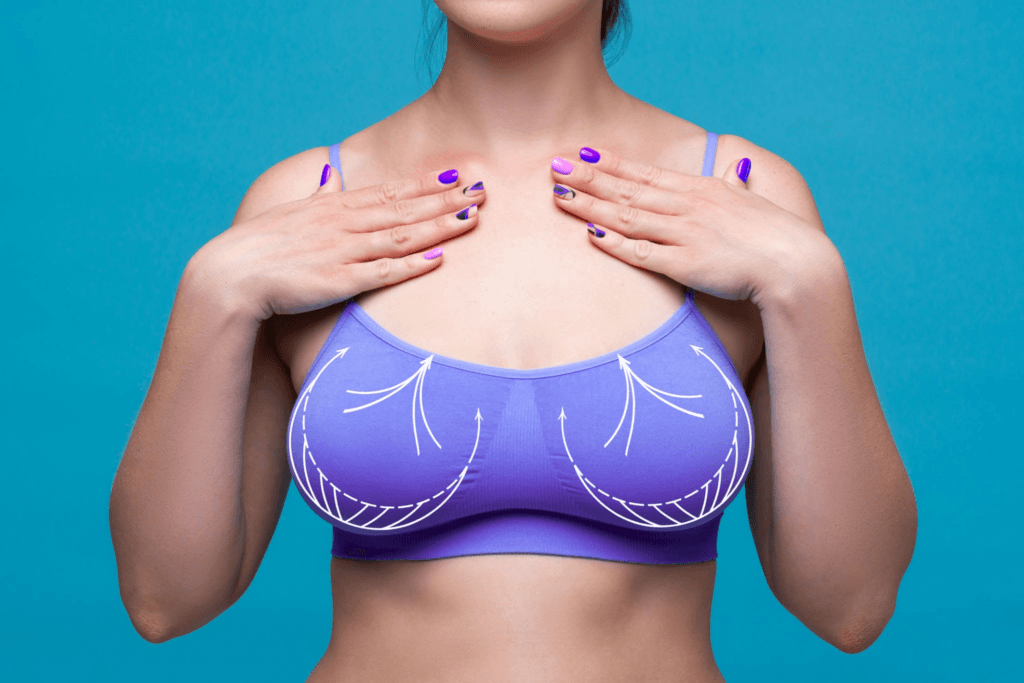
The commercial market for “breast-firming” creams, specialized chest-wall exercises, and magical herbal supplements is built on a fundamental defiance of biological physics. Millions of women seek ways to reverse breast sagging, driven by aggressive cosmetic marketing that promises gravity-defying results without surgical intervention. However, the hard biological truth remains that once the internal structures supporting the breasts stretch, no topical formulation, dietary alteration, or muscle-building exercise can restore them to their original height. Consequently, patients who rely on these unverified natural remedies often find themselves trapped in a cycle of disappointment and unnecessary expense.
In this comprehensive, science-first anatomical guide, we will break down the mechanical limits of breast tissue to explain why you cannot lift sagging breasts naturally. By analyzing the breakdown of Cooper’s ligaments, the progressive loss of skin elasticity, and the clinical reality of breast ptosis grades, you will discover why surgical correction is the only medically proven solution. At SurgyTeam, based in the beautiful Mediterranean district of Lara, Antalya, Türkiye, we believe in absolute clinical honesty and bespoke surgical planning. This realistic 2026 assessment will help you understand your unique anatomy and show you how our board-certified experts—such as our specialized breast surgeon, Dr. Bora Yucel, and our FEBOPRAS-certified co-founder, Dr. Mehmet Fatih Okyay—achieve safe, long-lasting restoration.

Table of Contents
Why You Cannot Lift Sagging Breasts Naturally: Exploding the Cosmetic Myth
To understand why you cannot lift sagging breasts naturally, we must first examine the commercial claims of breast-firming creams. Manufacturers often assert that their topical formulas stimulate collagen synthesis to lift sagging breasts naturally. However, medical science shows that these creams only target the epidermis, which is the skin’s outermost layer. The suspensory apparatus of the breast lies much deeper within the dermal and parenchymal layers. Consequently, topical macromolecules cannot penetrate deep enough to affect the mechanical support system. Therefore, spending money on creams to lift sagging breasts naturally is clinically futile.
Similarly, many wellness influencers promote specialized chest-wall exercises as a way to lift sagging breasts naturally. While building the pectoralis major muscle can improve your overall posture and push the breast tissue slightly forward, it cannot change the position of the breast gland itself. Pectoral muscle is located behind the breast, and the two are not fused together. Therefore, hypertrophied muscle does not pull the breast gland upward. Indeed, no physical routine can lift sagging breasts naturally because the breast consists of fat, glands, and ligaments, not muscle tissue.
Lastly, dietary supplements and herbal remedies frequently claim they can lift sagging breasts naturally. These products often contain phytoestrogens, which may cause temporary water retention and breast swelling. This temporary swelling mimics firmness, but it does not address the underlying structural stretching. As soon as the supplement is discontinued, the swelling subsides, leaving the breasts in their original position. Ultimately, attempting to lift sagging breasts naturally with unregulated supplements poses health risks without offering any permanent physical elevation.
The Science of Breast Anatomy and the True Role of Cooper’s Ligaments
A thorough look at breast anatomy reveals why it is biomechanically impossible to lift sagging breasts naturally. The primary structural support of the breast consists of Cooper’s ligaments, which are thin, collagen-rich fibrous bands of tissue. These ligaments run from the deep pectoral fascia, through the breast gland, and attach directly to the dermis of the skin. They act like internal suspensory straps, maintaining the shape and height of the breast. When you attempt to lift sagging breasts naturally, you are fighting against the permanent mechanical elongation of these delicate fibrous bands.
Over time, gravity, pregnancy, weight fluctuations, and aging place a continuous load on Cooper’s ligaments. Under this constant tension, the collagen fibers undergo a process called mechanical creep, where they slowly and permanently stretch. Unlike muscles, which can contract and regain their shape, ligaments are passive structures with very low elasticity. Once they stretch or tear under chronic load, they cannot contract or shorten. Therefore, any claim that you can lift sagging breasts naturally ignores the basic biomechanical laws of ligament tissue.
Additionally, hormonal fluctuations during menopause and pregnancy lead to glandular atrophy, which replaces dense glandular tissue with soft fat. This shift alters the volume distribution, causing the remaining tissue to sag. If you expect to lift sagging breasts naturally after these profound anatomical changes, you will be disappointed. The structural framework has lost its anchoring points, and the skin envelope is now too large for the volume it contains. Consequently, only surgical correction can physically reposition these deeper structures.
Skin Elasticity and Dermal Remodeling Under Mechanical Creep
Beyond the suspensory ligaments, skin elasticity plays a critical role in maintaining breast shape. The dermal extracellular matrix contains collagen fibers, which provide tensile strength, and elastin fibers, which allow the skin to recoil after stretching. However, skin elasticity declines steadily with age, decreasing by about thirty percent every decade. This intrinsic aging process reduces fibroblast activity, meaning your body produces less new collagen. Therefore, expecting your skin to contract enough to lift sagging breasts naturally is structurally impossible once elasticity is lost.
Extrinsic factors, such as UV exposure and smoking, accelerate the breakdown of both collagen and elastin. When the skin envelope loses its structural integrity, it can no longer support the weight of the breast gland. Under this weight, the skin undergoes permanent plastic deformation. Once this occurs, the mechanical set-point of the tissue is permanently altered. Because of this, no non-invasive method can restore the original elasticity. Thus, those who try to lift sagging breasts naturally through massage or home remedies cannot reverse this dermal cellular degradation.
Furthermore, rapid weight fluctuations stretch the skin to its absolute limit, leaving it thin and depleted of structural proteins. When you lose weight, the fat inside the breast disappears, but the overstretched skin envelope remains. This leaves the breast looking deflated and hollow. Since skin tissue does not contain muscle fibers, it cannot actively tighten to fit the new, smaller volume. Consequently, the only way to resolve this discrepancy is to physically remove the excess skin, reinforcing why you cannot lift sagging breasts naturally.
Evaluating Your Breast Ptosis Grades: A Scientific Classification
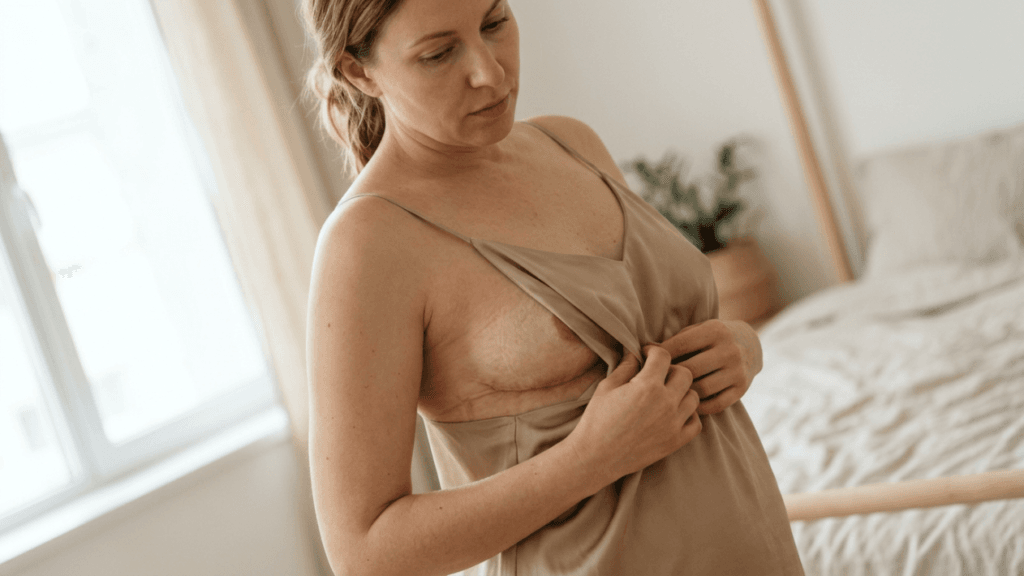
In plastic surgery, we evaluate breast sagging using a standardized scale called the Regnault classification. This system classifies breast ptosis grades based on the position of the nipple relative to the inframammary fold, which is the crease under the breast. Understanding these breast ptosis grades helps patients realize why they cannot lift sagging breasts naturally. While mild sagging might seem manageable, moderate and severe cases involve significant structural descent that only surgery can correct. Our clinical assessment in 2026 emphasizes this scientific approach to ensure realistic expectations.
Let us examine the exact definition of each grade. Grade I, or mild ptosis, occurs when the nipple lies at the level of the inframammary fold. Grade II, or moderate ptosis, is when the nipple falls below the fold but remains above the lower contour of the breast. Grade III, or severe ptosis, describes a nipple that points downward at the lowest point of the breast. Finally, pseudoptosis occurs when the breast gland sags below the fold, but the nipple remains above it. Clearly, these mechanical changes cannot be altered by simple physical exercises or skin creams, making the dream to lift sagging breasts naturally medically unrealistic.
| Ptosis Grade (Regnault) | Clinical Nipple Position | Biomechanical Tissue State | Surgical Correction Strategy |
|---|---|---|---|
| Grade I (Mild) | At the level of the inframammary fold (IMF) | Early stretching of Cooper’s ligaments; minor skin laxity | Periareolar Mastopexy or Augmentation Mastopexy |
| Grade II (Moderate) | Below the IMF, but above the lower breast contour | Moderate ligament elongation; loss of upper-pole fullness | Vertical (Lollipop) Mastopexy; possible fat grafting |
| Grade III (Severe) | Below the IMF, pointing downward at the lowest point | Severe degradation of collagen; extensive skin stretching | Inverted-T (Anchor) Mastopexy; glandular reshaping |
| Pseudoptosis | Above the IMF, but the breast parenchyma sags below it | Loss of glandular volume while nipple position remains stable | Breast Augmentation or limited Mastopexy |
To further demonstrate the futility of non-surgical methods, we have compiled a comparison of common natural claims versus actual scientific facts. This comparison highlights why you cannot lift sagging breasts naturally using commercial products. By studying these facts, you can protect yourself from predatory advertising and make informed decisions about your body.
| Claimed Natural Method | The Mythical Promise | Anatomical Reality | Scientific Outcome |
|---|---|---|---|
| Firming Creams | Stimulate collagen and lift sagging breasts naturally | Active molecules cannot cross the 0.1 mm epidermal barrier to reach deep ligaments | Superficial hydration only; zero physical elevation of breast tissue |
| Pectoral Exercises | Strengthen chest muscles to lift sagging breasts naturally | The pectoralis major lies deep to the breast; the breast gland itself has no muscle fibers | Improved posture; the breast mound remains physically sagged on the chest wall |
| Dietary Supplements | Hormonally firm and lift sagging breasts naturally | Phytoestrogens cause temporary fluid retention and swelling of the breast tissue | Temporary swelling subsides once supplement stops; potential hormonal imbalances |
| Cold Showers & Massage | Tighten skin fibers to lift sagging breasts naturally | Cold causes minor, temporary skin contraction; massage does not rebuild collagen | Brief vascular contraction that disappears in minutes; no permanent skin tightening |
The Path to Real Improvement: Surgical Correction via Mastopexy
Since you cannot lift sagging breasts naturally, the only scientifically proven way to restore breast position is through surgical correction. The gold standard for correcting breast ptosis is a surgical procedure called mastopexy, commonly known as a breast lift. During a mastopexy, a plastic surgeon removes excess skin, reshapes the underlying breast tissue, and repositions the nipple-areola complex to a higher, more youthful position. This procedure directly addresses the overstretched Cooper’s ligaments by creating a new, tight skin envelope that acts as a natural brassiere.
For patients who have lost substantial volume due to pregnancy or weight loss, a standalone mastopexy may not provide the desired fullness in the upper pole. In such cases, an augmentation mastopexy is the ideal solution. This combined procedure uses breast implants to restore volume while simultaneously lifting the skin envelope. Conversely, for patients with very heavy, large breasts that cause chronic neck pain and severe sagging, a reduction mammoplasty is more appropriate. This technique removes excess glandular tissue and skin to lighten the load on the chest, preventing future sagging.
Ultimately, these advanced techniques require deep anatomical knowledge and precise execution. Unlike the false promises of trying to lift sagging breasts naturally, surgical correction delivers immediate, visible, and dramatic improvements that can last for many years. At SurgyTeam, our surgeons customize every procedure to match the patient’s specific anatomy. By rejecting the standard “one-size-fits-all” approach, we ensure that your surgical results look natural, proportional, and beautiful.
Why You Cannot Lift Sagging Breasts Naturally After Weight Fluctuations
Weight fluctuations are one of the most common causes of breast sagging. When you gain weight, your breasts expand as fat accumulates in the parenchymal layers, stretching the surrounding skin and Cooper’s ligaments. However, when you lose weight, this fat is depleted, but the stretched tissue does not shrink back to its original size. Consequently, the breasts lose their fullness and sag downward. This mechanical stretching is permanent, which is why attempting to lift sagging breasts naturally after major weight loss will not produce results.
Furthermore, the rate of weight loss plays a significant role in tissue damage. Rapid weight loss does not allow the skin any time to adjust, leading to severe deflated appearance. Many women turn to high-intensity chest exercises in a desperate attempt to lift sagging breasts naturally. While exercise is excellent for your cardiovascular health, it cannot rebuild the elastic fibers that have been torn by rapid expansion. Therefore, patients must accept that once the tissue’s physical limit is exceeded, only surgical correction can restore their shape.
In addition, chronic weight fluctuations degrade the overall quality of your skin collagen. This repeated stretching and shrinking weakens the dermal matrix, making the skin even less elastic over time. If you continue to search for ways to lift sagging breasts naturally after multiple weight cycles, you are fighting a losing battle against biology. The optimal approach is to stabilize your weight and seek professional clinical support. Our team at SurgyTeam is dedicated to helping patients navigate this transition safely, providing clear, science-first guidance instead of empty cosmetic promises.
Choosing Transparency: Surgical Correction at SurgyTeam in 2026
At SurgyTeam, we understand that deciding to undergo surgery is a significant personal journey. That is why we reject the misleading marketing that claims you can lift sagging breasts naturally. Instead, we focus on medical transparency, detailed anatomical education, and honest clinical results. Located in the beautiful Mediterranean district of Lara, Antalya, Türkiye, our private clinic is a leading center for international patients seeking premium surgical care. We provide a safe, luxurious, and supportive environment where your health and satisfaction are our top priorities.
Our clinic is built on the expertise of a distinguished collective of board-certified specialists with over twenty years of successful clinical experience. Rather than relying on generalist surgeons, we assign every patient to a niche specialist who focuses entirely on their specific procedure. For breast surgeries, our dedicated specialist, Dr. Bora Yucel, utilizes advanced techniques to restore breast shape and volume. Additionally, our co-founder, Dr. Mehmet Fatih Okyay, holds the prestigious FEBOPRAS and EBOPRAS certifications, reflecting our commitment to the highest international standards of plastic surgery.
We also understand that traveling abroad for surgery can cause anxiety. Therefore, we offer premium, all-inclusive packages designed to make your journey as comfortable and stress-free as possible. From VIP airport transfers and luxury five-star hotel accommodations to dedicated multi-language coordinators, we manage every detail of your stay. When you choose SurgyTeam, you are not just getting a surgical procedure; you are experiencing European-standard care in a relaxing holiday setting. If you are ready to stop wasting time trying to lift sagging breasts naturally, we invite you to contact us today for a personalized, honest clinical evaluation.
Step-by-Step Action Plan: How to Address Breast Sagging Safely
Step 1: Assess your breast ptosis grade realistically. Stand in front of a mirror and check where your nipple lies relative to the crease under your breast. This initial self-check will help you understand the severity of your sagging and why you cannot lift sagging breasts naturally.
Step 2: Eliminate ineffective cosmetic treatments from your budget. Stop purchasing expensive “firming” creams, herbal supplements, or suction devices that claim to lift sagging breasts naturally. Saving these resources allows you to invest in a medically proven, permanent solution.
Step 3: Consult a board-certified plastic surgery specialist. A professional clinical examination is essential to determine the quality of your skin elasticity and the condition of your suspensory ligaments. During your consultation, ask about the differences between standard mastopexy and augmentation mastopexy.
Step 4: Select a customized surgical plan designed for your unique anatomy. Avoid generic, cookie-cutter treatment packages that do not account for your specific breast ptosis grades. A personalized plan ensures that your final results look natural and last for many years.
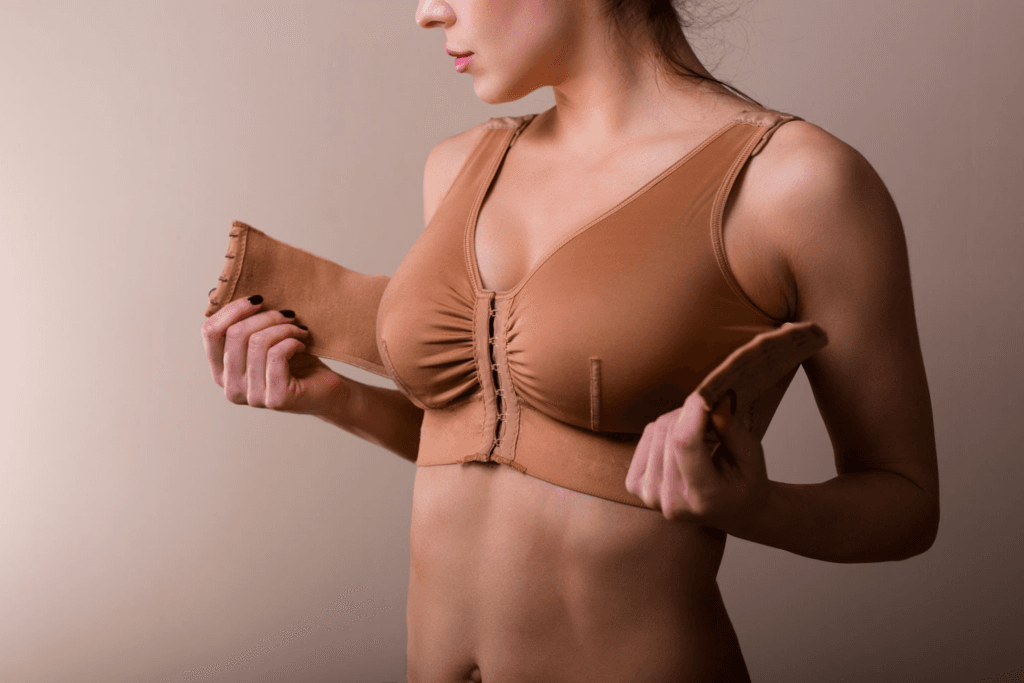
Step 5: Prepare for your recovery and follow all post-operative instructions. Wear your specialized compression garment as directed and avoid strenuous activities that place stress on your healing tissues. Following these guidelines is critical to ensure optimal healing and long-term satisfaction.
Ready to discard the myths and achieve real, lasting results? Contact us at SurgyTeam to schedule your personalized virtual consultation with our board-certified breast specialists.
Scientific References and Evidence-Based Medicine
We base our surgical practice and patient communication on verified medical science. Below are the peer-reviewed clinical studies that support our findings regarding Cooper’s ligaments, skin elasticity, and breast ptosis grades:
- Regnault, P. (1986). Classification of breast ptosis. Plastic and Reconstructive Surgery, 78(5), 641–645. PMID: 2948245
- Hickey, S. J., et al. (2015). Histologic architecture of Cooper’s ligaments in the human breast. Journal of Anatomy, 227(5), 735–743. PMID: 26311448
- Gierloff, A., & Hall, J. (2020). Biomechanical role of the suspensory ligament system in breast ptosis. Annals of Plastic Surgery, 85(4), 414–420. PMID: 32871386
Why can you not lift sagging breasts naturally?
You cannot lift sagging breasts naturally because breast ptosis is caused by the permanent stretching of Cooper’s ligaments and a loss of skin elasticity. Ligaments are passive, fibrous tissues that lack the ability to contract. Therefore, topical creams, muscle-building exercises, and supplements cannot restore the stretched tissue or re-anchor the breast gland to its original height on the chest wall.
Do breast firming creams work?
No, breast firming creams do not work to resolve sagging. Topical creams only affect the epidermis, which is the outermost 0.1 millimeters of the skin. The primary structures responsible for breast support, such as Cooper’s ligaments, lie several millimeters deep. Consequently, no topical formula can penetrate deeply enough to rebuild these suspensory ligaments or tighten the skin envelope permanently.
Can pectoral exercises lift my breasts?
Pectoral exercises strengthen the chest muscles located behind the breast gland, which can improve your posture and chest projection. However, the breast gland itself is composed of fat, glandular tissue, and ligaments with no muscle fibers. Therefore, muscle hypertrophy cannot lift the sagging breast tissue or reverse the mechanical stretching of Cooper’s ligaments and the skin envelope.
What is the most effective surgical correction for breast sagging?
The most effective surgical correction is a mastopexy, or breast lift. This procedure physically removes excess skin, reshapes the underlying breast tissue, and lifts the nipple-areola complex to a higher position. For patients who also suffer from volume loss, an augmentation mastopexy combines a lift with implants to restore full shape and youthful contour.
How long do the results of a surgical breast lift last?
The results of a surgical breast lift are long-lasting, but they are still subject to natural aging and gravity. To preserve your surgical correction, you must maintain a stable weight, wear supportive brassieres, and protect your skin from sun damage. Avoiding significant weight fluctuations and subsequent pregnancies will ensure your results remain beautiful for many years.