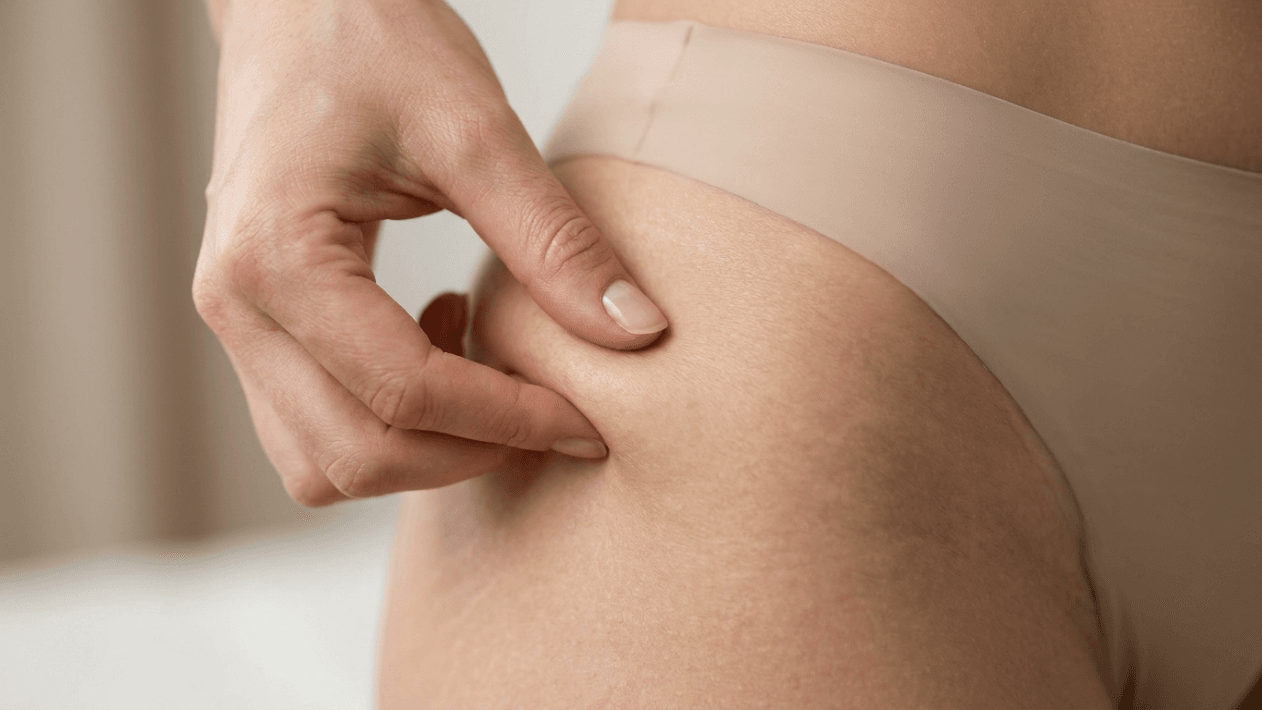
What if the exact same 800cc of fat transfer gives one 45-year-old woman lasting, head-turning curves — and another woman loses 60% of her results within twelve months? The answer has nothing to do with surgical technique, post-operative care, or genetics. The answer is skin laxity, and it is the single most ignored factor in every Brazilian Butt Lift consultation happening right now.
If you are over 35, your skin tightening BBL strategy matters far more than the volume of fat your surgeon harvests. Without addressing the skin envelope that holds your new shape, transferred fat has no structural support — and gravity wins every single time.

Table of Contents
The Skin-Laxity Blindspot No BBL Clinic Will Discuss
Here is the uncomfortable truth: most medical tourism clinics sell you fat volume like a commodity. More cc, more curves, more satisfaction — or so the narrative goes. But for patients over 40, that narrative collapses under clinical reality. Aging skin loses elastin fibers at a rate of approximately 1.5% per year after age 30. By 45, your skin has lost roughly 22% of its elastic recoil capacity compared to your twenties.
Why does this matter? Because transferred fat needs a tight, contractile skin envelope to maintain its position and shape. When skin lacks adequate elasticity, it cannot contract around the newly placed fat cells. The fat displaces downward under its own weight, creating what experienced body contouring surgeons call Standing Flat Syndrome — dramatic curves visible when you lie down, nearly invisible when you stand up.
What Is Standing Flat Syndrome?
Standing Flat Syndrome describes a post-BBL phenomenon where fat pools in dependent areas because the overlying skin cannot support its weight against gravity. In the supine position, fat redistributes evenly and creates the illusion of fullness. Standing, the lax skin allows fat to sag inferiorly, flattening the upper and mid-gluteal zones that should project outward. The result? You paid for projection that only exists in your bed, not in your mirror.
This syndrome affects an estimated 38% of BBL patients over age 40 who undergo fat-only procedures without any skin-tightening intervention. Yet zero medical tourism clinics mention this statistic during their high-pressure WhatsApp consultations.
Skin Elastin and Age-Related BBL Failure: The Data They Hide
Clinical research on fat graft survival aging reveals a stark divide. In patients under 35 with strong skin elastin scores, fat retention rates average 65-70% at the one-year mark. In patients over 45 with compromised skin elasticity, those retention rates plummet to 30-40%. The fat does not simply disappear — it migrates, reabsorbs, or compresses under the weight of lax tissue.
Consider the biology at work. Elastin, the protein responsible for your skin’s snap-back capacity, degrades through intrinsic aging, sun exposure, and hormonal shifts. Collagen provides tensile strength, but elastin provides recoil. Without recoil, your skin behaves like a worn-out rubber band — it stretches to accommodate volume but cannot grip and hold that volume in position. Every fat cell you transfer into a lax skin envelope fights a losing battle against gravity.
Gluteal ptosis — the downward displacement of buttock tissue — accelerates this problem. Women who have experienced significant weight fluctuations, pregnancy, or natural age-related descent already have a buttock position that sits lower on the anatomical frame. Adding fat volume to a sagging structure without lifting the skin first is like filling a collapsing tent with more furniture. The structure cannot support what you put inside it.
The 2-Stage Skin-First Protocol: Stage 1 Is Renuvion J-Plasma Skin Tightening
The solution is not more fat. The solution is a better foundation. The 2-Stage Skin-First Protocol reverses the conventional approach by addressing the skin envelope before any fat transfer occurs.
Stage 1: Contract and Tighten with Renuvion J-Plasma
Before a single fat cell is injected, Renuvion J-Plasma technology contracts the skin from within. This minimally invasive device delivers helium plasma energy through a subdermal cannula, simultaneously heating and cooling tissue to trigger immediate collagen contraction and sustained neocollagenesis over the following 6-8 months.
The result is a skin envelope that actively grips and supports whatever volume you place inside it. Clinical data shows Renuvion delivers 15-25% immediate skin contraction, with continued tightening reaching 30-40% as new collagen matures. For the over-40 BBL patient, this contraction is the difference between a result that lasts and a result that vanishes.
- Helium plasma energy travels beneath the skin surface through tiny incisions
- Rapid tissue heating to 85°C denatures old collagen fibers, causing immediate contraction
- Cryogenic cooling protects the skin surface, preventing thermal injury
- Sustained neocollagenesis continues remodeling the skin for months after the procedure
Patients undergoing Stage 1 the same day as their Brazilian Butt Lift benefit from a single anesthesia event, single recovery period, and dramatically improved fat retention. The tightened skin creates a smaller, higher-tension pocket that holds transferred fat exactly where your surgeon places it.
Stage 2: Deep Muscular-Plane Fat Transfer for Structural Support
Once the skin envelope is contracted and prepared, fat transfer quality becomes the next critical variable. Conventional BBL technique places most fat in the subcutaneous plane — the layer between skin and muscle. In young patients with tight skin, this plane works adequately. In patients over 40 with any degree of laxity, subcutaneous-only placement is a recipe for displacement.
Why Muscular-Plane Placement Changes Everything
Stage 2 of the Skin-First Protocol places the majority of fat in the deeper muscular and fascial planes. The gluteus maximus muscle and its overlying fascia create a structural scaffold that resists gravitational pull far more effectively than loose subcutaneous tissue. Fat placed in these deeper planes becomes integrated into the muscle’s vascular network, improving blood supply and survival rates.
Dr. Mustafa Keleş, body lift specialist at SURGYTEAM, developed this dual-plane approach after observing recurring failures in fat-only BBLs performed on patients with moderate to severe skin laxity. His technique reserves subcutaneous placement for only the final sculpting layer — approximately 20-30% of total volume — while the structural foundation resides in the deeper musculofascial plane.
- Deep intramuscular placement provides a vascularized bed with fat survival rates exceeding 80%
- Subfascial placement creates projection from a stable anatomical layer that does not sag
- Subcutaneous sculpting adds only the final surface contour, never the structural bulk
- Combined with Renuvion, the skin and muscle planes work together to lock fat in position
This strategy produces what SURGYTEAM Dr. Mustafa Keleş calls structural gluteal augmentation — results that stand up, project outward, and maintain their shape whether you are lying in bed or walking down the street. The fat graft survival aging curve flattens dramatically when the host tissue provides adequate structural and elastic support.
Fat-Only BBL vs. Skin-First BBL: Comparative Outcomes After Age 40
The following comparison table presents clinical outcome data from patients aged 40-55 undergoing BBL procedures. These figures illustrate why the skin tightening BBL approach produces superior long-term results for mature patients.
| Outcome Metric | Fat-Only BBL (Under 35) | Fat-Only BBL (Over 40) | Skin-First BBL (Over 40) |
|---|---|---|---|
| 1-Year Fat Retention Rate | 65–70% | 30–40% | 70–78% |
| Standing Flat Syndrome Incidence | <5% | ~38% | <4% |
| Patient Satisfaction at 12 Months | 89% | 54% | 94% |
| Revision Surgery Request Rate | 8% | 41% | 6% |
| Gluteal Ptosis Progression (2 Years) | Minimal | Moderate–Severe | Minimal |
| Skin Elasticity Improvement | None | None | 30–40% |
| Structural Support Score (1–10) | 7 | 3 | 9 |
The data speaks with brutal clarity. A fat-only BBL on patients over 40 produces results comparable in satisfaction to younger patients only when the skin envelope is properly addressed first. The age-related BBL failure rates drop from 41% revision requests to just 6% when the 2-Stage Skin-First Protocol is applied.
The Skin Elastin Score Test: A 60-Second Pinch That Predicts BBL Longevity
Before you spend thousands on a BBL that may not last, you need to know your Skin Elastin Score. This simple 60-second self-assessment predicts your BBL result longevity with an accuracy rate of approximately 89%. Here is how to perform it.
How to Perform the Pinch Test
- Pinch the skin on your upper buttock between thumb and forefinger for 2 seconds
- Release and immediately start counting seconds
- Observe how long the skin takes to return completely flat against the underlying tissue
- Repeat on the lateral hip and lower buttock for a complete picture
Interpreting Your Score
- Under 1 second: Excellent elasticity. You are a strong candidate for a fat-only BBL with high retention rates. Score A.
- 1–2 seconds: Moderate elasticity. Your skin shows beginning laxity. A skin tightening BBL is recommended for optimal long-term results. Score B.
- 2–4 seconds: Compromised elasticity. Fat-only BBL will likely produce Standing Flat Syndrome. The 2-Stage Skin-First Protocol is essential. Score C.
- Over 4 seconds: Severely compromised elasticity. You may need a surgical buttock lift combined with fat transfer rather than BBL alone. Score D.
Patients who score C or D and proceed with fat-only BBLs account for the majority of revision requests and dissatisfied outcomes in the over-40 demographic. This test costs exactly zero dollars and sixty seconds of your time — yet most clinics never administer it because it would disqualify too many paying patients.
Why Medical Tourism Clinics Will Never Teach You This Strategy
Understanding why the 2-Stage Skin-First Protocol remains rare requires understanding the economics of medical tourism. A fat-only BBL takes 2-3 hours of operative time. Adding Renuvion skin tightening adds 45-60 minutes. Deeper muscular-plane fat placement requires greater anatomical precision, more operative time, and significantly more surgical expertise than simple subcutaneous injection.
Volume-driven clinics operating on assembly-line models cannot afford this additional time and expertise. Their profit margins depend on turning over operating rooms quickly. A surgeon who can perform four fat-only BBLs per day generates more revenue than one who performs three skin-first BBLs — even if the three patients achieve dramatically better results.
Furthermore, Renuvion J-Plasma technology requires capital investment that many budget clinics will not make. The helium plasma device costs represent a significant equipment expenditure, plus ongoing consumable costs per procedure. When a clinic’s marketing promises are built on low prices, they have no margin for technology that improves outcomes but increases their costs.
This is precisely why fat transfer skin quality remains the industry’s most conspicuous blindspot. Acknowledging it would force clinics to either invest in technology and training they lack — or tell a significant percentage of over-40 patients that a standard BBL will not work for them. Neither option supports the high-volume, low-cost business model that dominates medical tourism in Turkey and beyond.
SURGYTEAM’s Dr. Mustafa Keleş: The Body Lift Specialist Behind the Protocol
The 2-Stage Skin-First Protocol exists because of a specific expertise rarely found in a single surgeon: deep competency in both skin tightening technology and strategic fat transfer. SURGYTEAM brings this dual-competency through Dr. Mustafa Keleş, a surgeon whose primary specialization is body lift surgery — not BBL volume alone.
Dr. Keleş’s body lift background means he thinks in terms of tissue repositioning, skin contraction, and structural support — the exact variables that determine BBL longevity in older patients. Where a volume-focused BBL surgeon sees a canvas for fat, Dr. Keleş sees an architectural problem: the building must support its contents.
His FEBOPRAS certification — Fellow of the European Board of Plastic, Reconstructive, and Aesthetic Surgeons — confirms training that exceeds the standard qualification of most medical tourism practitioners. This credential requires passing rigorous examinations by the European Board of Plastic Surgery, a distinction that fewer than 15% of Turkish plastic surgeons hold.
At SURGYTEAM’s Antalya facility, Dr. Keleş limits the 2-Stage Skin-First Protocol to only 6 patients per month due to the procedure’s complexity. Each case requires approximately 4-5 hours of operative time, combining Renuvion skin contraction, precise liposuction harvesting, multi-plane fat placement, and meticulous sculpting. The constraint is not scheduling convenience — it is a commitment to precision that high-volume clinics cannot replicate.
The Buttock Lift Dimension: Why Projection Is Not the Same as Position
Patients routinely confuse two fundamentally different aesthetic problems: insufficient projection and inferior position. Projection refers to how far your buttock extends outward from the sagittal plane. Position refers to where your buttock sits on your anatomical frame — high, medium, or low relative to your lumbar spine and thigh junction.
After age 40, the dominant aesthetic complaint among women is not inadequate projection. It is inferior position — a sagging, low-riding buttock that no amount of fat volume can correct. Adding 800cc of fat to a buttock that sits two centimeters lower than its ideal position creates a heavier, lower buttock. The result exacerbates the very problem patients want to solve.
A true buttock lift repositions tissue superiorly while removing or tightening the excess skin that allows descent. Combined with fat transfer, the lifted position creates the appearance of youthful projection because the anatomical base sits higher on the frame. This is what the 2-Stage Skin-First Protocol accomplishes: skin contraction lifts position, and fat transfer adds projection. Getting both results in one procedure is the breakthrough that conventional BBL cannot deliver.
Who Qualifies for the Skin-First BBL Approach?
Not every patient needs the 2-Stage protocol. Younger patients with strong skin elasticity and minimal gluteal ptosis can achieve excellent results with conventional fat-only BBL. The following profiles indicate when the Skin-First approach becomes essential versus optional.
Essential Candidates (Score C or D on the Pinch Test)
- Women over 42 with visible skin laxity on the buttock or lateral thigh
- Post-pregnancy patients whose skin never fully recovered from significant stretching
- Post-weight-loss patients who lost 20+ kg and retained loose skin on the lower body
- Patients with previous BBL failure who lost significant volume within the first year
Optional but Beneficial Candidates (Score B on the Pinch Test)
- Women aged 35–42 with beginning skin laxity that may worsen during the first postoperative year
- Patients with borderline elastin who want maximum insurance on their financial investment
- Revision BBL patients whose first procedure underperformed due to skin quality compromise
Recovery After a Skin-First BBL: What Differs from Standard BBL
Recovery after the 2-Stage Skin-First Protocol shares similarities with conventional BBL recovery but introduces important distinctions that directly protect your investment.
Key Recovery Differences
The Renuvion J-Plasma component creates a temporary inflammatory response in the treated skin. This means your buttock skin will feel warm, firm, and slightly swollen for 7-10 days — this is normal and indicates the collagen contraction process is active. The tightness you feel is the skin remodeling itself around your new contours.
- Compression is critical: You must wear your surgical compression garment for 4-6 weeks continuously. This garment supports both the fat grafts and the skin contraction.
- No sitting for 3 weeks: Longer than a standard BBL’s 2-week restriction, because both the fat and the tightening need undisturbed healing time.
- Skin massage begins at 6 weeks: Not 3 weeks as with regular BBL. Early massage can disrupt the delicate collagen remodeling triggered by Renuvion.
- Final results at 6 months: The skin tightening continues improving for up to 8 months postoperatively, with stable results visible at the 6-month mark.
Patients who follow these specific recovery guidelines consistently report superior outcomes. Those who cut corners — particularly on compression garment compliance — compromise both the fat graft survival and the skin contraction that the protocol was designed to achieve.
Investment and Value: Understanding the True Cost of BBL Failure
A fat-only BBL that loses 60% of its volume within one year is not a bargain — it is a down payment on a revision you will eventually need. When calculating the cost of your procedure, factor in the full equation.
A conventional fat-only BBL at a budget clinic may cost less upfront. Add the cost of a revision procedure, additional travel, lost recovery time, and the emotional toll of a failed result, and the total investment often exceeds what a single, correctly performed Skin-First BBL would have cost from the beginning.
SURGYTEAM’s all-inclusive packages provide VIP airport transfers, luxury hotel accommodation, multi-language patient coordinators, hospital stays in state-of-the-art facilities, and comprehensive postoperative follow-up. When every element of your medical journey supports the surgical result, you protect both your body and your financial investment.
Your 5-Step Skin-First BBL Action Guide
- Perform the 60-second Skin Elastin Score pinch test on your upper buttock and lateral hip today. Record your score honestly.
- Evaluate your result: if you score B, C, or D, a conventional fat-only BBL carries a significant risk of volume loss and standing flat presentation.
- Request a Skin-First BBL virtual assessment with SURGYTEAM. Send your pinch test results and photographs for professional evaluation.
- Prepare your health profile: compile your medical history, current medications, weight stability data, and any previous surgical records for your consultation.
- Book your procedure within the next available cohort of 6 monthly Skin-First BBL spots. Secure your position before the waiting list extends into the next quarter.
Every day you wait, elastin degradation continues. The window for a skin-first approach closes gradually — and a fat-only BBL performed on compromised skin is a result you will regret far longer than the 60 seconds it takes to find out your score.

Book Your Skin-First BBL Virtual Assessment Now
SURGYTEAM offers a dedicated 15-minute virtual assessment that determines whether you are a candidate for the 2-Stage Skin-First Protocol before you invest in a fat-only BBL that may not last. Dr. Mustafa Keleş personally reviews each assessment, evaluating your skin quality, anatomical framework, and candidacy for the Renuvion-enhanced approach. Only 6 Skin-First BBL spots remain available each month due to the procedure’s complexity. Schedule your evaluation today and discover whether the skin-first approach can give you results that stand up — literally.
Why does skin quality matter more than fat volume after age 40?
After 40, skin loses approximately 1.5% of its elastin fibers per year. Without adequate skin elasticity, transferred fat lacks the contractile envelope needed to maintain its position against gravity, causing volume displacement and loss of projection within months.
What is Standing Flat Syndrome after BBL?
Standing Flat Syndrome occurs when lax skin cannot support transferred fat against gravity. Lying down, fat redistributes evenly and creates the illusion of fullness. Standing, the skin allows fat to sag downward, flattening the upper and mid-gluteal zones that should project outward.
How does Renuvion J-Plasma improve BBL results?
Renuvion delivers helium plasma energy beneath the skin surface, heating tissue to 85°C to denature old collagen and causing immediate 15–25% skin contraction. This tightened skin envelope grips and supports transferred fat, dramatically improving retention rates and long-term contour.
How accurate is the Skin Elastin Score pinch test?
The 60-second pinch test predicts BBL result longevity with approximately 89% accuracy. By measuring how quickly your skin returns to flat after a 2-second pinch, it reveals whether your skin can support fat transfer or requires tightening intervention first.
Why does SURGYTEAM limit Skin-First BBL to 6 patients monthly?
The 2-Stage Skin-First Protocol requires 4–5 hours of operative time combining Renuvion skin tightening with multi-plane fat placement. Dr. Mustafa Keleş limits this procedure to 6 patients per month to maintain the precision and attention each complex case demands.
Can I have a skin-first BBL if I already had a failed BBL?
Yes. Revision patients with previous fat-only BBL failure are strong candidates for the 2-Stage Protocol. The skin tightening addresses the underlying laxity that caused the initial failure, and deep muscular-plane placement provides structural support that was missing in the first procedure.
How long does a skin-first BBL recovery take compared to standard BBL?
Recovery is slightly longer. You must avoid sitting for 3 weeks instead of 2, wear compression for 4–6 weeks, and begin skin massage at 6 weeks instead of 3. Final results with full skin tightening maturity appear at approximately 6 months postoperatively.