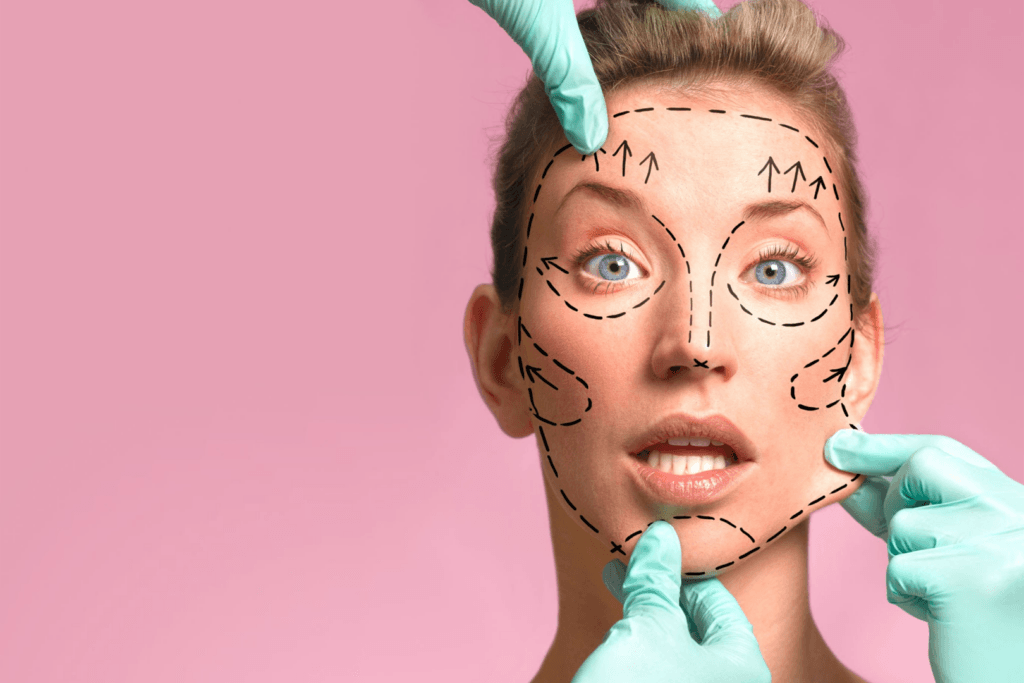
Up to 30% of patients seeking revision eyelid surgery cite a hollow, skeletal appearance as their primary complaint—and the root cause in the vast majority of these cases is over-resection of orbital fat during their initial blepharoplasty. This staggering figure exposes a silent epidemic in aesthetic surgery: surgeons trained in the outdated ‘remove as much as possible’ paradigm are inadvertently accelerating the very aging their patients hoped to reverse. When fat pads are stripped away aggressively, the delicate tissue surrounding the eye collapses, producing a sunken, hollowed look that adds decades rather than subtracting them.
You are about to discover the definitive signs that separate a volume-conscious surgeon from an aggressive fat remover. Understanding blepharoplasty hollowing before you commit to surgery empowers you to protect your appearance, demand age-appropriate fat pad preservation, and secure a naturally refreshed outcome that endures for years. This guide reveals the consultation red flags, anatomical truths, and surgical techniques that determine whether you wake up looking rested—or ravaged.

Table of Contents
Why Blepharoplasty Hollowing Has Become the Number One Reversible Error in Eyelid Surgery
The human orbit is a confined bony cavity housing fat pads that serve critical functions: cushioning the eyeball, supporting smooth oculomotor movement, and providing the youthful fullness that signals vitality. For decades, cosmetic eyelid surgery operated under a simple assumption—puffy eyes meant too much fat, and the solution was maximal excision. This logic collapsed when surgeons observed patients returning five to ten years post-operatively looking dramatically older than peers who never underwent surgery.
The missing variable was volume. Orbital fat does not merely accumulate with age; it undergoes subtle redistribution and gradual atrophy. Removing large quantities during a blepharoplasty jumpstarts this atrophy, accelerating a volume deficit that nature would have taken decades to produce. The result is blepharoplasty hollowing—a condition where the upper or lower eyelids appear sunken, dark circles deepen, and the eye takes on an unhealthy, skeletal quality.
The Anatomical Reality of Orbital Fat Pads
Understanding orbital anatomy is essential before evaluating any surgical plan. The upper eyelid contains two distinct fat compartments: the medial (nasal) fat pad and the central (pre-aponeurotic) fat pad. The lower eyelid houses three: the medial, central, and lateral fat pads. Each pad is separated by structural connective tissue septa and wrapped in a delicate fascial envelope.
- Medial Fat Pad: Densely packed, whitish-yellow, and located closest to the nose. This pad is the most frequently over-resected because its bulging is visually prominent even in young patients. Aggressive removal here creates a visible dark hollow near the inner eye corner.
- Central Fat Pad: The largest compartment, situated beneath the pupil. It provides the broad convexity of youthful lower lids. Over-resection flattens this area, eliminating the smooth contour that signals health.
- Lateral Fat Pad: The smallest and often overlooked compartment. Inadequate treatment here leaves residual puffiness, but over-removal carves an unnatural depression at the outer eyelid corner.
These fat pads are not surplus tissue. They are functional, structural components of facial rejuvenation that must be evaluated on a patient-by-patient basis. A surgeon who treats every fat pad as an enemy to be eliminated demonstrates a fundamental misunderstanding of aging eyes.

Seven Consultation Red Flags That Reveal an Aggressive Fat Remover
Your consultation is the single most critical moment to determine whether your surgeon prioritizes fat pad preservation or defaults to aggressive removal. The words a surgeon uses, the examination they perform, and the decisions they make in that room predict your surgical outcome with startling accuracy. Below are seven warning signs that should prompt you to seek a second opinion before proceeding.
- Red Flag 1 – ‘We Will Remove All the Fat’: A surgeon who states they will remove all visible fat from your eyelids has already decided your anatomy does not matter. This declaration signals a one-size-fits-all approach that ignores individual variations in orbital volume, facial structure, and aging trajectory.
- Red Flag 2 – No Preoperative Volume Assessment: If your surgeon does not assess the quality and quantity of your periorbital volume during the examination, they are flying blind. Volume assessment involves evaluating skin thickness, fat pad prominence, midface support, and the relationship between the eye and surrounding structures. Skipping this step guarantees surgical complications down the line.
- Red Flag 3 – Ignoring Midface Anatomy: The lower eyelid does not exist in isolation. A surgeon who evaluates the eyelid without examining the cheek and midface complex fails to recognize that cheek descent often causes lower lid pseudoherniation—a condition where fat appears bulging but is actually being pushed forward by gravity acting on the midface. Treating this with fat removal accelerates blepharoplasty hollowing.
- Red Flag 4 – Dismissing Fat Repositioning as Unnecessary: Fat repositioning—moving herniated fat from the front of the orbital septum to behind it or redistributing it along the orbital rim—is a well-established technique. A surgeon who dismisses this option likely lacks the technical skill to perform it and defaults instead to excision.
- Red Flag 5 – No Discussion of Age-Related Volume Loss: Your surgeon should proactively explain how fat naturally diminishes with age and how over-removal today compounds with future aging. If this conversation never happens, your surgeon is planning for today’s appearance without considering how you will look in a decade.
- Red Flag 6 – Template Before-and-After Photos: If every post-operative photo shows patients with deeply hollowed upper lids and flat lower lids, the surgeon’s aesthetic sensibility favors depletion. You should see results that retain smooth, age-appropriate fullness.
- Red Flag 7 – Rushed Surgical Planning: A surgeon who spends minimal time examining your eyelids and middle face before proposing excision is not investing in the precision your anatomy demands. Detailed mapping of each fat pad should occur during the consultation, not discovered intraoperatively.

Fat Preservation vs. Fat Excision: A Comparative Analysis of Long-Term Outcomes
The difference between a preserved-fat blepharoplasty and an excision-heavy approach becomes dramatically visible over time. Patients who undergo fat-preserving techniques maintain youthful eyelid contours for significantly longer, while those subjected to aggressive removal face progressive hollowing with each passing year. The table below illustrates these contrasting outcomes across key aesthetic parameters.
| Outcome Parameter | Aggressive Fat Excision | Fat Preservation Technique |
|---|---|---|
| Upper lid contour at 1 year | Deep sulcus, sunken appearance | Smooth, natural fullness |
| Lower lid appearance at 5 years | Flat, dark circles worsen | Gentle convexity, minimal shadowing |
| Rate of revision surgery needed | 20-35% | 3-7% |
| Periorbital volume at 10 years | Severe depletion, skeletal eye | Age-appropriate volume maintained |
| Patient satisfaction at 10 years | Drops significantly after year 3 | Remains consistently high |
| Skin quality over orbital rim | Thin, adherent, visible vessels | Supple, well-supported skin |
| Midface-lower lid continuity | Disrupted, visible step-off | Smooth transition preserved |
This data makes an irrefutable case: preserving fat pads during eyelid surgery is not merely an artistic preference—it is a clinical imperative. Patients who lose periorbital volume face compounding aesthetic deficits that become increasingly difficult to correct. Fat grafting into previously operated eyelid tissue carries lower survival rates and less predictable results compared to primary fat preservation.
How Aging Eyes Compound the Damage of Over-Resection
The periorbital region undergoes predictable aging changes that every surgical plan must account for. Fat volume in the orbit decreases naturally at a rate of approximately 1% per year after age 35. Simultaneously, the bony orbit widens slightly as the orbital rim remodels, and the retaining ligaments of the midface weaken, causing descent of the cheek fat pad. These interconnected changes create a cascade of volume loss that aggressive blepharoplasty dramatically accelerates.
The Vicious Cycle of Volume Depletion
When a surgeon removes fat pads during a blepharoplasty, the immediate postoperative result often appears pleasing—the lids look flatter, the bulges disappear, and the patient feels satisfied. However, this satisfaction is temporary. As natural aging continues to deplete residual fat, the surgeon’s initial over-resection leaves the patient with insufficient padding. The eyelid skin, deprived of its supportive fat base, collapses inward and adheres directly to the underlying orbicularis oculi muscle and orbital rim bone.
This collapse produces a cascade of secondary deformities. The upper eyelid crease migrates upward as volume disappears, creating an unnaturally high fold. The lower eyelid develops a visible separation from the cheek, forming a distinct groove known as the nasojugal fold or tear trough deformity. Dark circles intensify because the thin skin now rests directly against muscle and bone without the veil of intervening fat. Each of these changes compounds the others, producing a face that reads as prematurely aged rather than rejuvenated.
Patients who understand this trajectory recognize that blepharoplasty hollowing is not a risk affecting only a small percentage of people—it is the inevitable consequence of an outdated surgical philosophy. The only question is timing. A 45-year-old who undergoes aggressive fat removal may look acceptable at age 47 but devastated at age 55, precisely when their peers are beginning to show aging that could have been delayed with a fat-preserving approach. This is why choosing a surgeon who prioritizes facial rejuvenation through volume retention is one of the most consequential decisions regarding your appearance you will ever make.
Visual Signs of Blepharoplasty Hollowing Every Patient Must Recognize
Identifying hollowing early allows patients to seek corrective intervention before the deformity becomes severe. Recognizing these visual markers also helps you evaluate before-and-after photographs during your surgeon selection process, enabling you to spot the hallmarks of aggressive fat removal in other patients’ results.
Upper Eyelid Hollowing Indicators
- Deep Supratarsal Sulcus: A pronounced groove running from the inner eye corner across the upper lid. In severe cases, this sulcus becomes so deep that it creates a noticeable shadow even in overhead lighting. The crease appears skeletal rather than youthful.
- Multiple Upper Lid Creases: When fat is insufficient to support the skin, the lid folds irregularly upon opening. Instead of a single, clean crease, patients develop secondary folds that bunch and overlap. The lid architecture loses its structural elegance.
- Visible Vascularity Through Thin Skin: Without fat buffering the skin from underlying muscle, telangiectasias and venous markings become visible. The upper lid takes on a mottled, aged texture that no topical treatment can resolve.
- Difficulty Closing the Eye Fully: In extreme cases, severe upper lid hollowing from over-resection contributes to lagophthalmos—an inability to close the eyelid completely. This exposes the cornea and creates a serious functional complication beyond aesthetic dissatisfaction.
Lower Eyelid Hollowing Indicators
- Scleral Show and Tethering: The lower lid margin retracts or pulls downward, exposing the white sclera below the iris. This rundowns the eye, producing a perpetually tired and hollow appearance that restorative sleep cannot improve.
- Exaggerated Tear Trough Deformity: The groove between the lower lid and cheek deepens dramatically. Aggressive fat removal eliminates the smooth transition from lid to cheek, creating an abrupt step-off that casts persistent shadows.
- Lower Lid Skin Adherence to Bone: When fat is absent, the thin lower lid skin directly contacts the orbital rim. This produces a hard, unyielding appearance during animation—smiling, blinking, or speaking reveals that the skin lacks the soft, mobile quality of a well-padded lid.
- Midface-Lower Lid Separation: The aesthetic continuity between the lower eyelid and the upper cheek is disrupted. Instead of a seamless slope, a visible groove or shelf appears, fragmenting the midface into disconnected zones rather than a unified, youthful surface.
The Fat Preservation Blepharoplasty Technique: How Our Surgeons Operate Differently
At SURGYTEAM, our surgeons reject the outdated paradigm of maximal fat excision. Our approach to eyelid surgery centers on age-appropriate volume retention—a philosophy grounded in the understanding that periorbital fat is an asset to be conserved and redistributed, not discarded. This distinction transforms the surgical outcome from a depleting procedure into a genuinely rejuvenating one.
Core Principles of Our Preservation Approach
- Conservative Graded Excision: When genuine excess fat exists—typically the medial fat pad—our surgeons remove only the minimal amount necessary to reduce visible bulging. Central and lateral pads are almost never excised. Instead, they are repositioned or supported. This measured strategy prevents the cascade of volume depletion that leads to hollowing.
- Fat Repositioning Over Resection: Herniated fat pads are redirected behind the orbital septum or draped along the orbital rim to fill tear troughs and smooth lid-cheek transitions. This technique harnesses the fat you already possess as a natural volumizer rather than discarding it and creating a future deficit that requires revisionary filler or grafting.
- Septal Reset Technique: Rather than cutting through the orbital septum to access and remove fat, our surgeons often perform a septal reset—tightening and repositioning the septum itself. This addresses the prolapse of fat without reducing total volume. The septum acts as a structural barrier, restoring the fat pads to their anatomically correct position while preserving fullness.
- Integrated Midface Support: Because lower lid hollowing frequently stems from midface descent rather than true fat excess, our surgeons evaluate whether a concomitant midface lift addresses the root cause of lower lid bulging. Elevating the midface redrapes the cheek fat, taking tension off the lower lid and eliminating the pseudoherniation that aggressive surgeons mistakenly treat with fat removal. Explore how a midface lift can complement your eyelid procedure.
These principles collectively represent a paradigm shift in periorbital surgery. Where traditional techniques progressively age the eye area, our fat preservation method produces results that actually improve relative appearance over time because the retained volume continues to provide structural support as natural aging unfolds. Learn more about our comprehensive approach to eyelid surgery at SURGYTEAM.
Why Revision Blepharoplasty Is Far More Challenging Than Primary Surgery
Correcting blepharoplasty hollowing through revision surgery presents challenges that primary surgery never encounters. Once fat has been removed and the surrounding septa disrupted, the tissue planes become scarred and fused. Fat grafting into these compromised tissues yields unpredictable survival rates, often requiring multiple sessions to achieve adequate volume. Structural fat grafting—the technique most commonly employed for revision—carries a survival rate of only 40-60% in previously operated eyelids compared to 70-85% in untouched tissue.
Beyond technical difficulty, revision patients face emotional and financial burdens that compound the physical challenge. Many describe a sense of betrayal by their original surgeon and frustration at having to invest additional time, discomfort, and expense to correct a problem that was entirely preventable. The cost of revision blepharoplasty frequently exceeds the original procedure because it demands more time, more sophisticated technique, and often multiple stages. These facts alone make avoiding over-resection during primary surgery an absolute priority.
Challenges Specific to Revision Procedures
- Scar Tissue Distortion: Previous incisions and fat removal create scar tissue that alters the natural planes of the eyelid. This scarring makes dissection more difficult and increases the risk of contour irregularities after fat grafting.
- Limited Donor Options: Structural fat grafting requires harvesting fat from another body area. In slender patients, finding adequate donor fat can be difficult, and the small amounts needed for eyelid augmentation make precision more critical than in larger-volume procedures.
- Surface Irregularities: Fat grafted into hollowed eyelids can develop visible lumps, cysts, or calcifications. The thin skin of the periorbital region provides no camouflage, making every imperfection conspicuous. Achieving a smooth result requires exceptional surgical finesse.
Questions to Ask Your Surgeon During the Blepharoplasty Consultation
Arming yourself with specific, probing questions transforms your consultation from a passive informational session into a rigorous evaluation of your surgeon’s philosophy and competence. The answers you receive will immediately reveal whether your surgeon understands the importance of volume or whether they plan to strip away fat indiscriminately.
- ‘How much fat do you typically remove during a blepharoplasty, and how do you determine the amount?’ Listen for an answer that references individual anatomy, conservative thresholds, and an awareness of long-term volume changes. A dismissive or vague response signals trouble.
- ‘Do you reposition fat pads rather than excising them, and in what percentage of your cases?’ A surgeon who regularly repositions fat—rather than simply removing it—demonstrates the technical skill and preservation mindset your anatomy requires.
- ‘How do you address the tear trough and lid-cheek junction during lower blepharoplasty?’ The correct answer should involve fat redraping, septal reset, or midface suspension. Excision alone will deepen the tear trough and accelerate hollowing.
- ‘What percentage of your blepharoplasty patients require revision surgery for hollowing?’ An honest surgeon will cite a low percentage and describe their approach to preventing this outcome. Evasion or unrealistic zero-percent claims warrant skepticism.
- ‘How will my results look in 10 years compared to someone who never had surgery?’ This question directly tests whether the surgeon considers long-term volume trajectory. A preservation-minded surgeon will explain how retaining fat ensures your eyelids age in step with your natural aging process.
The Role of Orbital Anatomy in Predicting Your Surgical Risk
Not all patients face equal risk of blepharoplasty hollowing. Specific anatomical features predispose certain individuals to more dramatic hollowing after fat removal. Identifying your risk profile before surgery allows you and your surgeon to adjust the operative plan, preserving more fat in high-risk patients.
High-Risk Anatomical Features
- Deep-Set Eyes: Patients with deep-set orbits naturally have less fat relative to the orbital volume. Even modest fat removal in these patients creates visible hollowing because the fat deficit becomes proportionally significant against the deep bony contour.
- Thin Skin: Extremely thin periorbital skin offers no camouflage for underlying volume deficits. Every millimeter of fat loss becomes visible through this paper-thin tissue. These patients require the most conservative approach to fat removal.
- Prominent Nasojugal Grooves: Patients with deep tear troughs before surgery are at heightened risk of worsening these grooves after fat excision. Redraping existing fat over the groove, rather than removing pads adjacent to it, represents the correct strategy.
- Flat Malar Cheeks: Patients with flat or retruded midface anatomy depend more heavily on lower lid fat for the transition from lid to cheek. Removing this fat eliminates the already tenuous bridge between these two aesthetic zones.
Patients presenting with any combination of these features should insist on a preservation-forward surgical plan. A qualified surgeon will identify these risk factors unprompted during the consultation and propose a strategy that accounts for them. Failing to recognize these anatomical vulnerabilities represents a critical gap in surgical planning that produces preventable hollowing.
How to Evaluate Before-and-After Photos for Signs of Aggressive Fat Removal
A surgeon’s portfolio of before-and-after images reveals their aesthetic philosophy more clearly than any conversation. Learning to interpret these images critically separates you from patients who make decisions based on surface-level impressions. The photographs you review should demonstrate consistent patterns of fat pad preservation, not just short-term improvements in puffiness.
What to Look For in Ideal Results
- Retained Upper Lid Fullness: Post-operative images should show a gentle convexity in the upper lid, not a collapsed sulcus. The crease should appear well-defined but not hollowed—not sitting in a deep groove above the lash line.
- Smooth Lid-Cheek Transition: Lower lid results should demonstrate continuation from lid to cheek without an abrupt groove, shelf, or visible demarcation line. The midface and lower eyelid should read as a unified contour.
- Minimal Scleral Show: The lower lid margin should rest at or above the inferior iris border. Visible white sclera below the iris signals retraction—often caused by aggressive fat and skin removal.
- Natural Lighting and Expression: Evaluate photos taken in standardized, natural lighting without forced smiling or dramatic brow elevation. These conditions reveal the true contour quality of the eyelid region.
What to Avoid in Problematic Results
- Shadowed Upper Sulcus: If the area above the upper lid crease appears darker or more shadowed post-operatively, fat was likely over-removed. This shadowing deepens with time.
- Step-Off at the Orbital Rim: A visible ledge or shelf where the lower lid meets the cheek indicates that fat was removed without repositioning to smooth the transition.
- Over-Excised Medial Fat Pad: A dark, triangular hollow near the inner eye corner (the medial canthus) signals that the nasal fat pad was excessively removed. This defect is extremely difficult to correct.
The SURGYTEAM Difference: Specialist Expertise for Periorbital Rejuvenation
SURGYTEAM operates on a principle that sets us apart from conventional medical tourism: every surgeon concentrates exclusively on their area of subspecialty. Our facial rejuvenation team includes specialists who dedicate their practice to periorbital surgery and facial aging—surgeons who understand that the eyelid is the most visible, unforgiving structure on the human face and that surgical complications here carry disproportionate aesthetic and emotional consequences.
Credentials That Protect Your Outcome
- FEBOPRAS-Certified Specialists: Our lead surgeons hold Fellow of the European Board of Plastic, Reconstructive, and Aesthetic Surgeons certification—a distinction achieved by only a select group of practitioners who have demonstrated competency across the full spectrum of plastic surgery.
- Subspecialty Focus: Unlike clinics where one surgeon performs every procedure, SURGYTEAM assigns eyelid cases to surgeons whose primary focus is facial aesthetics. This specialization translates directly into fewer complications, more consistent results, and an instinct for fat preservation that generalist surgeons rarely develop.
- Bespoke Surgical Planning: No two orbits are identical. Our surgeons design each blepharoplasty around the patient’s specific anatomy—fat pad distribution, skin quality, midface support, and orbital rim contour—rather than applying a standardized excision template.
Patients from the United Kingdom, Germany, Italy, Russia, and the Middle East choose SURGYTEAM precisely because they recognize that eyelid surgery demands a specialist’s attention. Our aesthetic surgery programs in Turkey combine European-standard surgical expertise with the value proposition that international patients seek, without ever compromising on precision, safety, or aesthetic philosophy.
Your Step-by-Step Guide to Preventing Blepharoplasty Hollowing
Taking control of your blepharoplasty outcome requires deliberate action at every stage of the surgical journey. The following seven steps provide a concrete framework for ensuring fat preservation becomes a non-negotiable element of your surgical plan.
- Step 1 – Document Your Current Eyelid Anatomy: Photograph your eyelids from multiple angles—front, three-quarter, profile, and upward gaze. These images establish your baseline volume and serve as an objective reference for post-operative evaluation. Pay special attention to the contour of your upper sulcus and lower lid-cheek transition.
- Step 2 – Research Your Surgeon’s Blepharoplasty Philosophy: Review published articles, patient testimonials, and before-and-after galleries. Specifically search for evidence that the surgeon practices fat preservation and repositioning techniques. Absence of such evidence should prompt concern.
- Step 3 – Ask the Five Critical Consultation Questions: Use the questions detailed earlier in this guide during your consultation. Record the answers or take written notes. Compare responses across multiple consultations if possible—consistency in preservation-focused answers across surgeons validates your judgment.
- Step 4 – Request a Detailed Surgical Plan in Writing: Before scheduling, ask your surgeon to document the specific technique they intend to use, the amount of fat they plan to address, and whether repositioning will be employed. A written plan creates accountability and ensures both parties share expectations.
- Step 5 – Evaluate Your Anatomical Risk Factors: Determine whether you have deep-set eyes, thin skin, prominent tear troughs, or flat midface anatomy. Discuss each risk factor with your surgeon and confirm how the operative plan accounts for these vulnerabilities.
- Step 6 – Insist on Fat Preservation as a Core Requirement: State clearly during your consultation that retaining age-appropriate volume is your priority. A surgeon who respects this priority will adjust their technique accordingly. One who dismisses or minimizes the concern is not the right fit.
- Step 7 – Schedule Follow-Up Assessments at Yearly Intervals: Post-operative volume changes unfold over years. Annual evaluations allow your surgeon to detect early signs of hollowing and intervene with conservative measures—such as micro-fat grafting or structural support—before the deformity becomes severe.
Your eyes are too important to entrust to a surgeon who still believes less fat equals a better result. The evidence against aggressive fat removal is overwhelming, and the consequences of over-resection accumulate with every passing year. Contact SURGYTEAM today to schedule your consultation with a specialist who preserves what makes your eyes look youthful—their volume.
How do I know if my surgeon removed too much fat during blepharoplasty?
Visible signs include a deep hollow above the upper eyelid crease, worsening dark circles, multiple irregular lid folds, and lower lid retraction exposing white sclera. If your eyes appear gaunt or skeletal rather than refreshed, over-resection is the likely cause. These signs typically worsen over the first two years post-operatively as residual fat atrophies.
Why does fat preservation matter more as I age after eyelid surgery?
Aging naturally depletes orbital fat at approximately one percent per year after age 35. When a surgeon removes significant fat during blepharoplasty, this natural decline compounds the surgical deficit. By age 55, a patient who had aggressive fat removal at 45 may look dramatically older than peers because their eyelids lack the volume buffer that natural aging would have gradually consumed.
Can blepharoplasty hollowing be corrected without surgery?
Mild hollowing can temporarily be addressed with hyaluronic acid fillers, which add volume beneath the skin. However, fillers are temporary, carry risks of vascular complications in the periorbital region, and do not restore the structural fat architecture lost during surgery. Definitive correction typically requires fat grafting performed by a specialist who understands orbital anatomy.
What is fat repositioning during blepharoplasty?
Fat repositioning involves relocating herniated orbital fat pads from where they bulge forward to areas where volume deficiency exists, such as along the tear trough or orbital rim. Instead of cutting away fat that causes puffiness, the surgeon redirects it to fill hollows. This technique simultaneously eliminates bulging and restores volume where it is needed most.
Is blepharoplasty hollowing reversible?
Partial reversal is achievable through revision fat grafting, but results are less predictable than primary fat preservation. Scar tissue from the original surgery reduces fat graft survival rates, and multiple sessions may be necessary. Prevention through a preservation-focused primary blepharoplasty remains far more effective than any revision strategy.
How soon after blepharoplasty can hollowing become visible?
Early hollowing can appear within three to six months as post-operative swelling resolves and the true volume deficit reveals itself. In many patients, initial satisfaction gives way to concern as the flat or sunken contour becomes apparent during the first year. The hollowing continues to worsen progressively over subsequent years as natural fat atrophy compounds the surgical loss.
What qualifications should my blepharoplasty surgeon have to avoid hollowing?
Seek a board-certified plastic surgeon with FEBOPRAS or equivalent credentials who specializes in facial and periorbital procedures. The surgeon should demonstrate experience with fat repositioning techniques, present before-and-after images showing volume-retaining results, and proactively discuss long-term volume management during your consultation rather than focusing solely on fat removal.
Does blepharoplasty hollowing affect both upper and lower eyelids?
Yes, hollowing can affect either the upper lids, lower lids, or both depending on which fat pads were over-resected. Upper lid hollowing typically manifests as a deep supratarsal sulcus and multiple folding creases. Lower lid hollowing presents as an aggravated tear trough, visible step-off between lid and cheek, and lower lid retraction. Both require different correction approaches.