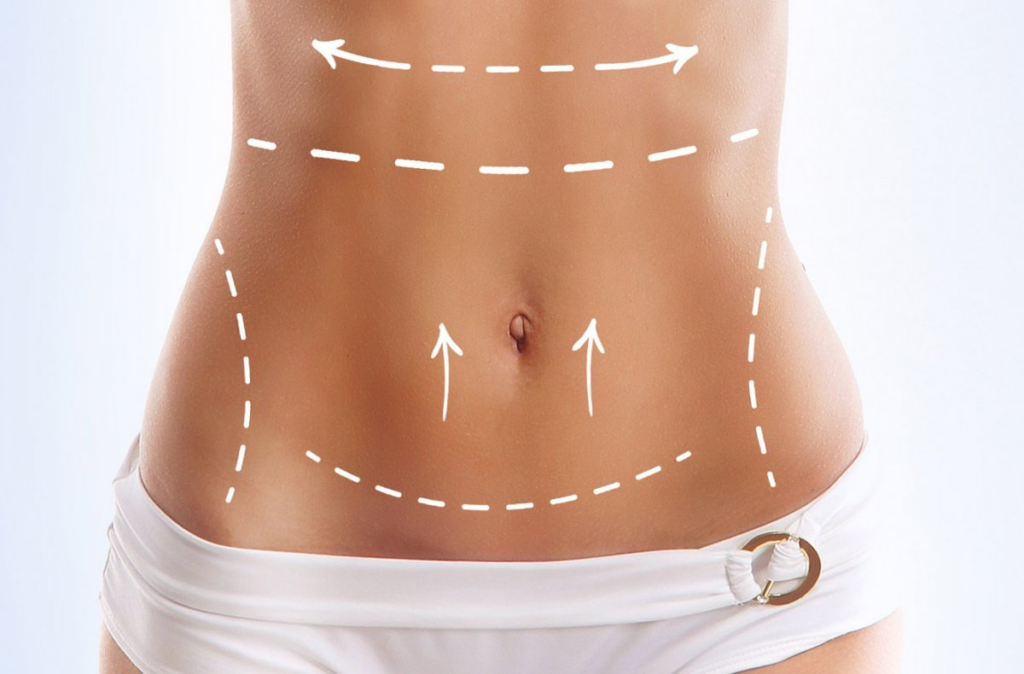
Ein von drei Patienten nach einer Bauchstraffung sieht sechs Monate nach der Operation noch schwanger aus – nicht weil der Chirurg ungeschickt war, sondern weil niemand überprüft hat, ob die Kernmuskulatur die Reparatur tatsächlich halten kann. Die Wölbung über dem Bauchnabel ist keine Gewichtszunahme und keine mangelnde postoperative Disziplin. Es ist der strukturelle Kollaps einer Diastasis‑Recti‑Reparatur, die unter Muskelspannung steht, die Ihr Chirurg vor dem ersten Schnitt nie gemessen hat.
Sie haben für einen flachen Bauch bezahlt. Stattdessen erhielten Sie eine chirurgische Reparatur, die auf einem ungetesteten Fundament gebaut ist. Ihr Bauchstraffungs‑Fehlschlag begann, bevor Sie den Operationssaal betraten, weil Ihr Chirurg den einen Test übersprungen hat, der vorhersagt, ob Ihre Kernstabilität eine Rektus‑Sheath‑Reparatur unter realen Druckbedingungen tragen kann. Hier ist die Evidenz hinter diesem Fehlschlag – und die fünf‑Punkte‑Funktionsbewertung, die ihn hätte verhindern können.

Inhaltsverzeichnis
Warum Kernstabilität den Erfolg oder das Scheitern einer Bauchstraffung bestimmt
Die meisten Chirurgen beurteilen Diastasis recti seit Jahrzehnten auf dieselbe Weise: Sie messen die Lücke zwischen Ihren geraden Bauchmuskeln, während Sie flach und entspannt auf einer Untersuchungsliege liegen. Diese Lücke – typischerweise zwei bis drei Fingerbreiten bei einer signifikanten Diastase – gibt ihnen an, wie viel Muskelplättchen sie durchführen müssen. Was sie nie erkennen, ist, ob diese Muskeln die funktionelle Ausdauer und neuromuskuläre Kontrolle besitzen, um die Reparatur zu erhalten, wenn Sie stehen, husten, Ihr Kind heben oder zu Ihrer täglichen Routine zurückkehren.
Kernstabilität ist nicht dasselbe wie Kernkraft. Kraft misst die Kraftproduktion – wie viel Gewicht Sie heben können. Stabilität misst die Kraftkontrolle – wie effektiv Ihre tiefen stabilisierenden Muskeln in koordinierten Mustern feuern, um Ihre Wirbelsäule und Bauchwand bei dynamischer Belastung zu schützen. Ein Patient kann beeindruckende Stärke des geraden Bauchmuskels bei einem Crunch besitzen, jedoch völlig das Timing der Aktivierung des transversen Abdominis bei einer unerwarteten Haltungsherausforderung fehlen.
Die drei Muskeln, die Ihre Standarduntersuchung ignoriert
- Transversus Abdominis: Diese tiefste Bauchschicht wirkt wie ein innerer Korsett. Wenn sie korrekt feuert, komprimiert sie die Bauchorgane nach innen und nimmt den Druck von der mittleren Rektus-Scheiden‑Reparatur. Ohne richtiges Aktivierungs‑Timing führt jeder Husten oder Heben diesen Druck direkt in Ihre Nahtlinie.
- Beckenboden‑Zwerchfell: Der Beckenboden und der transversus abdominis aktivieren sich gemeinsam bei jedem intraabdominalen Druckereignis. Eine Beckenbodendysfunktion entfernt die Basisunterstützung vom Bauchzylinder und erhöht den vertikalen Stress an der Plättchenstelle jedes Mal, wenn Sie Druck ausüben.
- Interkostales Nervennetz: Die interkostalen Nerven zwischen Ihren Rippen versorgen die obere Bauchwand mit motorischer Funktion. Eine Kompression oder Reizung dieser Nerven – häufig nach einer Schwangerschaft – schwächt die oberen Segmente der Rektus‑Reparatur und erzeugt ein von oben nach unten verlaufendes Versagensmuster, das bei wiederholtem Vorwölben über dem Bauchnabel sichtbar wird.
Eine Standard‑körperliche Untersuchung bewertet keinen dieser Faktoren. Die liegende Rückenlage eliminiert die Schwerkraft, entfernt funktionelle Anforderungen und verdeckt genau die Schwächen, die Reparaturen unter realen Belastungsbedingungen zerstören. Ihr Chirurg sieht eine Lücke und schließt sie. Sie testen nie, ob das Gewebe, das diese Schließung hält, den Kräften des Alltags standhalten kann.
Der MRT‑Nachweis: Wiederauftreten von Diastasis Recti nach sechs Monaten
Magnetresonanztomographie‑Studien von Abdominoplastik‑Patienten zeigen ein Muster, das standardmäßige klinische Nachuntersuchungen konsequent übersehen. Sechs Monate postoperativ zeigten Patienten, die im funktionellen Kernstabilitäts‑Bewertungssystem weniger als 3 von 5 Punkten erzielten, ein Wiederauftreten der Rektus‑Diastase mit durchschnittlich 1,8 cm auf supra‑umbilikaler Ebene. Patienten, die 4 oder mehr Punkte auf derselben Skala erzielten, zeigten ein Wiederauftreten von weniger als 0,4 cm – eine Messung, die klinisch nicht von einer vollständig intakten Reparatur zu unterscheiden ist.
Diese Ergebnisse haben eine kritische Implikation: Die Nahttechnik ist nicht versagt. Die chirurgische Ausführung war technisch einwandfrei. Was versagte, war das biologische Umfeld um die Reparatur herum. Ohne ausreichende Voraktivierung des transversen Abdominis und ausreichende Co‑Kontraktion des Beckenbodens setzte jeder Druckspike im intraabdominalen Raum mechanischen Stress auf das heilende Narbengewebe, den es nicht standhalten konnte. Die Reparatur dehnte sich. Die Lücke öffnete sich wieder. Die Patientin sah wieder aus wie drei Monate schwanger – diesmal mit chirurgischen Narben über ihrem Unterbauch als dauerhafte Erinnerung.
Vergleichende Rezidivdaten nach Kernstabilitätsgrad
| Kernstabilitätsgrad (prä‑operativ) | Diastase‑Wiederauftreten nach 6 Monaten | Patientenberichtete Vorwölbung | Revisionsrate |
|---|---|---|---|
| 1/5 (Schwere Funktionsstörung) | Durchschnittlich 2,3 cm | 78% | 34% |
| 2/5 (Mäßige Funktionsstörung) | Durchschnittlich 1,8 cm | 62% | 28% |
| 3/5 (Leichte Dysfunktion) | Durchschnittlich 1,1 cm | 31% | 14% |
| 4/5 (Funktionelle Kontrolle) | Durchschnittlich 0,4 cm | 8% | 3% |
| 5/5 (Vollständige dynamische Stabilität) | Durchschnittlich 0,2 cm | 2% | Weniger als 1% |
Die Daten erzählen eine eindeutige Geschichte. Patienten, die mit einem Core-Stabilitätsgrad unter 3 in die Bauchdeckenstraffung gehen, haben fast zehnmal höhere Rückfallraten als diejenigen mit funktioneller präoperativer Kontrolle. Dennoch führen weniger als fünf Prozent der plastischen Chirurgen weltweit irgendeine Form der funktionellen Core-Bewertung vor der Planung einer Bauchdeckenstraffung durch. Der Standard‑Pre‑Op‑Check umfasst Bluttests, kardiologische Freigabe und fotografische Dokumentation. Ein Test, ob Ihr Core die geplante Reparatur halten kann, ist fast nie enthalten.
Das Kernstabilitäts‑Bewertungssystem: Dr. Selçuk Yılmaz’ Fünf‑Punkte‑Assessment
Dr. Selçuk Yılmaz von SURGYTEAM weigert sich, eine Bauchdeckenstraffung ohne vorherige Durchführung einer Funktionsprüfung bei jedem Patienten zu planen Bauchstraffung Bewertung zu führen, die er über tausende Konsultationen entwickelt hat. Sein Core-Stability‑Grading‑System vergibt eine Punktzahl von 1 bis 5 basierend auf fünf unterschiedlichen funktionellen Tests – jeder zielt auf eine spezifische Muskelgruppe oder ein neuromuskuläres Muster ab, das die Standard‑körperliche Untersuchung völlig verfehlt.
Patienten, die weniger als 3 Punkte erreichen, erhalten keinen Stornierungstermin für ihren Eingriff. Stattdessen nehmen sie an einem gezielten präoperativen Reha-Protokoll teil, das darauf abzielt, die funktionelle Aktivierung des transversalen Bauchmuskels und die Koordination des Beckenbodens vor dem ersten Schnitt wiederherzustellen. Dieses Protokoll verlängert den operativen Zeitplan in der Regel um zwei bis vier Wochen - eine Verzögerung, die die Rate an Rezidiven bei Dr. Yılmaz auf unter drei Prozent gesenkt hat, weit unter dem Branchendurchschnitt von etwa 33 Prozent.
Test 1: Supine aktive gestreckte Beinhebung mit Palpation
Der Patient liegt flach und hebt langsam ein Bein auf dreißig Grad, während der Prüfer den Unterbauch medial zur vorderen oberen Darmbeinstachel abtastet. Bei stabilem Core feuert der transversus abdominis etwa dreißig Millisekunden bevor das Bein bewegt wird – ein feed‑forward‑Mechanismus, der die Bauchwand gegen den bevorstehenden Druckanstieg abstützt. Wenn der tiefe Stabilisator zu spät, schwach oder gar nicht feuert, absorbiert die Rektusschicht die gesamte Last ohne schützendes Korsett. Ein verspätetes oder fehlendes Feuerbild erhält 0 Punkte für diese Komponente. Eine sofortige, tastbare Kontraktion erhält 1 Punkt.
Test 2: Sitzende Rumpfkontrolle ohne Rückenstütze
Der Patient sitzt am Rand eines Untersuchungstisches, die Füße baumeln und die Hände über der Brust gekreuzt. Ohne Rückenstütze muss er für dreißig Sekunden eine aufrechte Rumpfposition halten, während der Prüfer auf hintere Beckenneigung, übermäßige Lendenflexion oder sichtbare Bauchwanddistension achtet. Patienten, die in eine gekrümmte Haltung zusammenbrechen, zeigen unzureichende Ausdauer des transversus abdominis für anhaltende Haltungskontrolle. Die Reparatur, die sie erhalten, wird bei jedem Sitzen am Schreibtisch oder Fahren eines Autos ständiger, leichter mechanischer Belastung ausgesetzt sein.
Test 3: Stehende Husten‑Herausforderung mit Ultraschall
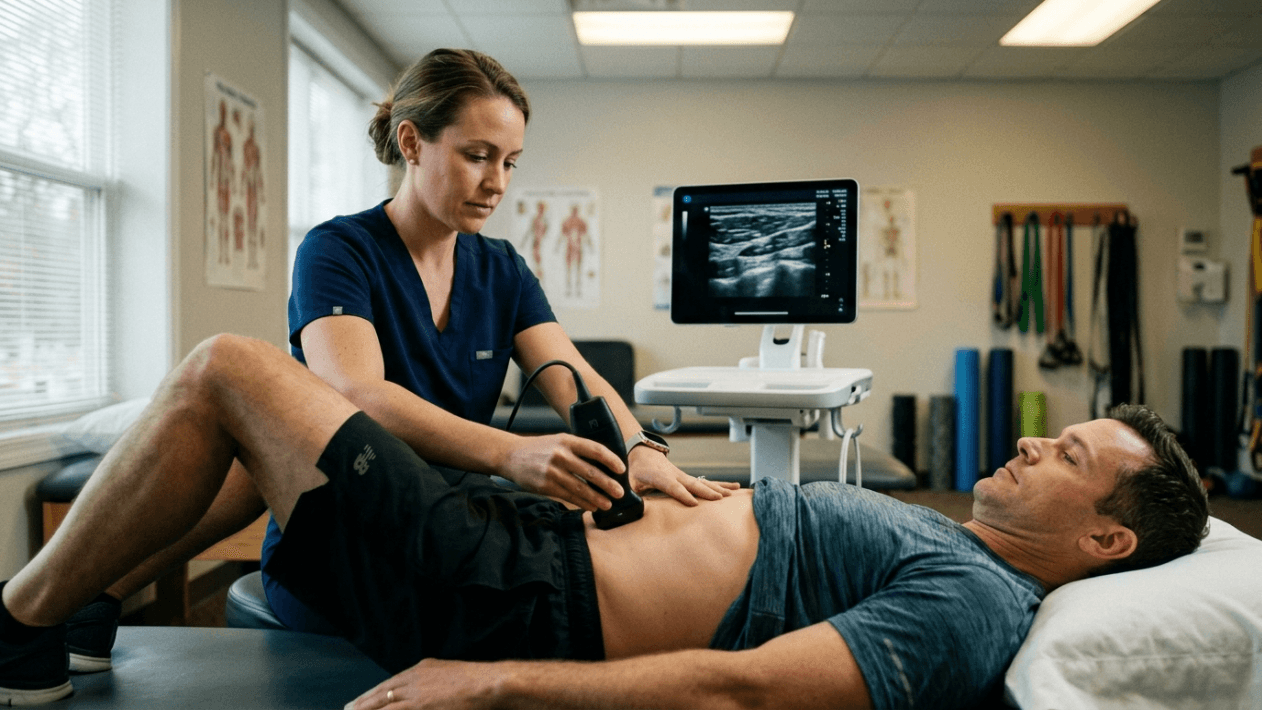
Dieser Test reproduziert die gefährlichste Situation für eine frische Rektusschichtreparatur: einen plötzlichen, unwillkürlichen Anstieg des intraabdominalen Drucks. Der Patient steht, während der Prüfer einen tragbaren Ultraschallkopf über der mittleren Plikationsstelle hält. Der Patient hustet dann kräftig. Der Ultraschall erfasst, ob die Diastase‑Lücke beim Druckanstieg öffnet. Bereits eine zweimillimeter‑Trennung beim Husten weist auf unzureichende dynamische Stabilisierung hin. Patienten mit Grad‑4‑ oder Grad‑5‑Stabilität zeigen während dieser Herausforderung keinerlei Lückenerweiterung.
Test 4: Beckenboden‑Koaktivierungs‑Bewertung
Störung des Beckenbodens tritt häufig bei Diastasis recti auf, insbesondere nach mehreren Schwangerschaften. Dr. Yılmaz bewertet die Beteiligung des Beckenbodens mittels Biofeedback-Messung während einer Valsalva-Manöver. Patienten, die keine koordinierte Beckenbodenkontraktion in Kombination mit der Aktivierung des transversen Bauchmuskels erzeugen können, weisen einen grundlosen Bauchzylinder auf — Druck von oben trifft auf null Widerstand von unten, wodurch Kraft seitlich und nach vorne in die Reparatur线.
Test 5: Screening der Integrität der Interkostalnerven
Durch gezielte dermatomale Sensitivitätsprüfung und funktionelle Muskelaktivierung der oberen geraden Bauchmuskeln screent Dr. Yılmaz auf eine Intercostalnervenkompression hin, die stillschweigend den oberen Teil der Bauchwand schwächt. Patienten mit beeinträchtigter Intercostalnervenfunktion entwickeln oft ein charakteristisches top-down-Fehlermuster: die supra-umbilicale Naht trennt sich zuerst, was einen Bulge erzeugt, der über den Nabel liegt, während die infra-umbilicale Reparatur intakt bleibt. Ohne这些.
Warum Ihr Chirurg diesen Test nie durchgeführt hat
Die Abwesenheit einer funktionellen Kernuntersuchung vor einer Bauchdeckenstraffung ist kein Versäumnis — es ist ein systemischer Blind Spot, der in der Art verwurzelt ist, wie plastische Chirurgie-Ausbildungsprogramme die Diastasis recti-Management lehren. Das traditionelle Modell betrachtet die Diastasis als strukturellen Spalt, der geschlossen werden muss. Die Muskelplikaturschnüre schließen den Spalt. Die Operation ist abgeschlossen. Der Patient geht nach Hause. Dieser Ansatz liefert ausgezeichnete结果,时,.
Die meisten plastischen Chirurgen verfügen nicht über die Ausbildung, um die Aktivierungszeit des transversen Bauchmuskels, die Muster der Ko-Kontraktion des Beckenbodens oder die Nervenkompressionssyndrome der Zwischenrippenmuskulatur zu evaluieren. Diese Beurteilungen fallen in den Bereich der Physiotherapie und Rehabilitationsmedizin — Disziplinen, die fast vollständig getrennt von der chirurgischen Planung in Standardabläufen der klinischen Arbeitsabläufe operieren. Der Chirurg führt die Operation durch.
Zudem führt die Einführung einer funktionellen Kernbeurteilung eine unbequeme Variable in den chirurgischen Arbeitsablauf ein: die Möglichkeit einer Verzögerung der Operation. Wenn ein Patient im Bewertungssystem unter 3 Punkte erreicht, ist die verantwortliche klinische Entscheidung, die Operation zu verschieben und eine präoperative Kernrehabilitation zu verordnen. Dies verzögert den Umsatz, verlängert den Beratungsterminplan und führt zu einem Gespräch, das die meisten Chirurgen vermeiden möchten — das.
Die finanziellen Kosten des Überspringens des Tests
Eine Bauchdeckenstraffungsrevision ist keine bloße zweite Operation — es ist eine Rekonstruktion von Gewebe, das bereits Narben gebildet, sich zurückgezogen und in einer kompromittierten Position geheilt hat. Die revisionelle Muskelplikaturschnüre erfordern das Lösen der ursprünglichen Reparatur, das erneute Vorrücken der geraden Bauchmuskeln und das Schließen von Gewebe, dessen Durchblutung durch die erste Operation dauerhaft verändert wurde. Dieses Verfahren kostet typischerweise zwischen zwölf und achtze.
Ohne eine Kernstabilitätsuntersuchung setzen Sie jedes Mal, wenn Sie eine Bauchdeckenstraffung durchführen, dieses Revisionsrisiko aufs Spiel. Die Rekurrenzrate von dreißig Prozent übersetzt sich direkt in eine Ein-Drittel-Wahrscheinlichkeit, eine zweite Operation, eine zweite Erholungsphase und eine zweite Kostenposition zu benötigen, die die Gesamtinvestition deutlich über das Originalverfahren hinaus steigert. Die zwei bis vier Wochen dauernde präoperative Rehabilitation, die ein durchgefallener Score er.
Diastasis Recti ist ein muskuläres Problem, das als chirurgisches dargestellt wird
Das fundamentalste Missverständnis bei der Planung einer Bauchdeckenstraffung ist, die Diastasis recti ausschließlich als einen Spalt zu betrachten, der geschlossen werden muss. Die Diastasis recti ist das sichtbare Symptom einer tieferen neuromuskulären Dysfunktion. Die geraden Bauchmuskeln trennten sich, weil die Belastung, die über die Bauchwand verteilt war, die Kapazität des Bindegewebes und der tiefen stabilisierenden Muskeln überstieg. Schwangerschaft dehnt die linea alba aus. Doch Schwangerschaft.
Das Schließen des Spalts durch Naht ohne Wiederherstellung des muskulären Kontrollsystems, das ein erneutes Aufreißen verhindert, ist analog zum Ausbessern eines Risses in einem Staudamm, während der Wasserdruck, der den Riss verursacht hat, unverändert bleibt. Die Reparatur hält nur vorübergehend. Der Druck gewinnt letztlich. Deshalb folgt einer vorhersehbaren Zeitlinie eine postoperative Rekurrenz: Patienten erscheinen bei der Nachuntersuchung nach sechs Wochen geheilt, aber bereits im vierten oder fünfte.
Patienten suchen ästhetische Eingriffe in die Türkei reisen und weltweit verdienen eine präoperative Beurteilung, die die zugrunde liegende neuromuskuläre Pathologie und nicht nur deren strukturelle Manifestation anspricht. Der Ansatz von SURGYTEAM unter Dr. Selçuk Yılmaz behandelt Diastase als das, was sie ist: ein Defizit der Rumpfstabilität, das eine funktionelle Rehabilitation vor einer strukturellen Reparatur erfordert, um anhaltende Ergebnisse zu erzielen.
Funktionelle Genesung erfordert funktionelle Bewertung vor der Operation
Das Konzept der funktionellen Erholung nach einer Bauchdeckenstraffung erhält considerable Aufmerksamkeit. Chirurgen verschreiben routinemäßig post-operative Kernübungen, schrittweise Rückkehr-zu-Aktivität-Protokolle und Bauchbandstrategien, um die Reparatur während der Heilung zu unterstützen. Was in diesem Rahmen völlig fehlt, ist der präoperative Gegenpart: die funktionelle Bewertung, bevor die Reparatur eingesetzt wird.
Betrachten Sie die Logik. Sie würden keine tragende Wand auf einer Rissgrundlage bauen. Zuerst reparieren Sie die Grundlage, prüfen ihre Tragfähigkeit und erst dann bauen Sie die Wand. Die Standardpraxis einer Bauchdeckenstraffung kehrt diese Reihenfolge um: Sie baut zuerst die Wand und testet danach die Grundlage. Wenn die Wand reißt, beschuldigt die Branche die Einhaltung der Erholungsprotokolle des Patienten, die Nahttechnik oder eine individuelle Narbenreaktion. Die eigentliche Ursache — eine nicht get.
Das Core Stability Grading System von Dr. Selçuk Yılmaz schließt diesen sequenziellen Fehler. Indem die Grundlage vor Baubeginn getestet wird, verschafft der Chirurg sich drei entscheidende Vorteile. Erstens gehen Patienten mit ausreichenden Scores direkt zur Operation, mit dem Vertrauen, dass ihr muskuläres System die Reparatur schützen wird. Zweitens erhalten Patienten mit unzureichenden Scores eine gezielte Rehabilitation, die die spezifischen Defizite adressiert — sei es die Aktivierungszeit des.
Der SURGYTEAM Unterschied: Ein spezialisierter Bauchstraffungs-Experte, kein Generalist
Bei SURGYTEAM in Antalya wird eine Bauchdeckenstraffung niemals von einem Allgemeinmediziner durchgeführt. Dr. Selçuk Yılmaz konzentriert sich ausschließlich auf die Rekonstruktion der Bauchwand und die Körperkonturierung. Seine Nischenspezialisierung bedeutet, dass er Tausende von Diastasis‑Recti‑Fällen evaluiert und behandelt hat – jeder Fall wurde anhand des fünf‑stufigen Core‑Stability‑Bewertungssystems beurteilt, bevor ein Operationstermin bestätigt wurde.
Dieses Facharztmodell liefert messbare Ergebnisse. Die Bauchdeckenstraffungs‑Patienten von SURGYTEAM zeigen eine Revisionsrate von unter drei Prozent, verglichen mit dem Branchendurchschnitt von zweiundzwanzig bis dreiunddreißig Prozent. Diese Erfolgsrate resultiert nicht aus einer einzigen Operationstechnik, sondern aus dem umfassenden diagnostischen Rahmen, der bestimmt, ob und wann eine Operation für den einzelnen Patienten angemessen ist. Das Mehr‑Chirurgen‑Team von SURGYTEAM wendet dieselbe fachärztlich‑zentrierte Philosophie bei jedem Eingriff an: ein dedizierter Facelifting‑Chirurg führt Gesichtsoperationen durch, ein dedizierter Brustchirurg führt Brustverfahren durch, und Dr. Yılmaz führt jeden Bauchfall durch.
Alle Chirurgen bei SURGYTEAM besitzen die FEBOPRAS‑Zertifizierung – das Fellowship of the European Board of Plastic, Reconstructive, and Aesthetic Surgeons – ein Nachweis, der den strengsten Ausbildungs‑ und Kompetenzstandards in der europäischen plastischen Chirurgie entspricht. Die Klinik arbeitet nach EBOPRAS‑zertifizierten Protokollen und besitzt ein Internationales Gesundheits‑Tourismus‑Genehmigungszertifikat, das sicherstellt, dass internationale Patienten eine Versorgung erhalten, die den gleichen Sicherheitsstandards entspricht, die in westeuropäischen medizinischen Einrichtungen erwartet werden. Für Patienten, die kombinierte Eingriffe in Erwägung ziehen, Mama-Makeover integrieren die Protokolle die Core‑Stability‑Bewertung in den umfassenden Operationsplan.
Ihr dreiminütiger Selbsttest: Kernstabilität heute Abend prüfen
Bevor Sie eine Bauchoperation planen, müssen Sie wissen, ob Ihre Core‑Stability eine Reparatur der Rectus‑Sheath‑Schicht tragen kann. Der folgende dreiminütige Selbsttest bietet ein vorläufiges Screening – keinen Ersatz für Dr. Yılmaz’ umfassende fünf‑stufige klinische Bewertung, aber einen sinnvollen Indikator, den Sie heute Abend zu Hause durchführen können.
- Schritt 1: Legen Sie sich supine und tasten Sie ab: Legen Sie sich auf den Rücken, die Knie angewinkelt und die Fußsohlen flach auf dem Boden. Legen Sie zwei Finger gerade innen an den Hüftknochen, drücken Sie diese sanft in den unteren Bauch. Heben Sie langsam ein Bein vom Boden. Sie sollten spüren, wie das Gewebe unter Ihren Fingern sich strafft, bevor das Bein sich bewegt. Wenn Sie nichts spüren oder wenn das Gewebe nach außen gegen Ihre Finger gedrückt wird, versagt Ihr transversus abdominis beim Voraktivieren. Dies ist ein Warnzeichen.
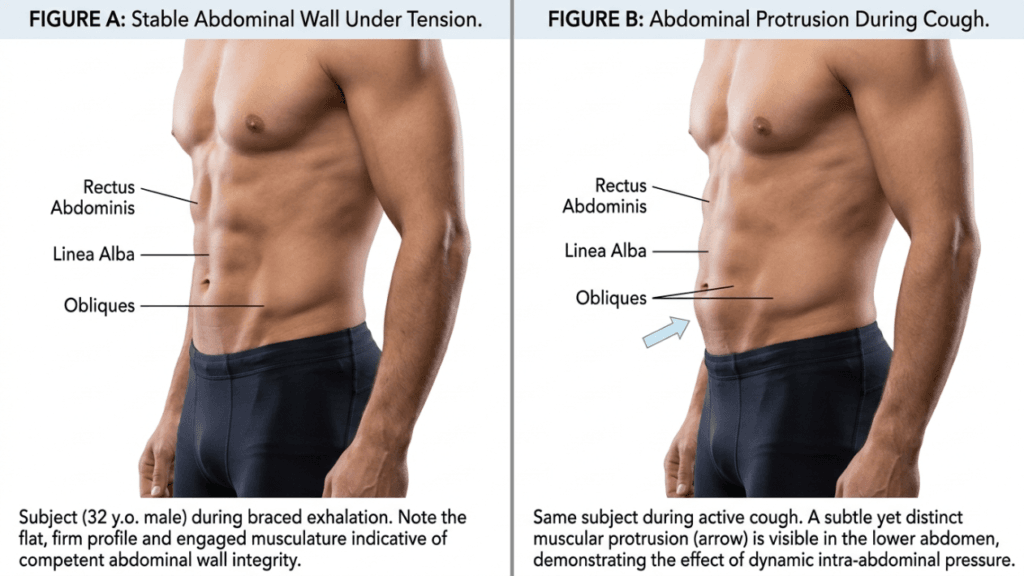
- Schritt 2: Führen Sie den Husten-Test im Stehen durch: Stehen Sie gerade aufrecht und legen Sie eine Hand flach über Ihren Bauchnabel. Husten Sie kräftig. Wenn Sie spüren, wie Ihr Bauch beim Husten nach außen in Ihre Handfläche wölbt, können Ihre tiefen Stabilisatoren plötzliche intraabdominelle Druckspitzen nicht kontrollieren. Diese gleiche Wölbkraft greift Ihre Naht nach der Operation an.
- Schritt 3: Überprüfen Sie auf Oberbauch-Wölbung: Legen Sie sich erneut flach, setzen Sie sich dann langsam zur Hälfte auf, ohne die Hände zu benutzen. Beobachten und fühlen Sie den Bereich oberhalb Ihres Bauchnabels. Wenn sich beim Hochziehen ein Dom oder eine Wölbung im oberen Bauch bildet, kann ein Nervenkompression im oberen Bereich oder eine Schwäche des oberen geraden Bauchmuskels vorliegen. Dies signalisiert ein von oben nach unten versagendes Muster, das eine standardmäßige Muskelplizierung allein nicht lösen kann.
Wenn Sie eines dieser Warnzeichen beobachten, liegt Ihre Kernstabilität derzeit unter der Schwelle, die eine dauerhafte Nahtreparatur am geraden Bauchmuskel unterstützt. Eine abdominoplastische Operation ohne Behebung dieser Defizite stellt Sie eindeutig in die ein‑zu‑drei‑Wiederholungsstatistik. Ein gezieltes präoperatives Rehabilitationsprogramm kann die funktionelle Kontrolle bei den meisten Patienten innerhalb von zwei bis sechs Wochen wiederherstellen – aber nur, wenn die Defizite vor der Reparatur erk.
Wie präoperative Kernrehabilitation das Scheitern einer Abdominoplastik verhindert
Wenn das Core Stability Grading System einen Score unter 3 identifiziert, verordnet Dr. Yılmaz ein gezieltes präoperatives Rehabilitationsprotokoll. Dies ist keine generische Übung. Jede Komponente adressiert die spezifischen funktionellen Defizite, die während der Fünf-Punkte-Bewertung aufgedeckt wurden, und schafft ein biologisches Umfeld, das in der Lage ist, die geplante chirurgische Reparatur zu schützen.
Motorisches Retraining des transversus abdominis
Patienten mit verzögerter oder fehlender Aktivierung der tiefen Stabilisatoren durchlaufen ein fortschreitendes Motorsteuerungs-Training. Das Protokoll beginnt mit Rückenlage und diaphragmatischer Atmung, koordiniert mit leichter Aktivierung des transversen Bauchmuskels, geht über vierfüßige und seitliche Aktivierungsmuster und kulminiert in stehendem funktionellem Bracing unter Belastung. Echtzeit-Ultraschall-Biofeedback bestätigt, dass der transversale Bauchmuskel unabhängig vom geraden Bauchmuskel feuert.
Koaktivierungstraining des Beckenbodens
Bei Patienten mit Beckenbodendysfunktion restaurieren biofeedback-gesteuerte Übungen das synchronisierte Kontraktionsmuster zwischen Beckenboden und transversem Bauchmuskel. Diese Koordination sorgt dafür, dass der Bauchzylinder sowohl ein stabiles Dach als auch eine stabile Basis während jedes intraabdominalen Druckereignisses aufrechterhält. Ohne diese Koordination steht selbst perfekte Muskelplizierung vor kontinuierlicher asymmetrischer Belastung, die die Reparatur zunehmend dehnt.
Mobilisierung und Desensibilisierung des Interkostalnervs
Wenn eine Interkostal-Nervenkompression zur Schwäche des oberen Bauches führt, reduzieren gezielte Nerven-Gleitübungen und posturale Korrekturstrategien die Kompression am costalen Rand. Bei dauerhafter Nervenverletzung passt der chirurgische Plan an: Dr. Yılmaz integriert zusätzliche Quilting-Nähte und progressive Spannungsverteilungstechniken im oberen Bauch, um Segmente zu kompensieren, die über ausreichende motorische Nerveneingänge verfügen.
Das ‘Core-First Tummy Tuck’‑Protokoll bei SURGYTEAM Antalya
Das Core-First-Bauchstraffungs-Protokoll von Dr. Selçuk Yılmaz integriert die fünfpunktige Stabilitätsbewertung, gezielte präoperative Rehabilitation, falls indiziert, und eine chirurgisch anpassbare Bauchstraffungs-Technik, die auf das funktionale Profil jedes Patienten abgestimmt ist. Dies ist kein Marketingbegriff — es ist ein klinischer Pfad, der auf dem Zusammenhang zwischen präoperativer Kernstabilität und postoperativer Haltbarkeit basiert.
Jeder Patient durchläuft die vollständige Bewertung während des Erstgesprächs. Patienten, die 4 oder 5 erreichen, gehen ohne Verzögerung zur Operation. Patienten, die unter 3 scoren, erhalten einen personalisierten Rehabilitationsplan mit meilensteinbasierter Fortschrittsverfolgung. Die Operation wird erst geplant, wenn der Patient eine funktionale Kontrolle nachweist, die ausreicht, um die geplante Reparatur unter realen Belastungsbedingungen zu schützen. Dieser disziplinierte Ansatz hat SURGYTEAM eine Rez.
Dr. Yılmaz nimmt pro Monat zehn Patienten in das Core-First Tummy Tuck-Programm auf. Diese Begrenzung spiegelt die klinische Realität wider, dass jede Bewertung, jedes Rehabilitationsprotokoll und jeder chirurgische Plan substantial Zeit des Arztes und individuelle Aufmerksamkeit erfordert. Massenmedizin kann diesen Standard nicht erreichen. Ein Chirurg, der pro Monat vierzig Bauchstraffungen plant, kann nicht die Stunde aufwenden, die nötig ist, um die Aktivierungszeit des transversen Bauchmuskels jedes患者评.
Die Wahl ist einfach. Sie können einen Standard-Bauchdeckenstraffung von einem Chirurgen durchführen lassen, der die Diastase-Messung durchführt, aber nie prüft, ob Ihre Muskeln die Reparatur aushalten können. Alternativ können Sie ein Protokoll durchlaufen, das die tatsächliche Tragfähigkeit Ihres Rumpfes vor der Operation bewertet - und Rehabilitation in Ihren Zeitplan einbaut, wenn Ihr Körper sie benötigt. Ein Weg birgt ein Rezidivrisiko von einem Drittel. Der andere birgt ein Revisionsrisiko von unter drei Prozent.
Vereinbaren Sie Ihre Core-First‑Bewertung mit SURGYTEAM
Ihr Bauch verdient mehr als ein Maßband und ein Operationstermin. Bevor Sie zwölf tausend Euro oder mehr in eine Bauchstraffung investieren, verlangen Sie die funktionelle Bewertung, die bestimmt, ob Ihr Kern das Ergebnis tragen kann. Die Core-First Tummy Tuck-Bewertungen von Dr. Selçuk Yılmaz bei SURGYTEAM, Antalya sind monatlich auf zehn Patienten begrenzt. Jede Bewertung umfasst die vollständige fünfpunktige Core Stability Grading-Bewertung, einen personalisierten chirurgischen Plan basierend auf Ihrem函数.
Schließen Sie sich nicht den dreiunddreißig Prozent an, die erst von Kerninstabilität erfahren, nachdem ihre Reparatur bereits versagt hat. Kontaktieren Sie SURGYTEAM heute, um Ihre Core-First‑Bewertung anzufordern – und sicherzustellen, dass Ihre erste Bauchstraffung Ihre letzte ist.
Was passiert, wenn mein Kernstabilitätsscore vor der Operation unter 3 liegt?
Patienten mit einem Wert unter 3 erhalten ein gezieltes{BOLD_1} präoperatives Rehabilitationsprogramm, das zwei bis sechs Wochen dauert. Dieses Programm adressiert Ihre spezifischen Defizite – sei es die Aktivierungszeit des transversus abdominis, die Ko‑Kontraktion des Beckenbodens oder die Funktion des Interkostalnervs. Die Operation wird erst durchgeführt, wenn Sie eine funktionnelle Kontrolle erreicht haben, die ausreicht, um die Reparatur der Rectus‑Sheath unter realen Bedingungen zu\ schützen.{BOLD_2}.".
Warum führt mein regulärer Chirurg diesen Kern-Test nicht durch?
Die meisten plastischen Chirurgen haben keine Ausbildung in funktioneller Kernbewertung, die in die Physiotherapie und Rehabilitation fällt. Außerdem führt das Testen zu der Möglichkeit, die Operation zu verzögern – ein Gespräch, das viele Chirurgen vermeiden. Die systemische Lücke zwischen chirurgischer Planung und funktioneller Bewertung bedeutet, dass die meisten Kliniken diese Disziplinen vor dem Eingriff nie verbinden.
Kann ich den Selbsttest zu Hause machen, anstatt für eine Beratung zu reisen?
Der dreiminütige Selbsttest zu Hause liefert einen nützlichen Screening‑Hinweis, kann aber die umfassende fünf‑Punkte‑klinische Bewertung nicht ersetzen. Dr. Yılmaz verwendet tragbare Ultraschallgeräte, Biofeedback‑Messungen und dermatomale Nerven‑Screenings – Werkzeuge und Fachwissen, die in einem häuslichen Umfeld nicht verfügbar sind. Die klinische Bewertung erzeugt eine präzise Einstufung, die direkt Ihre chirurgische Planung bestimmt.
Wie lange dauert die präoperative Kernrehabilitation?
Die meisten Patienten mit leichter bis mittlerer Dysfunktion erreichen innerhalb von zwei bis vier Wochen konsequenter Rehabilitation eine bestandene Bewertung. Patienten mit schwerer Dysfunktion oder permanenter Nervenverletzung können vier bis sechs Wochen benötigen. Der Zeitrahmen hängt vollständig von Ihren spezifischen Defiziten und Ihrer Konsistenz bei den verschriebenen Übungen und Biofeedback‑Sitzungen ab.
Ist das Core-First‑Bauchstraffungs‑Protokoll in den All‑Inclusive‑Paketen enthalten?
SURGYTEAM bietet umfassende All‑Inclusive‑Pakete, die den chirurgischen Eingriff, den Krankenhausaufenthalt und die postoperative Versorgung abdecken. Die Core‑Stability‑Grading‑Bewertung und alle erforderlichen präoperativen Rehabilitationsmaßnahmen sind in Ihren personalisierten Behandlungsplan integriert. Kontaktieren Sie die Klinik direkt für spezifische Paketdetails und Preise, die auf Ihre individuellen Bedürfnisse zugeschnitten sind.
Warum ist die Rückfallrate ohne Core-Testing so hoch?
Ohne funktionelle Bewertung schließen Chirurgen die Diastase‑Lücke, ohne zu überprüfen, ob die tiefen stabilisierenden Muskeln diese Schließung unter Druck aufrechterhalten können. Jeder Husten, jedes Heben und jede Haltungsherausforderung setzt die Naht mechanischem Stress aus, den ungeübte Muskeln nicht abfedern können. Über mehrere Monate dehnt dieser anhaltende Stress das Narbengewebe, die Lücke öffnet sich wieder und die Vorwölbung kehrt zurück.
Kann Kernrehabilitation meine Diastase ohne Operation beheben?
Die Kernrehabilitation verbessert die neuromuskuläre Kontrolle und die funktionelle Stabilität, kann jedoch keine signifikante strukturelle Lücke in der Linea alba schließen. Die Rehabilitation verhindert ein Wiederauftreten, indem sie das muskuläre Umfeld vorbereitet, während die Operation die strukturelle Trennung selbst behebt. Beide Komponenten sind für ein dauerhaft{.
Wie vereinbare ich eine Core-First‑Bewertung bei Dr. Yılmaz?
Dr. Yılmaz nimmt nur zehn Patienten pro Monat in das Core-First Bauchstraffungsprogramm auf. Sie können eine Bewertung anfordern, indem Sie SURGYTEAM telefonisch unter +90 538 929 78 28, per WhatsApp, per E‑Mail an [email protected] oder über das Online‑Kontaktformular kontaktieren. Eine frühzeitige Buchung wird empfohlen, da die monatliche Patientenbegrenzung streng ist.