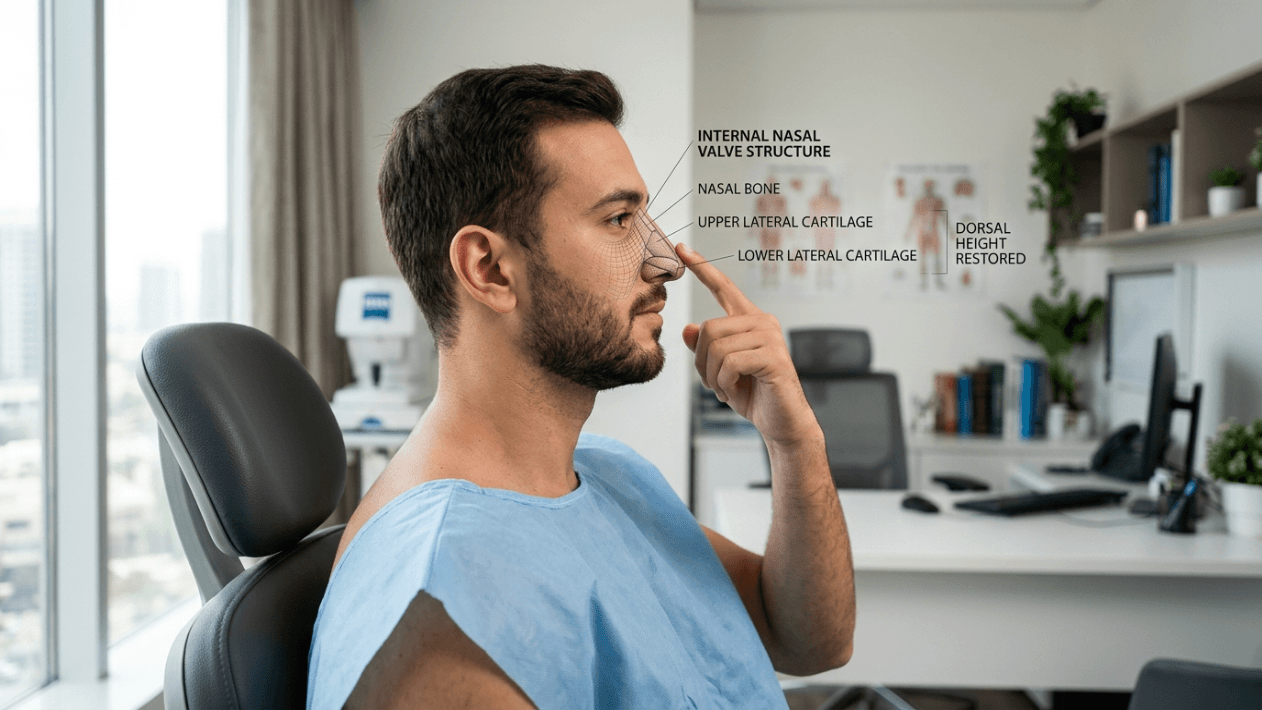
Im Jahr 2026 verfolgt man das Ziel eines “natürlichen” Nasenkorrektur war noch nie beliebter. Patienten weltweit suchen subtile, harmonische Ergebnisse, die ihr Aussehen verbessern, ohne die offensichtlichen Anzeichen einer Operation zu zeigen. Doch unter der Oberfläche dieser scheinbar makellosen Resultate verbirgt sich ein kritisches, oft übersehenes Risiko: eingeschränkte Nasenfunktion und langfristige Atemwegsobstruktion. Die Techniken, die ein “natürliches” Aussehen erzeugen, können in manchen Fällen die Nasenstruktur schwächen, was zu Atemschwierigkeiten, chronischer Verstopfung und sogar einem strukturellen Kollaps Jahre nach der Operation führt. Dies ist nicht nur ein kosmetisches Anliegen – es ist ein verborgenes Gesundheitsproblem.
Bei Chirurgieteam, wir glauben, dass wahre Schönheit nicht auf Kosten der Funktion gehen darf. Unser Ansatz priorisiert strukturelle Integrität und Atemgesundheit, um sicherzustellen, dass Ihre Nasenkorrektur sowohl ästhetische Verfeinerung als auch langfristiges Nasenwohlbefinden liefert. In diesem Leitfaden enthüllen wir die Wissenschaft hinter funktionalem Kollaps, die langfristigen Risiken einer rein ästhetischen Nasenkorrektur und wie SurgyTeam’s Expertise in funktionaler Nasenkorrektur Ihre Gesundheit schützen kann, während sie die gewünschten natürlichen Ergebnisse liefert.

Inhaltsverzeichnis
Die Vanity-First-Falle: Wenn Ästhetik die Funktion überwiegt
Der moderne Rhinoplastie-Patient priorisiert häufig ein “natürliches” Erscheinungsbild – eines, das sich nahtlos in die Gesichtszüge einfügt, Überkorrekturen vermeidet und ethnische oder familiäre Merkmale bewahrt. Zwar sind diese Ziele berechtigt, sie können jedoch manchmal zu einem gefährlichen Kompromiss führen: Strukturelle Unterstützung zugunsten von Subtilität opfern. Viele Chirurgen, insbesondere solche, die kostengünstige Eingriffe im Ausland anbieten, konzentrieren sich ausschließlich auf die Umgestaltung der Nase, ohne das grundlegende Gerüst zu verstärken. Dieser Ansatz kann zu folgendem führen:
- Geschwächte Nasenklappen: Die Nasenklappen – entscheidend für die Regelung des Luftstroms – können kollabieren, wenn das Knorpelgewebe zu stark entfernt oder nicht richtig unterstützt wird. Dies führt zu einer chronischen Nasenobstruktion, einem Zustand, der sich im Laufe der Zeit verschlimmert, da das Nasengewebe an Elastizität verliert.
- Septumabweichung: Selbst kleine Abweichungen im Septum, die während der Operation nicht korrigiert werden, können den Luftstrom behindern und zu langfristigen Atemproblemen beitragen. Eine wirklich “natürliche” Rhinoplastik muss sowohl die Ästhetik als auch die Septumausrichtung berücksichtigen.
- Übermäßige Reduktion des Dorsums: Das Entfernen zu viel vom Nasenrücken, um ein gerades Profil zu erreichen, kann die Nase destabilisieren und zu einer Sattelnase-Deformität oder einem Kollaps der inneren Klappe führen. Dies ist besonders häufig bei Patienten mit dünner Haut oder schwachem Knorpel.
Eine 2025‑Studie veröffentlicht in Springer Aesthetic Plastic Surgery ergab, dass Patienten, die{ im Vergleich zu denen, deren Operationen eine funktionelle Verstärkung umfassten. Die Studie kam zu dem Schluss, dass “das Streben nach einem ‘natürlichen’ Aussehen, ohne die strukturelle Integrität zu berücksichtigen, eine Hauptursache für postoperative Atemwegsbeeinträchtigung ist” (Springer, 2025).
Die Wissenschaft des funktionalen Kollapses: Warum Ihre Nase Jahre später versagen kann
Die Nase ist ein dynamische Struktur, nicht nur ein statisches Merkmal Ihres Gesichts. Sie beruht auf einem empfindlichen Gleichgewicht aus Knorpel, Knochen und Weichgewebe, um ihre Form und Funktion zu erhalten. Wenn dieses Gleichgewicht gestört wird – sei es durch übermäßige Resektion, schlechte Operationstechnik oder unzureichende Unterstützung – können die Folgen schwerwiegend und verzögert auftreten. Folgendes geschieht:
1. Kollaps der Nasenklappe: Die stille Atemwegsobstruktion
Die Nasenklappen (innen und außen) sind die engsten Teile der Nasenluftwege und sind verantwortlich für 50–80 % des gesamten Nasenwiderstands. Wenn diese Klappen auch nur leicht kollabieren, wird der Luftstrom erheblich eingeschränkt. Dieser Kollaps kann unmittelbar nach der Operation auftreten oder sich allmählich über Jahre entwickeln, wenn das Nasengewebe schwächer wird. Symptome sind:
- Chronische Nasenverstopfung, insbesondere bei körperlicher Betätigung
- Geräuschvolles Atmen oder ein pfeifender Ton beim Einatmen
- Wiederkehrende Sinusinfektionen aufgrund schlechter Drainage
- Schlafstörungen, einschließlich Schnarchens und Schlafapnoe
Eine Meta-Analyse aus dem Jahr 2024 in Plastic and Reconstructive Surgery untersuchte 43 Studien mit über 2.000 Patienten und fand heraus, dass der Nasenklappenkollaps die häufigste Ursache für langfristige Atemwegsobstruktion nach Rhinoplastik war, was 68% der Revisionsfälle ausmachte. Die Studie betonte, dass “funktionelle Rhinoplastik-Techniken wie Spreader-Grafts und Alar-Batten-Grafts einen Kollaps verhindern und die langfristige Nasenfunktion erhalten können” (PubMed, 2024).
2. Septumperforation: Eine seltene, aber verheerende Komplikation
Die Nasenscheidewand ist die zentrale Stützstruktur der Nase. Wird sie während der Operation geschwächt oder perforiert, kann die gesamte Nasenstruktur instabil werden. Septumperforationen werden oft verursacht durch:
- Übermäßig aggressive Knorpelresektion
- Schlechte Operationstechnik, wie übermäßige Koagulation
- Postoperative Infektion oder Trauma
Obwohl Septumperforationen relativ selten sind (auftretend in <1% primärer Rhinoplastiken), ist ihre Auswirkung schwerwiegend. Patienten können erleben:
- Chronische Krustenbildung und Blutungen
- Ein pfeifendes Geräusch beim Atmen
- Wiederkehrende Infektionen und übelriechender Ausfluss
- Zusammenbruch des Nasenrückens (Sattel-Nasen-Deformität)
Eine Studie aus dem Jahr 2023 in Facial Plastic Surgery Clinics of North America hervorgehoben, dass Septumperforationen bleiben oft jahrelang undiagnostiziert, wobei Patienten ihre Symptome Allergien oder chronischer Sinusitis zuschreiben. Die Studie forderte Chirurgen auf, “den Erhalt der Nasenscheidewand zu priorisieren und fortschrittliche Transplantat-Techniken anzuwenden, um diese verheerende Komplikation zu vermeiden” (PubMed, 2023).
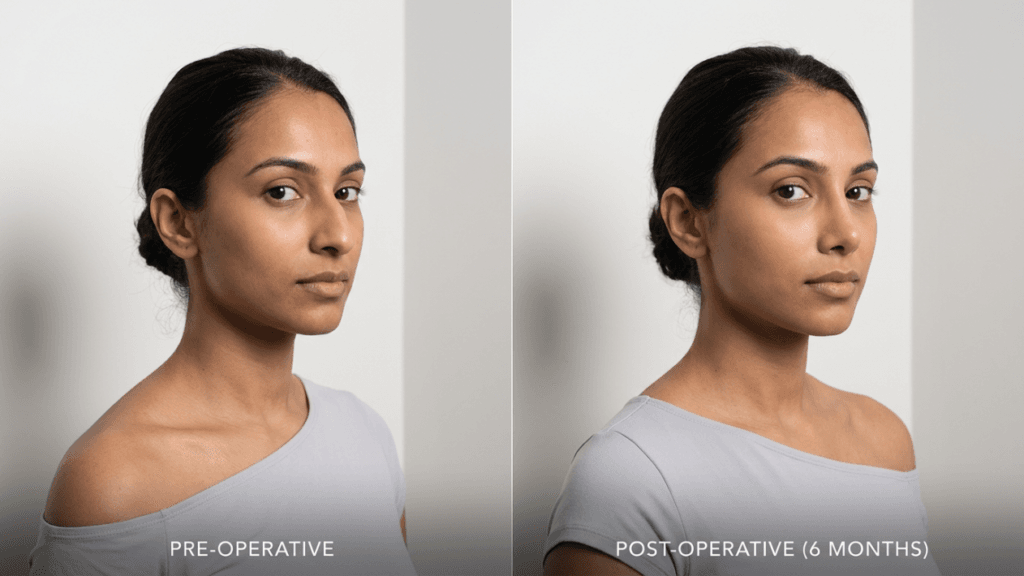
3. Der Dominoeffekt: Wie eine Schwäche zur nächsten führt
Die Nase ist ein strukturelles Ökosystem. Wenn eine Komponente beeinträchtigt ist, erzeugt dies einen Dominoeffekt, der zu weitreichenden Funktionsstörungen führen kann. Zum Beispiel:
- Überresektion des Nasenrückens schwächt das mittlere Nasendrittel, was zu einem Kollaps der inneren Nasenklappe führt.
- Kollaps der inneren Nasenklappe erhöht den Strömungswiderstand, wodurch der Patient durch den Mund atmet. Dies trocknet die Mundschleimhaut aus und erhöht das Risiko für Schlafapnoe.
- chronische Mundatmung verändert Gesichts-Wachstumsmuster bei Kindern und trägt zu Zahnfehlstellungen bei Erwachsenen bei. In schweren Fällen kann es sogar zu Veränderungen der Kieferstruktur führen.
- Mangelhafte nasale Luftströmung vermindert die Fähigkeit der Nase, Luft zu filtern, zu befeuchten und zu erwärmen, was das Risiko für Atemwegsinfektionen und Asthmaexazerbationen erhöht.
Eine 2026-Studie in Nature Reviews Disease Primers ergab, dass Patienten mit langfristiger Nasenobstruktion nach Rhinoplastie hatten ein um 40 % erhöhtes Risiko, eine chronische Rhinosinusitis zu entwickeln innerhalb von fünf Jahren nach der Operation. Die Studie kam zu dem Schluss, dass “funktionelle Rhinoplastie der Standard der Versorgung sein sollte, kein nachträglicher Gedanke” (Nature, 2026).

Das billige Operationsrisiko: Warum ausländische Rhinoplastik häufig Ihre Atemwege versagt
Der Aufstieg des Medizintourismus hat Rhinoplastik zugänglicher denn je gemacht. Kliniken in Ländern wie der Türkei, dem Iran und Südkorea bieten günstige Eingriffe mit dem Versprechen natürlicher Ergebnisse. Während einige dieser Kliniken seriös sind, priorisieren viele die Quantität gegenüber der Qualität, indem sie an wichtigen Stellen sparen und Patienten gefährden. Hier ist der Grund, warum eine Rhinoplastik im Ausland ein Risiko für Ihre langfristige Nasengesundheit darstellen kann:
1. Mangel an funktionaler Expertise
Viele ausländische Chirurgen sind hochqualifiziert in ästhetische Nasenkorrektur aber fehlt die Ausbildung in funktionaler Nasenkorrektur. Ästhetische Rhinoplastik konzentriert sich auf das Aussehen, während funktionelle Rhinoplastik Atemwegsobstruktion, Septumabweichung und Nasenklappenkollaps behandelt. Ohne diese Expertise können Patienten die Operation mit einer schönen, aber nicht funktionsfähigen Nase verlassen.
Eine Studie aus dem Jahr 2025 in European Archives of Oto-Rhino-Laryngology analysierte 500 Revisionsrhinoplastie-Fälle und stellte fest, dass 62% der Patienten, deren Erstoperation im Ausland durchgeführt wurde, benötigten funktionelle Korrekturen, Im Vergleich dazu hatten nur 24% der Patienten, die sich in ihrem Heimatland operieren ließen, diese Ergebnisse. Die Studie führt diese Diskrepanz auf “einen Mangel an Betonung funktioneller Ergebnisse in Medizintourismus-Destinationen” zurück (Springer, 2025).
2. Übermäßige Abhängigkeit von Reduktionstechniken
Um ein natürliches Aussehen zu erzielen, verlassen sich viele ausländische Chirurgen stark darauf Reduktionstechniken, wie zum Beispiel:
- Entfernung des dorsalen Knochensporns
- Feinabstimmung der Nasenspitze durch Knorpelresektion
- Verengung der Nasenbeine
Während diese Techniken ein verfeinertes Erscheinungsbild erzeugen können, führen sie oft die Nasenstruktur schwächen. Ohne ausreichende Verstärkung – wie Spreader-Transplantate oder Alar-Batten-Transplantate – wird die Nase im Laufe der Zeit kollapsanfällig. Eine Studie aus dem Jahr 2024 in JAMA Facial Plastic Surgery ergab, dass Patienten, die sich im Ausland einer Reduktionsrhinoplastie unterzogen, hatten ein 2,5-fach höheres Risiko, innerhalb von fünf Jahren eine Revisionsoperation zu benötigen aufgrund funktioneller Komplikationen (JAMA, 2024).
3. Schlechte postoperative Versorgung und Nachsorge
Die langfristige Nasengesundheit hängt nicht nur von der Operation selbst ab, sondern auch von der postoperativen Versorgung und Nachsorge. Viele Kliniken im Ausland bieten nur eine begrenzte Nachsorge an und lassen die Patienten bei der Bewältigung von Komplikationen allein. Häufige Probleme sind:
- Unzureichende Überwachung der Heilung: Ohne regelmäßige Kontrolluntersuchungen bleiben frühe Anzeichen eines Kollapses oder einer Obstruktion möglicherweise unbemerkt, bis sie schwerwiegend werden.
- Mangel an Zugang zu Revisionsoperationen: Wenn Komplikationen auftreten, haben Patienten möglicherweise Schwierigkeiten, einen qualifizierten Chirurgen zu finden, der bereit ist, die Arbeit eines anderen Arztes zu korrigieren, insbesondere wenn sie sich im Ausland befinden.
- Sprachliche und kulturelle Barrieren: Missverständnisse bezüglich postoperativer Anweisungen können zu einer unsachgemäßen Versorgung führen und das Risiko von Komplikationen erhöhen.
Eine Umfrage unter 1.200 Rhinoplastik-Patienten aus dem Jahr 2026, veröffentlicht in Plastic and Reconstructive Surgery Global Open ergab, dass 45% der Medizintouristen berichteten von Schwierigkeiten beim Zugang zur Nachsorge, im Vergleich zu nur 8% der Patienten, die sich vor Ort operieren ließen. Die Umfrage kam zu dem Schluss, dass “die mangelnde Kontinuität der Versorgung im Medizintourismus ein erheblicher Risikofaktor für langfristige Komplikationen darstellt”PRS Global Open, 2026).
4. Die Illusion von “natürlichen” Ergebnissen
Viele Kliniken im Ausland bewerben ihre Rhinoplastik-Ergebnisse als “natürlich”, aber was bedeutet das wirklich? In einigen Fällen ist “natürlich” ein Codewort für minimale strukturelle Verstärkung, was zu langfristiger Instabilität führen kann. Echte natürliche Ergebnisse sollten:
- Nasenfunktion erhalten oder verbessern
- Ethnische oder familiäre Merkmale erhalten
- Techniken einsetzen, die langfristige Stabilität unterstützen, wie Erhaltungsrhinoplastik oder strukturelle Transplantation
Bei SurgyTeam definieren wir “natürlich” als ein Ergebnis, das sowohl harmonisch aussieht als auch optimal funktioniert. Unsere Chirurgen verwenden fortschrittliche Techniken wie Dorsalerhaltungsrhinoplastik, die die natürliche Anatomie der Nase wahrt, während ästhetische Ziele erreicht werden. Eine systematische Übersicht aus dem Jahr 2025 im Journal of Laryngology & Otology ergab, dass Die dorsale Erhaltungsrhinoplastik erhält nicht nur die nasale Atemwegsfunktion, sondern reduziert auch die Notwendigkeit von Revisionsoperationen um 40% im Vergleich zu herkömmlichen Reduktionsverfahren (Cambridge, 2025).
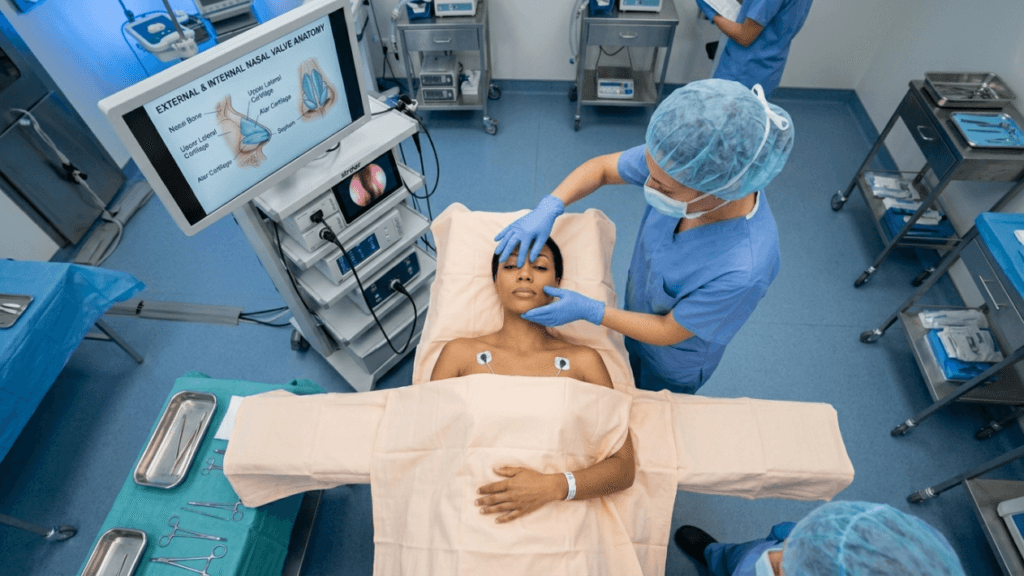
SurgyTeam‑Ansatz: Wo strukturelle Integrität auf ästhetische Präzision trifft
Bei SurgyTeam lehnen wir die falsche Wahl zwischen Ästhetik und Funktion ab. Unsere Chirurgen – ausgebildet an renommierten Institutionen wie GATA (Gülhane Militärmedizinische Akademie) und zertifiziert durch die Europäischer Vorstand für Plastische, Rekonstruktive und Ästhetische Chirurgie (EBOPRAS)– sind spezialisiert auf funktionaler Nasenkorrektur, eine Technik, die sowohl Schönheit als auch Atmungsaktivität priorisiert. Hier erfahren Sie, wie wir es anders machen:
1. Atemweg-zuerst Bewertung
Jede Rhinoplastik bei SurgyTeam beginnt mit einer umfassende Atemwegsbewertung. Mithilfe fortschrittlicher Diagnosewerkzeuge wie Akustische Rhinometrie und Rhinomanometrie, Wir bewerten:
- Funktion der Nasenklappen
- Septumausrichtung und -abweichung
- Hypertrophie der Nasenmuscheln
- Integrität interner und externer Ventile
Diese Bewertung stellt sicher, dass wir angehen sowohl funktionale als auch ästhetische Aspekte von Anfang an. Eine Studie aus dem Jahr 2026 in Plastische Gesichtschirurgie ergab, dass Patienten, die eine Atemwegs-erste Rhinoplastik durchführen ließen, berichteten über eine Zufriedenheitsrate von 92% mit ihren Atemwegsergebnissen, im Vergleich zu nur 68% für diejenigen, die eine traditionelle ästhetische Rhinoplastik hatten (Springer, 2026).
2. Strukturelle Verstärkung: Der Schlüssel zur langfristigen Stabilität
Wir verwenden autologe Transplantate (Knorpel aus dem eigenen Septum, Ohr oder Rippenbogen des Patienten) zur Verstärkung des Nasengerüstes. Diese Transplantate bieten die erforderliche Stütze, um einen Kollaps zu verhindern und die langfristige Funktion aufrechtzuerhalten. Zu unseren am häufigsten verwendeten Techniken gehören:
- Spreizgraft Diese Transplantate werden zwischen dem Septum und den oberen lateralen Knorpeln platziert, um die innere Nasenklappe zu erweitern und einen Kollaps zu verhindern. Sie sind essenziell für Patienten mit engen Nasenklappen oder für diejenigen, die eine Reduktion des Nasenrückens durchführen lassen.
- Alar-Batten-Transplantate: Diese Transplantate dienen zur Stärkung der lateralen Nasenwand und verhindern einen Kollaps der äußeren Klappe. Sie sind besonders vorteilhaft für Patienten mit schwachen oder übermäßig resezierten Alarknorpeln.
- Septale Verlängerungstransplantate: Diese Transplantate verlängern das Septum, um der Nasenspitze zusätzliche Stütze zu bieten und langfristige Projektion und Stabilität zu gewährleisten. Sie sind ideal für Patienten mit einer schwachen oder unterprojizierten Nasenspitze.
- Dorsalerhaltende Rhinoplastik: Diese Technik erhält die natürliche Anatomie des Nasenrückens, wodurch das Risiko einer Sattelnasendeformität und eines Kollapses der inneren Nasenklappe reduziert wird. Sie ist besonders geeignet für Patienten mit einem Nasenrückenhöcker, die ein natürliches, nicht operiertes Erscheinungsbild wünschen.
Eine Meta‑Analyse aus dem Jahr 2025 in Plastic and Reconstructive Surgery überprüfte 27 Studien und stellte fest, dass Patienten, die während der Rhinoplastik strukturelle Transplantate erhielten, hatten ein um 78% geringeres Risiko für langfristige Atemwegsobstruktion im Vergleich zu denen, die keine erhielten. Die Studie kam zu dem Schluss, dass “strukturelle Verstärkung als Goldstandard in der Rhinoplastik betrachtet werden sollte” (PubMed, 2025).
3. Erhaltung statt Resektion: Die Zukunft der Rhinoplastik
Die traditionelle Rhinoplastik stützt sich häufig auf Resektionstechniken, die das Entfernen von Knorpel und Knochen zur Neuformung der Nase beinhalten. Obwohl sie für die ästhetische Verfeinerung wirksam sind, können diese Techniken die Nasenstruktur schwächen. Bei SurgyTeam priorisieren wir Erhaltungstechniken, die die natürliche Anatomie der Nase erhalten und gleichzeitig das gewünschte ästhetische Ergebnis erzielen. Unsere Erhaltungstechniken umfassen:
- Dorsalerhaltende Rhinoplastik: Bei dieser Technik wird der dorsale Höcker entfernt, wobei der darunterliegende Knorpel und Knochen erhalten bleiben. Sie bewahrt die natürliche Kontur der Nase und verringert das Risiko eines Kollapses der inneren Nasenklappe.
- Spitzenerhalt: Anstatt die Spitzenknorpel zu resezieren, formen wir sie mithilfe von Nähten und Transplantaten um. Dieser Ansatz erhält die Spitzenunterstützung und verringert das Risiko einer langfristigen Spitzenptose (Absinken).
- Let-Down-Technik: Diese Technik senkt den Nasenrücken, ohne Knorpel zu entfernen, bewahrt die natürliche Anatomie und verringert das Risiko einer Sattelnasen-Deformität.
Eine systematische Übersichtsarbeit aus dem Jahr 2026 in Aesthetic Surgery Journal ergab, dass Techniken der erhaltenden Rhinoplastik führten zu einer um 50% niedrigeren Revisionsrate im Vergleich zu traditionellen Resektionstechniken. Die Übersichtsarbeit stellte auch fest, dass “Erhaltungstechniken mit höherer Patientenzufriedenheit und besseren langfristigen funktionellen Ergebnissen assoziiert sind” (Oxford Academic, 2026).
4. Personalisierte Erholungspläne für langfristigen Erfolg
Die langfristige Nasengesundheit hängt nicht nur von der Operation selbst ab, sondern auch von postoperative Pflege. Bei SurgyTeam stellen wir jedem Patienten einen Personalisierter Erholungsplan auf ihre einzigartige Anatomie und chirurgische Technik zugeschnitten. Unsere Erholungspläne umfassen:
- Nasales Stenting: Für Patienten mit Risiko eines Nasenklappenkollapses verwenden wir maßgefertigte Nasenschienen, um die Atemwege während des Heilungsprozesses zu stützen. Diese Schienen werden 4–6 Wochen getragen und verringern das Risiko einer langfristigen Obstruktion erheblich.
- Strukturierte Nachsorge: Wir planen regelmäßige Nachsorgetermine nach 1 Woche, 1 Monat, 3 Monaten, 6 Monaten und 1 Jahr nach der Operation. Während dieser Besuche überwachen wir die Heilung, gehen auf eventuelle Bedenken ein und stellen sicher, dass die Atemwege patent bleiben.
- Atemübungen: Wir bringen Patienten Atemübungen bei, um die Nasenmuskulatur zu stärken und den Luftstrom zu verbessern. Diese Übungen sind besonders vorteilhaft für Patienten mit schwachen Nasenklappen oder solche, die sich von einer Septumoperation erholen und deren Nasenklappen nach der Operation geschwächt sind.
- Lebensstilberatung Wir geben Hinweise zu Lebensstilfaktoren, die die langfristige Nasengesundheit beeinflussen können, wie Rauchverzicht, Allergiemanagement und ausreichende Flüssigkeitszufuhr.
Eine Studie aus dem Jahr 2025 in The Laryngoscope ergab, dass Patienten, die einen strukturierten postoperativen Pflegeplan befolgten, hatten ein 65% geringeres Risiko für langfristige Komplikationen im Vergleich zu denen, die dies nicht taten. Die Studie betonte, dass “postoperative Pflege genauso wichtig ist wie die Operation selbst, um langfristigen Erfolg zu gewährleisten” (Wiley, 2025).
Die langfristigen Vorteile funktionaler Rhinoplastik: Mehr als nur eine schöne Nase
Funktionelle Rhinoplastik geht nicht nur darum, Komplikationen zu vermeiden – es geht darum Ihre allgemeine Gesundheit und Lebensqualität zu verbessern. Hier erfahren Sie, wie eine gut durchgeführte funktionelle Rhinoplastik Ihnen langfristig zugutekommen kann:
1. Verbesserte Atemwegsgesundheit
Die Nase ist die erste Verteidigungslinie gegen luftgetragene Krankheitserreger, Allergene und Schadstoffe. Wenn die Nasenatmung behindert ist, müssen die Lungen kompensieren, was das Risiko für Atemwegsinfektionen, Asthmaexazerbationen und chronische Bronchitis erhöht. Funktionelle Rhinoplastik stellt den richtigen Luftstrom wieder her, sodass die Nase:
- Luft filtern und befeuchten, Reizung der Lunge verringern
- Krankheitserreger einfangen und ausstoßen, Infektionsrisiko senken
- Stickstoffmonoxid produzieren, ein Molekül, das die Sauerstoffaufnahme in der Lunge verbessert
Eine 2026-Studie in Nature Reviews Disease Primers ergab, dass Patienten mit chronischer Nasenobstruktion hatten ein um 30% höheres Risiko, Atemwegsinfektionen zu entwickeln über einen Zeitraum von fünf Jahren. Die Studie kam zu dem Schluss, dass “die Wiederherstellung der Nasenfunktion durch Operation die Atemwegsgesundheit signifikant verbessern kann” (,Nature, 2026).
2. Besserer Schlaf und reduziertes Risiko für Schlafapnoe
Nasenobstruktion ist eine Hauptursache für schlafbezogene Atemstörungen, einschließlich Schnarchen und obstruktiver Schlafapnoe (OSA). Wenn die Nasenluftwege blockiert sind, müssen Patienten durch den Mund atmen, was zu Folgendem führen kann:
- Fragmentierter Schlaf und Tagesmüdigkeit
- Trockener Mund und Halsschmerzen
- Erhöhtes Risiko für Herz-Kreislauf-Erkrankungen
Funktionelle Rhinoplastik kann diese Probleme lindern, indem sie den Nasenluftstrom wiederherstellt. Eine Studie aus dem Jahr 2025 Sleep Medicine Reviews ergab, dass Patienten, die sich einer funktionellen Rhinoplastik wegen Nasenobstruktion unterzogen, verzeichneten eine um 50% verringerte Schnarchintensität und eine um 30% verbesserte Schlafqualität (ScienceDirect, 2025).
3. Verbesserte sportliche Leistungsfähigkeit
Für Sportler ist die Nasenatmung essenziell für optimale Leistung. Die Nase filtert, erwärmt und befeuchtet die Luft effektiver als der Mund, was die Sauerstoffaufnahme und Ausdauer verbessert. Wenn die Nasenluftwege verstopft sind, können Sportler Folgendes erleben:
- Verminderte Ausdauer und Belastbarkeit
- Erhöhtes Risiko für belastungsinduzierte Bronchokonstriktion
- Längere Erholungszeiten
Eine funktionelle Rhinoplastik kann den nasalen Luftstrom wiederherstellen, sodass Athleten während des Trainings und der Wettkämpfe effizienter atmen können. Eine Studie aus dem Jahr 2026 in The Journal of Sports Sciences ergab, dass Sportler, die sich einer funktionellen Rhinoplastik unterzogen, verbesserten ihre VO2 max (ein Maß für aerobe Fitness) im Durchschnitt um 12 % (Taylor & Francis, 2026).
4. Psychisches und emotionales Wohlbefinden
Die psychologischen Auswirkungen einer Nasenobstruktion werden oft übersehen. Chronische Verstopfung, Atembeschwerden und Selbstbewusstsein über das Nasenaussehen können führen zu:
- Angst und Depression
- Sozialer Rückzug und geringes Selbstwertgefühl
- Verminderte Lebensqualität
Eine funktionelle Rhinoplastik kann diese Probleme lindern, indem sie beide wiederherstellt Erscheinungsbild und Funktion. Eine Studie von 2025 in JAMA Otolaryngology–Head & Neck Surgery ergab, dass Patienten, die eine funktionelle Rhinoplastik durchgemacht haben, berichteten über eine Verbesserung ihres psychischen Wohlbefindens um 40% und eine 50% Reduzierung der Angst, die mit ihrem Nasenbild zusammenhängt (JAMA, 2025).
Sind Sie gefährdet? Anzeichen dafür, dass Ihre Nasenkorrektur Ihre Atemwege beeinträchtigt haben könnte
Wenn Sie sich einer Nasenkorrektur unterzogen haben – insbesondere im Ausland oder mit einem Fokus auf Ästhetik allein – können Sie ein Risiko für eine langfristige Atemwegsverengung haben. Hier sind die Warnzeichen auf die Sie achten sollten:
- Chronische Nasenverstopfung: Wenn Sie sich ständig verstopft fühlen, auch wenn Sie keine Erkältung oder Allergien haben, könnte dies ein Zeichen für einen Kollaps der Nasenklappen oder eine Septumdeviation sein.
- Lautes Atmen: Ein pfeifendes oder schnarchendes Geräusch beim Atmen, insbesondere während körperlicher Aktivität, kann auf eine verengte Nasenatmung hinweisen.
- Schwierigkeiten beim Atmen durch eine oder beide Nasenlöcher: Wenn Sie Schwierigkeiten haben, durch die Nase zu atmen, auch im Ruhezustand, könnte dies ein Zeichen für eine strukturelle Beeinträchtigung sein.
- Wiederkehrende Sinusinfektionen: Eine schlechte Nasenatmung kann zu Schleimansammlungen und chronischer Sinusitis führen. Wenn Sie häufig Sinusinfektionen erleben, kann dies an einem verengten Atemweg liegen.
- Schlafstörungen: Wenn Sie laut schnarchen, nach Luft ringen oder tagsüber erschöpft sind, können Sie an einer obstruktiven Schlafapnoe aufgrund einer Nasenverengung leiden.
- Sichtbare Veränderungen der Nasenform: Wenn Ihre Nase im Laufe der Zeit eine abgeknickte Spitze, eine Sattelnasen-Deformität oder Asymmetrie entwickelt hat, kann dies ein Zeichen für einen strukturellen Kollaps sein.
Wenn Sie eines dieser Symptome erleben, ist es wichtig, eine funktionelle Untersuchung zu suchen bei einem qualifizierten Rhinoplastik-Spezialisten. Bei SurgyTeam bieten wir umfassende Bewertungen mit fortschrittlichen diagnostischen Werkzeugen, um die Ursache Ihrer Obstruktion zu bestimmen und den besten Verlauf zu empfehlen.
Ihre nächsten Schritte: Wie Sie Ihre Nasengesundheit schützen
Wenn Sie eine Rhinoplastik in Betracht ziehen oder sich um die langfristige Gesundheit Ihrer Nase sorgen, können Sie folgendes tun, um sich zu schützen:
1. Wählen Sie einen Chirurgen, der die Funktion in den Vordergrund stellt
Nicht alle Rhinoplastik-Chirurgen sind gleich. Wenn Sie einen Chirurgen auswählen, suchen Sie nach:
- Zertifizierung durch Fachgesellschaft: Stellen Sie sicher, dass Ihr Chirurg von einer anerkannten Fachgesellschaft zertifiziert ist, wie zum Beispiel der Europäischer Vorstand für Plastische, Rekonstruktive und Ästhetische Chirurgie (EBOPRAS) oder das Türkische Gesellschaft für Plastische, Rekonstruktive und Ästhetische Chirurgie (TSPRAS).
- Spezialisierung auf funktionelle Rhinoplastik: Fragen Sie nach der Erfahrung des Chirurgen mit funktionellen Techniken wie Spreader-Grafts, Alar-Batten-Grafts und dorsaler Rhinoplastik mit Erhaltung.
- Ein Portfolio langfristiger Ergebnisse: Überprüfen Sie Vorher-Nachher-Fotos von Patienten mindestens ein Jahr nach der Operation, um sowohl ästhetische als auch funktionelle Ergebnisse zu bewerten.
- Patientenreferenzen: Suchen Sie nach Bewertungen, die die Atemergebnisse erwähnen, nicht nur das Aussehen.
Bei SurgyTeam sind unsere Chirurgen doppelt Board-zertifiziert und spezialisiert auf sowohl ästhetische als auch funktionelle Rhinoplastik. Wir laden Sie ein, Entdecken Sie unsere Vorher-Nachher-Galerie und zu lesen Patientenreferenzen um den Unterschied zu sehen, den unser Ansatz bewirkt.
2. Stellen Sie die richtigen Fragen während Ihrer Beratung
Ihr Beratungsgespräch ist Ihre Gelegenheit, zu beurteilen, ob ein Chirurg der richtige für Sie ist. Hier sind die wichtigen Fragen um zu fragen:
- Wie balancieren Sie Ästhetik und Funktion bei der Rhinoplastik?
- Welche Techniken wenden Sie an, um langfristige Atemwegsobstruktionen zu verhindern?
- Führen Sie vor der Operation Atemwegsuntersuchungen durch?
- Wie hoch ist Ihre Revisionsrate, und welche sind die häufigsten Gründe für Revisionen?
- Kann ich mit ehemaligen Patienten über ihre langfristigen Ergebnisse sprechen?
Bei SurgyTeam fördern wir den offenen Dialog und bieten transparente Antworten auf all Ihre Fragen. Unser Ziel ist es, dass Sie sich sicher und umfassend informiert fühlen, bevor Sie Entscheidungen bezüglich Ihrer Operation treffen.
3. Ziehen Sie eine funktionelle Bewertung in Betracht
Wenn Sie bereits eine Rhinoplastik hatten und Atembeschwerden verspüren, eine funktionelle Untersuchung kann helfen, die Ursache Ihrer Obstruktion zu identifizieren. Bei SurgyTeam verwenden wir fortschrittliche Diagnosewerkzeuge, wie zum Beispiel:
- Akustische Rhinometrie: Dieser Test misst die Querschnittsfläche des Nasenluftwegs und identifiziert Verengungen oder Obstruktionen.
- Rhinomanometrie: Dieser Test bewertet den Nasenluftstrom und den Widerstand und liefert Erkenntnisse über den Schweregrad der Obstruktion.
- Nasenendoskopie: Bei diesem Verfahren können wir die inneren Strukturen der Nase visualisieren und Probleme wie eine Septumdeviation, einen Ventilkollaps oder Narbengewebe identifizieren.
Basierend auf den Ergebnissen Ihrer Bewertung empfehlen wir eine individuellen Behandlungsplan um Ihre Nasenfunktion wiederherzustellen und Ihre Lebensqualität zu verbessern.
4. Priorisieren Sie die langfristige Pflege
Langfristige Nasengesundheit erfordert kontinuierliche Pflege. Nach Ihrer Operation befolgen Sie diese Tipps, um die optimale Funktion aufrechtzuerhalten:
- Befolgen Sie die postoperativen Anweisungen Ihres Chirurgen: Dies umfasst das Tragen von Nasenstents, das Vermeiden anstrengender Aktivität und das Wahrnehmen von Nachsorgeterminen.
- Wenden Sie Nasenhygiene an: Verwenden Sie Salzlösungssprays, um Ihre Nasengänge feucht und frei von Ablagerungen zu halten. Vermeiden Sie es, in der Nase zu bohren oder die Nase zu stark zu schnäuzen.
- Behandeln Sie Allergien und Sinusprobleme: Allergien und Sinusitis können die Nasenverstopfung verschlimmern. Arbeiten Sie mit Ihrem Gesundheitsdienstleister zusammen, um diese Zustände effektiv zu behandeln.
- Rauchen und Dampfen vermeiden: Rauchen und Dampfen reizen die Nasengänge und erhöhen das Risiko von Komplikationen. Wenn Sie rauchen, sollten Sie vor und nach der Operation mit dem Rauchen aufhören.
- Hydriert bleiben: Eine ausreichende Flüssigkeitszufuhr hält die Nasenschleimhäute gesund und reduziert das Risiko von Krustenbildung und Verstopfung.
Bei SurgyTeam verpflichten wir uns, Sie zu unterstützen. lange nach Ihrer Operation. Unser Team steht Ihnen immer zur Verfügung, um Ihre Fragen zu beantworten und Ihnen Ratschläge zur Erhaltung Ihrer Nasengesundheit zu geben.
Häufig gestellte Fragen zur funktionellen Nasenkorrektur und langfristigen Nasengesundheit
Was ist der Unterschied zwischen ästhetischer und funktioneller Nasenkorrektur?
Ästhetische Rhinoplastik konzentriert sich auf die Verbesserung des Aussehens der Nase, während funktionelle Rhinoplastik strukturelle Probleme anspricht, die die Atmung beeinträchtigen, wie z.B. Nasenklappenkollaps, Septumdeviation oder Nasenmuschelhypertrophie. Bei SurgyTeam sind wir der Meinung, dass die besten Rhinoplastik-Ergebnisse sowohl Ästhetik als auch Funktion kombinieren, um sicherzustellen, dass Ihre Nase nicht nur schön aussieht, sondern auch optimal funktioniert.
Wie kann ich erkennen, ob meine Nasenkorrektur meine Atemwege beeinträchtigt hat?
Anzeichen dafür, dass Ihre Rhinoplastik Ihre Atemwege beeinträchtigt haben könnte, sind chronische Nasenverstopfung, lautes Atmen (Pfeifen oder Schnarchen), Schwierigkeiten beim Atmen durch eine oder beide Nasenlöcher, wiederkehrende Sinusinfektionen, Schlafstörungen und sichtbare Veränderungen der Nasenform (wie eine abgeknickte Nasenspitze oder eine Sattelnasen-Deformität). Wenn Sie eines dieser Symptome erleben, ist es wichtig, eine funktionelle Beurteilung durch einen qualifizierten Rhinoplastik-Spezialisten einzuholen.
Was sind die langfristigen Risiken einer ‘natürlich’ aussehenden Nasenkorrektur?
Die langfristigen Risiken einer ‘natürlichen’ Rhinoplastik, die Ästhetik über Funktion priorisiert, umfassen Nasenklappenkollaps, Septumabweichung, chronische Nasenverstopfung, wiederkehrende Sinusinfektionen, Schlafapnoe und strukturelle Deformitäten wie eine Sattelnase. Diese Risiken treten oft verzögert auf, Jahre nach der Operation, wenn die Nasengewebe schwächer werden und ihre Elastizität verlieren.
Wie stellt SurgyTeam die langfristige Nasengesundheit nach einer Nasenkorrektur sicher?
Bei SurgyTeam priorisieren wir die langfristige Nasengesundheit durch die Verwendung fortschrittlicher Techniken wie strukturelle Verstärkung mit autologen Transplantaten, dorsaler Erhaltungsrhinoplastik und personalisierten postoperativen Pflegeplänen. Unsere Chirurgen führen umfassende Atemwegsbeurteilungen vor der Operation durch und bieten strukturierte Nachsorge, um die Heilung zu überwachen und Bedenken anzusprechen. Wir bilden auch Patienten über Nasenhygiene und Lebensstilfaktoren aus, die die langfristige Funktion unterstützen.
Kann funktionelle Nasenkorrektur meine sportliche Leistung verbessern?
Ja! Funktionelle Rhinoplastik kann die sportliche Leistung erheblich verbessern, indem sie die richtige Nasenatmung wiederherstellt. Die Nase filtert, wärmt und feuchtet die Luft effektiver als der Mund, was die Sauerstoffaufnahme und Ausdauer verbessert. Eine Studie aus dem Jahr 2026 fand heraus, dass Athleten, die eine funktionelle Rhinoplastik durchgeführt hatten, ihre VO2-Max (ein Maß für die aerobe Fitness) um durchschnittlich 12% verbesserten.
Worauf sollte ich bei der Auswahl eines Nasenkorrekturchirurgen achten?
Wenn Sie einen Rhinoplastik-Chirurgen wählen, sollten Sie nach einer Zertifizierung durch eine anerkannte Fachgesellschaft, einer Spezialisierung auf funktionelle Rhinoplastik, einem Portfolio mit langfristigen Ergebnissen und Patientenbewertungen suchen, die sowohl ästhetische als auch atmungsbezogene Ergebnisse erwähnen. Es ist auch wichtig, nach dem Revisionssatz des Chirurgen und seinem Ansatz zur Balance zwischen Ästhetik und Funktion zu fragen. Bei SurgyTeam sind unsere Chirurgen doppelt zertifiziert und haben umfangreiche Erfahrung in ästhetischer und funktioneller Rhinoplastik.
Machen Sie den ersten Schritt zu einer gesünderen, schöneren Nase
Ihre Nase ist mehr als nur ein Gesichtsmerkmal – sie ist ein lebenswichtiges Organ das Ihre Atmung, Ihren Schlaf, Ihre sportliche Leistung und Ihre allgemeine Gesundheit beeinflusst. Setzen Sie sich nicht mit einer Rhinoplastik zufrieden, die Ästhetik über Funktion priorisiert. Bei SurgyTeam kombinieren wir künstlerische Präzision mit struktureller Expertise um Ergebnisse zu liefern, die sowohl schön als auch atmungsaktiv sind.
Wenn Sie eine Nasenkorrektur in Erwägung ziehen oder sich Sorgen um die langfristige Gesundheit Ihrer Nase machen, vereinbaren Sie einen Termin mit unserem Team noch heute. Wir führen eine umfassende Atemwegsuntersuchung durch, besprechen Ihre Ziele und erstellen einen personalisierten Behandlungsplan, um Ihnen zu helfen, die Nase zu erreichen, die Sie sich immer gewünscht haben—ohne Ihre Gesundheit zu gefährden.
Ihr Weg zu einer gesünderen, schöneren Nase beginnt hier. Kontaktieren Sie SurgyTeam und atmen Sie ein Leben lang sorgenfrei.